

Introduction
In modern mechanical systems, controlled linear motion is a fundamental requirement. From CNC machines and industrial automation to robotics and medical equipment, accuracy, stability, and efficiency directly affect performance and product quality. At the center of these systems is the linear bearing.
A linear bearing is designed to support loads while allowing smooth movement along a straight path with minimal friction. Compared to traditional sliding surfaces, linear bearings provide higher precision, better repeatability, and longer service life. As a result, they have become indispensable in modern engineering and manufacturing.
This article provides a comprehensive overview of linear bearings, including their definition, working principles, types, materials, advantages, applications, and selection guidelines.
What Is a Linear Bearing?
A linear bearing is a mechanical component that enables relative motion in one direction while restricting movement in other directions. It supports loads and guides motion along a shaft, rail, or track with reduced friction.
A typical linear bearing system consists of:
Guide Element: Shaft, rail, or track
Bearing Housing: Encases rolling or sliding elements
Rolling Elements or Bushings: Balls, rollers, or low-friction liners
Seals and Wipers: Protect against dust and contaminants
Lubrication System: Ensures smooth and durable operation
Linear bearings are engineered to deliver smooth motion, high accuracy, and reliable load support.
How Linear Bearings Work
Linear bearings operate based on one of two principles:
1. Rolling Contact
Uses balls or rollers between the bearing and guide surface
Converts sliding friction into rolling friction
Allows high speed, high precision, and long service life
2. Sliding Contact
Uses low-friction materials such as polymers or bronze
Simple design and quiet operation
Suitable for moderate loads and speeds
The choice between rolling and sliding depends on load, speed, accuracy, and operating environment.
Main Types of Linear Bearings
1. Ball Linear Bearings
Contain recirculating steel balls
Low friction and smooth motion
High speed and high positioning accuracy
Applications: CNC machines, automation equipment, robotics
2. Roller Linear Bearings
Use cylindrical or needle rollers
Line contact provides higher load capacity
Greater rigidity and shock resistance
Applications: Heavy machinery, gantry systems, machine tools
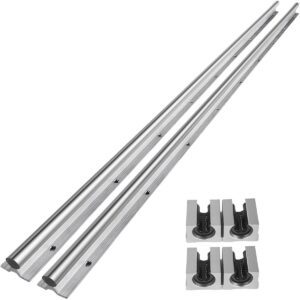
3. Plain (Sliding) Linear Bearings
No rolling elements
Often self-lubricating
Quiet and maintenance-friendly
Applications: Packaging machinery, conveyors, clean environments
4. Linear Bushings
Cylindrical bearings for round shafts
Easy to install and cost-effective
Suitable for light to medium loads
Applications: 3D printers, small automation systems
5. Miniature Linear Bearings
Compact size for limited spaces
High precision for small loads
Applications: Medical devices, electronics, laboratory instruments
Materials Used in Linear Bearings
The performance and durability of linear bearings depend heavily on materials:
Hardened Alloy Steel: High strength and wear resistance
Stainless Steel: Corrosion resistance for harsh environments
Aluminum Housings: Lightweight and corrosion-resistant
Polymer Liners: Low friction, self-lubricating, quiet operation
Advanced surface treatments such as chrome plating or anodizing further enhance wear resistance.
Key Advantages of Linear Bearings
Low Friction: Smooth and efficient linear motion
High Precision: Accurate positioning and repeatability
High Load Capacity: Especially with roller designs
Long Service Life: Reduced wear and fatigue
Compact Design: Space-saving solutions for modern machines
Versatility: Suitable for many industries and applications
These advantages make linear bearings superior to traditional sliding guides in most modern systems.
Applications of Linear Bearings
Linear bearings are used across a wide range of industries:
CNC Machine Tools: Tool and table positioning
Industrial Automation: Assembly and pick-and-place systems
Robotics: Linear axes and positioning modules
Packaging Machinery: Smooth, repetitive motion
Medical Equipment: Imaging and laboratory automation
Material Handling: Conveyors, lifting systems, gantries
Their adaptability makes linear bearings suitable for both precision and heavy-duty applications.
Linear Bearings vs Traditional Sliding Guides
| Feature | Linear Bearings | Traditional Sliding Guides |
|---|---|---|
| Friction | Very low | High |
| Accuracy | High | Medium |
| Speed | High | Low |
| Load Capacity | Medium to high | Medium |
| Maintenance | Low | High |
| Wear | Minimal | Significant |
Linear bearings provide greater efficiency, accuracy, and durability.
How to Choose the Right Linear Bearing
When selecting a linear bearing, consider:
Load Requirements: Static and dynamic loads
Speed and Acceleration: Rolling bearings for high speed
Accuracy Needs: Precision grade and clearance
Guide Type: Round shaft or linear rail
Environmental Conditions: Dust, moisture, temperature
Maintenance Preferences: Lubricated vs self-lubricating
Correct selection improves system reliability and reduces operating costs.
Installation and Maintenance Tips
Ensure guide surfaces are straight and rigid
Align bearings accurately during installation
Use recommended mounting torque
Lubricate regularly unless self-lubricating
Inspect seals and bearing surfaces periodically
Proper installation and maintenance significantly extend bearing life.
Frequently Asked Questions (FAQs)
1. What is a linear bearing used for?
It supports and guides linear motion in machines and automation systems.
2. Are linear bearings better than sliding bushings?
For high speed and precision, yes. Sliding bushings are quieter and simpler.
3. Do linear bearings require lubrication?
Most rolling linear bearings require lubrication; some polymer types do not.
4. Can linear bearings handle heavy loads?
Yes, especially roller-type linear bearings designed for industrial use.
5. How long do linear bearings last?
With proper installation and maintenance, they can last for many years.
Conclusion
A linear bearing is a critical component in modern linear motion systems, enabling smooth, precise, and reliable movement. Whether used in CNC machines, automation lines, robotics, or medical equipment, linear bearings improve efficiency, accuracy, and durability.
By understanding the different types, materials, and selection criteria, engineers and manufacturers can choose the right linear bearing to achieve optimal performance and long-term reliability.