

Introduction
In modern mechanical engineering and industrial automation, achieving accurate and smooth linear motion is essential. Linear guide ways are key mechanical components designed to guide moving machine parts along a straight path with high precision, rigidity, and reliability. They are widely used in CNC machine tools, industrial automation systems, robotics, precision measuring equipment, and heavy machinery.
Compared with traditional sliding ways, linear guide ways offer lower friction, higher efficiency, improved positioning accuracy, and longer service life. As manufacturing moves toward higher speeds and tighter tolerances, linear guide ways have become an industry standard for precision motion control.
This article provides a detailed overview of linear guide ways, including their definition, structure, working principles, types, materials, advantages, applications, selection criteria, installation, maintenance, and future development trends.

What Are Linear Guide Ways?
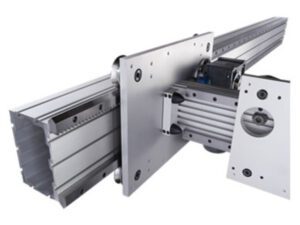
Linear guide ways are mechanical guiding systems that support and direct linear motion along a straight line using rolling or sliding elements. They are typically composed of guide rails and moving blocks or carriages that travel along the rails with controlled friction.
The main purposes of linear guide ways are:
To guide linear motion accurately
To support loads in multiple directions
To reduce friction and wear
To maintain alignment and motion stability
Linear guide ways are engineered to deliver high precision, smooth movement, and excellent load-carrying capability under continuous operation.
Main Components of Linear Guide Ways
1. Guide Rail
Precision-machined and hardened steel rail
Provides a straight and rigid reference surface
Mounted securely to the machine base or frame
2. Guide Block / Carriage
Moves along the rail
Supports the applied load
Contains rolling or sliding elements
3. Rolling or Sliding Elements
Steel balls or cylindrical rollers (for rolling guide ways)
Sliding liners or coatings (for sliding guide ways)
Reduce friction and distribute loads evenly
4. End Caps and Circulation System
Allow rolling elements to recirculate smoothly
Maintain continuous motion
5. Seals and Wipers
Prevent dust, debris, and coolant from entering
Improve durability and accuracy
6. Lubrication System
Grease or oil channels to minimize wear
Essential for smooth operation and long service life
How Linear Guide Ways Work
Linear guide ways function by transforming sliding friction into rolling friction, or by controlling sliding contact with precision surfaces:
The guide rail is fixed to a flat, rigid mounting surface.
The carriage moves along the rail, guided by raceways.
Rolling elements (balls or rollers) circulate between the rail and carriage.
Loads are supported in radial, axial, and moment directions.
Motion remains smooth, accurate, and repeatable across the entire travel length.
This design enables high-speed movement with minimal energy loss.
Types of Linear Guide Ways
1. Ball-Type Linear Guide Ways
Use recirculating steel balls
Low friction and smooth motion
Suitable for high-speed and high-precision applications
2. Roller-Type Linear Guide Ways
Use cylindrical rollers instead of balls
Higher rigidity and load capacity
Ideal for heavy-duty machinery and large CNC machines
3. Sliding (Plain) Guide Ways
Use direct sliding contact between surfaces
High damping and vibration absorption
Common in traditional machine tools
4. Profile Linear Guide Ways
Rectangular rail design with integrated raceways
High stiffness and accuracy
Widely used in industrial automation
5. Miniature Linear Guide Ways
Compact design for limited installation space
Used in medical devices, electronics, and laboratory equipment
Materials Used in Linear Guide Ways
Hardened Carbon Steel – High strength and wear resistance
Stainless Steel – Corrosion resistance for harsh environments
Cast Iron – High damping for sliding guide ways
Aluminum Alloy – Lightweight applications
Surface Treatments – Chrome plating, black oxide, anti-corrosion coatings
Material selection depends on load, precision, environment, and cost requirements.
Advantages of Linear Guide Ways
High Positioning Accuracy and Repeatability
Low Friction and High Mechanical Efficiency
Excellent Load Capacity in All Directions
High Rigidity and Structural Stability
Long Service Life with Proper Lubrication
Reduced Wear Compared to Sliding Ways
Lower Energy Consumption
These advantages make linear guide ways ideal for modern high-performance machinery.
Applications of Linear Guide Ways
Linear guide ways are widely used in:
CNC Machine Tools – Machining centers, lathes, grinders
Industrial Automation Equipment – Assembly and inspection systems
Robotics – Linear axes and gantry systems
Semiconductor Manufacturing – Precision positioning systems
Medical Equipment – Imaging and diagnostic machines
Packaging Machinery – High-speed motion systems
Measurement and Testing Equipment
How to Choose the Right Linear Guide Ways
When selecting linear guide ways, consider the following factors:
Load Capacity – Static, dynamic, and moment loads
Required Accuracy and Rigidity
Operating Speed and Acceleration
Travel Length and Stroke
Environmental Conditions – Dust, moisture, temperature
Mounting Surface Quality
Maintenance and Lubrication Requirements
Proper selection ensures stable performance and long-term reliability.
Installation Best Practices
Ensure mounting surfaces are flat, clean, and rigid
Align guide rails accurately to prevent uneven wear
Use specified torque for mounting bolts
Apply proper lubrication before operation
Perform smooth running and alignment tests
Correct installation is essential for maintaining precision and durability.
Maintenance of Linear Guide Ways
Regular cleaning to remove dust and debris
Periodic lubrication based on operating conditions
Inspection of seals, raceways, and rolling elements
Prompt replacement of worn or damaged components
Preventive maintenance significantly extends service life.

Future Trends in Linear Guide Way Technology
Integrated Condition Monitoring Sensors
Predictive Maintenance and Smart Lubrication
Advanced Wear-Resistant Coatings
Maintenance-Free Linear Guide Ways
Higher Speed and Load Capacity Designs
These innovations support smart manufacturing and Industry 4.0 initiatives.
Frequently Asked Questions (FAQs)
1. What are linear guide ways used for?
They guide machine components in a straight line with high accuracy and low friction.
2. What is the difference between linear guide ways and sliding ways?
Linear guide ways use rolling motion for lower friction, while sliding ways rely on surface contact and offer higher damping.
3. Can linear guide ways handle heavy loads?
Yes, roller-type linear guide ways are designed for heavy-load applications.
4. Do linear guide ways require lubrication?
Yes, proper lubrication is essential for performance and longevity.
5. Where are linear guide ways commonly used?
CNC machines, automation equipment, robotics, and precision machinery.
Conclusion
Linear guide ways are a cornerstone of modern precision engineering, offering high accuracy, smooth motion, and excellent load-bearing capability. Their advanced design and versatility make them indispensable in CNC machining, automation, and high-tech manufacturing.
By selecting the appropriate guide way type, ensuring correct installation, and following regular maintenance practices, manufacturers can achieve consistent performance, reduced downtime, and extended equipment life. As technology continues to evolve, linear guide ways will remain a vital component in the future of precision motion control.