

Stainless steel linear guides play a crucial role in modern machinery where accuracy, durability, and cleanliness are paramount. From medical devices to food processing plants, these linear motion components ensure smooth, precise, and corrosion-free operation under challenging conditions. Understanding their design, material composition, and practical advantages helps engineers and manufacturers make smarter, cost-effective choices.
Understanding Stainless Steel Linear Guide
A stainless steel linear guide is a mechanical motion system designed to provide precise linear movement along a straight path. It typically consists of a rail and a carriage (also called a block or slider) that moves along the rail with minimal friction. The entire assembly—or at least its critical parts—is constructed from stainless steel to ensure exceptional resistance to corrosion, moisture, and harsh chemicals.
Linear guides are integral in automation systems, robotics, CNC machines, and medical instruments. When made from stainless steel, they not only enhance performance in extreme environments but also extend operational life by preventing rust and contamination.

Core Components of Stainless Steel Linear Guides
A stainless steel linear guide system is composed of several precision-engineered components working in harmony:
Rail: A hardened, ground stainless steel track that defines the motion path. Its surface is precision-polished to ensure smooth movement.
Carriage or Block: The movable element that slides or rolls along the rail, supporting the load while maintaining alignment.
Rolling Elements: Stainless steel balls or rollers that reduce friction between the rail and carriage.
End Seals and Scrapers: Protect internal components from dust, water, or cleaning agents.
Lubrication Ports: Allow easy application of grease or oil to maintain long-lasting performance.
Together, these components deliver smooth, repeatable linear motion with high accuracy.
Material Composition and Grades
Stainless steel linear guides are typically made from high-grade stainless steels, each selected for its unique properties:
AISI 304 (SUS304): Ideal for general-purpose applications requiring good corrosion resistance.
AISI 316 (SUS316): Offers superior resistance to chemicals and saltwater; perfect for marine, food, and pharmaceutical industries.
AISI 440C: A high-carbon stainless steel providing exceptional hardness and wear resistance, suitable for heavy-duty precision systems.
AISI 420: Offers a balanced combination of corrosion resistance and strength at a lower cost.
Choosing the right stainless steel grade ensures long-term reliability and cost-efficiency.
Advantages of Stainless Steel Linear Guides
Corrosion Resistance
The defining advantage of stainless steel linear guides is their superior resistance to corrosion. Unlike standard carbon steel guides that rust when exposed to moisture or chemicals, stainless steel maintains structural integrity and appearance even after years of operation.
Hygienic Design
The smooth, polished surface of stainless steel is easy to clean, making these guides ideal for industries where hygiene is essential—such as food processing, pharmaceuticals, and healthcare manufacturing.
Durability and Longevity
Stainless steel’s inherent strength ensures that these guides can withstand continuous operation, vibration, and load without significant wear or deformation.
Low Maintenance
Because they resist corrosion and contamination, stainless steel linear guides require minimal maintenance. Regular cleaning and occasional lubrication are often sufficient to keep them in top condition.
Temperature and Chemical Resistance
Whether exposed to steam, saline solutions, or sterilizing agents, stainless steel guides maintain stable performance across a wide range of temperatures and chemical environments.
Applications of Stainless Steel Linear Guides
Food and Beverage Processing
In food manufacturing, equipment must be cleaned regularly using high-pressure water and detergents. Stainless steel linear guides handle this rigorous sanitation process without corroding, ensuring safety and reliability.
Medical and Pharmaceutical Equipment
These guides are vital in medical devices and laboratory automation systems where sterilization and precision are non-negotiable. Their non-corrosive and non-contaminating properties meet strict hygiene standards.
Marine and Offshore Equipment
In saltwater environments, ordinary steel components corrode rapidly. Stainless steel guides, particularly those made of AISI 316, offer long-lasting performance against salt-induced corrosion.
Chemical and Industrial Machinery
For chemical manufacturing plants exposed to acids or alkalis, stainless steel guides are the preferred choice due to their resistance to aggressive compounds.
Semiconductor and Clean Room Equipment
In clean-room environments, particle-free operation is essential. Stainless steel’s smooth finish prevents particle generation, ensuring compliance with cleanliness standards.
Working Principle of Stainless Steel Linear Guide
At its core, a stainless steel linear guide reduces friction to enable smooth motion. The rolling elements—such as balls or rollers—circulate within the carriage as it moves along the rail. The load applied to the carriage is distributed evenly across the rolling elements, minimizing wear and maintaining precision. The result is quiet, efficient motion, ideal for high-speed automation.
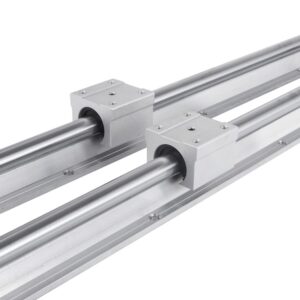
Types of Stainless Steel Linear Guides
Ball-Type Linear Guides
Utilize recirculating ball bearings for low friction and high accuracy. Commonly found in CNC machines and robotics.
Roller-Type Linear Guides
Employ cylindrical rollers for higher load capacity and stiffness, suitable for heavy-duty industrial applications.
Plain Bearing (Sliding) Guides
Use a self-lubricating polymer or bronze liner against the stainless steel rail. These are ideal for clean environments requiring dry or lubricant-free motion.
Design Considerations When Selecting Stainless Steel Linear Guides
Choosing the correct stainless steel linear guide depends on various design and operational parameters:
Load Capacity: Ensure the guide can handle both static and dynamic loads.
Precision Requirements: For applications demanding micron-level accuracy, select high-precision ground rails.
Operating Environment: Consider exposure to moisture, chemicals, and temperature fluctuations.
Speed and Acceleration: High-speed systems may require advanced lubrication and bearing configurations.
Maintenance Frequency: Some guides are designed for minimal maintenance using self-lubricating materials.
Cost Efficiency: While stainless steel is pricier, its lifespan and reliability often outweigh initial costs.
Performance Characteristics
| Property | Stainless Steel Linear Guide | Conventional Steel Guide |
|---|---|---|
| Corrosion Resistance | Excellent | Poor to Moderate |
| Load Capacity | High | High |
| Hygiene | Excellent | Limited |
| Maintenance Need | Low | High |
| Service Life | Long | Shorter |
| Cost | Higher | Lower |
This table illustrates the clear long-term advantage of stainless steel in demanding environments.
Installation and Alignment Tips
Ensure Flat Mounting Surfaces: Even minor unevenness can cause premature wear.
Use Precision Alignment Tools: Proper rail alignment ensures smooth motion and reduces friction.
Torque Fasteners Correctly: Over-tightening can deform the rail; under-tightening may cause slippage.
Lubricate Before Use: Apply appropriate lubricant before starting operation.
Check for Contamination: Before assembly, clean all components to remove debris or dust.
Maintenance Best Practices
Although stainless steel linear guides require minimal upkeep, regular maintenance enhances performance and longevity.
Clean Regularly: Remove debris and residues, especially in wash-down environments.
Lubricate Periodically: Use suitable grease or oil, preferably food-grade where applicable.
Inspect for Wear: Check rolling elements and raceways for pitting or scratches.
Monitor Noise and Vibration: Unusual sounds often indicate misalignment or insufficient lubrication.
Replace Worn Parts Promptly: Prevent secondary damage to other components by timely replacement.
Common Problems and Solutions
| Issue | Possible Cause | Solution |
|---|---|---|
| Rough or jerky motion | Contamination or misalignment | Clean and realign system |
| Excessive noise | Lack of lubrication | Re-lubricate with proper grease |
| Corrosion spots | Exposure to harsh chemicals | Use 316-grade stainless steel |
| Reduced load capacity | Bearing wear | Replace worn components |
| Overheating | Excessive friction | Ensure proper lubrication and alignment |
Innovations in Stainless Steel Linear Guide Technology
Modern advancements have transformed the capabilities of stainless steel linear guides:
Self-Lubricating Designs: Incorporation of polymer liners reduces maintenance frequency.
Wash-Down-Ready Configurations: Special designs eliminate crevices, allowing thorough cleaning.
High-Speed Rolling Elements: Improved bearing materials allow faster and smoother motion.
Lightweight Construction: Hybrid designs combine stainless steel with engineered plastics for reduced weight.
These innovations continue to push the boundaries of performance, reliability, and hygiene.
Cost vs. Value Analysis
While stainless steel linear guides are more expensive than their carbon steel counterparts, their total cost of ownership is often lower. Reduced maintenance, longer service life, and prevention of corrosion-related downtime make them a more economical choice in the long run.
Investing in stainless steel pays off especially in industries where equipment downtime or contamination can lead to significant financial losses.
Environmental Benefits
Stainless steel is fully recyclable and environmentally friendly. Its long lifespan means fewer replacements and reduced waste. Moreover, its resistance to corrosion eliminates the need for harmful surface coatings or chemical treatments.
Future Trends
Emerging technologies are further enhancing stainless steel linear guides. Nanocoatings, additive manufacturing (3D printing), and advanced sensor integration are transforming them into smart, self-monitoring systems capable of predictive maintenance and real-time performance tracking.
Stainless Steel Linear Guide: A Symbol of Precision and Reliability
At the heart of every high-precision system, the stainless steel linear guide ensures accuracy, durability, and performance under even the harshest conditions. Its unmatched resistance to corrosion, coupled with its hygienic design and low maintenance, makes it indispensable in industries where reliability is non-negotiable.
Frequently Asked Questions
What is a stainless steel linear guide used for?
It’s used to provide precise linear motion in machinery, especially in environments exposed to moisture, chemicals, or where cleanliness is vital.
Why choose stainless steel over carbon steel for linear guides?
Because stainless steel resists corrosion and maintains performance in wet, humid, or chemical environments, extending the equipment’s life span.
Do stainless steel linear guides need lubrication?
Yes, though some designs use self-lubricating materials that reduce maintenance needs.
Can stainless steel linear guides handle heavy loads?
Yes, particularly those made with hardened 440C or 420 stainless steel for superior load-bearing capacity.
Are they suitable for food and medical industries?
Absolutely. Their cleanability and corrosion resistance make them ideal for sanitary and sterile environments.
How long do stainless steel linear guides last?
With proper maintenance and operation, they can last several years—even in demanding conditions—far exceeding standard steel alternatives.
Conclusion
Stainless steel linear guides represent the perfect blend of strength, precision, and endurance. Whether in a high-speed robot, a food packaging machine, or a surgical instrument, these components guarantee smooth, reliable motion where other materials would fail. Investing in stainless steel linear guides means investing in long-term performance, safety, and efficiency.
Suggested Internal Links
Linear Motion Systems Overview
How to Choose the Right Linear Bearing
Guide to Corrosion-Resistant Materials
Suggested External Links
ISO Standards for Linear Motion Components
Material Comparison: AISI 304 vs. 316 Stainless Steel
Maintenance Best Practices for Precision Equipment