

In the fields of manufacturing, automation, precision engineering, and robotics, the demand for smooth, accurate, and efficient linear motion has become paramount to ensuring product quality, operational reliability, and production efficiency. A linear rail carriage—often referred to as a linear slide carriage or linear bearing carriage—is a core component of linear motion systems, designed to enable controlled, low-friction movement along a linear rail (guide rail). It serves as the interface between the moving load and the fixed rail, translating rotational energy into precise linear displacement or supporting linear movement directly. This article delves into the intricacies of linear rail carriages, exploring their core structure, working principles, diverse types, wide-ranging applications, key selection factors, technological advancements, and essential maintenance practices.
1. What is a Linear Rail Carriage? Definition and Core Concept
A linear rail carriage is a precision mechanical component that, when paired with a linear guide rail, facilitates smooth, constrained linear motion of a load along a predefined path. Unlike traditional sliding mechanisms (e.g., plain bearings), linear rail carriages minimize friction through specialized rolling or sliding elements, ensuring high positional accuracy, repeatability, and load-bearing capacity. They are engineered to withstand radial, axial, and moment loads (tilting forces) while maintaining consistent performance over extended operational lifespans.
The fundamental premise of a linear rail carriage is to eliminate unnecessary friction and play (backlash) in linear motion systems, enabling precise control of movement speed, position, and acceleration. This precision makes linear rail carriages indispensable in applications where even minute deviations from the desired path can compromise product quality or operational safety—from high-speed automated assembly lines to ultra-precise laboratory equipment. When paired with a linear rail (a rigid, polished rail with a predefined cross-section), the carriage forms a complete linear motion system that is widely used across industries to replace less efficient linear motion solutions.
2. Core Structure of Linear Rail Carriages
Linear rail carriages are composed of several key components, each playing a critical role in ensuring smooth motion, load support, and durability. While design variations exist across different types of carriages, the core structure remains consistent, consisting of the following components:
2.1 Carriage Body (Housing)
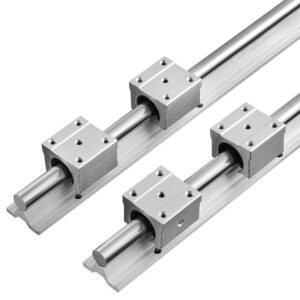
The carriage body, or housing, is the outer structure of the linear rail carriage and serves as the mounting point for the load. It is typically manufactured from high-strength materials such as hardened steel (e.g., SCM440, SUJ2), aluminum alloy (for lightweight applications), or engineering plastics (for corrosion-resistant or low-noise applications). The body is precision-machined to ensure tight tolerances, with internal grooves or channels designed to house the rolling or sliding elements and retainers. The top and/or sides of the carriage body feature mounting holes (threaded or through-holes) for attaching the load, and the bottom is shaped to fit seamlessly with the corresponding linear rail, ensuring proper alignment and load distribution.
2.2 Rolling/Sliding Elements
The rolling or sliding elements are the heart of the linear rail carriage, responsible for minimizing friction between the carriage and the rail. These elements vary based on the type of carriage (rolling vs. sliding) but are always engineered to reduce contact friction and distribute the load evenly. Common rolling elements include steel balls (for ball-type carriages), cylindrical rollers (for roller-type carriages), and needle rollers (for compact, high-load applications). Sliding elements, by contrast, often consist of low-friction coatings (e.g., PTFE, bronze) or self-lubricating bushings that glide directly along the rail surface.
2.3 Retainers (Cages)
Retainers—also known as cages or separators—are designed to separate and guide the rolling elements within the carriage body. They prevent the rolling elements from colliding with one another, reducing wear, noise, and friction, while ensuring uniform distribution of the elements along the internal grooves of the carriage. Retainers are typically made from engineering plastics (e.g., POM, PA66) or lightweight metals, and their design is optimized to minimize contact with both the rolling elements and the carriage body, further reducing friction. Some high-performance retainers feature lubrication grooves to store lubricant, enhancing long-term performance.
2.4 End Caps (Seals and End Plates)
End caps are mounted on the front and rear of the carriage body, serving two primary functions: sealing and guiding the rolling elements. Seals integrated into the end caps (e.g., lip seals, scraper seals) prevent dust, debris, moisture, and other contaminants from entering the carriage, which can damage the rolling elements and rail surface. They also help retain lubricant within the carriage, reducing the need for frequent maintenance. End plates (or end caps without integrated seals) guide the rolling elements as they circulate within the carriage, ensuring smooth, continuous motion.
2.5 Lubrication Ports
Most linear rail carriages feature lubrication ports (often located on the top or side of the carriage body) to facilitate the application of lubricant (grease or oil). Lubrication reduces friction between the rolling elements, carriage, and rail, minimizes wear, and prevents corrosion. Some advanced carriages incorporate self-lubricating systems (e.g., lubricant-impregnated retainers) that eliminate the need for manual lubrication, reducing maintenance requirements in hard-to-reach or high-volume applications.
2.6 Optional Accessories
Many linear rail carriages can be equipped with optional accessories to enhance performance or adapt to specific applications, including: dust covers (for extreme contamination environments), shock absorbers (to reduce impact loads during motion), position sensors (to monitor carriage position), and adjustable preload mechanisms (to eliminate backlash and improve rigidity).
3. Core Working Principles of Linear Rail Carriages
Linear rail carriages operate on one of two core principles—rolling friction or sliding friction—each tailored to specific load requirements, speed, precision, and environmental conditions. The choice of principle directly impacts the carriage’s performance characteristics, including friction level, load capacity, and maintenance needs.
3.1 Rolling Friction Principle (Most Common)
The vast majority of linear rail carriages operate on the rolling friction principle, which uses rolling elements (balls, rollers, or needles) to minimize friction between the carriage and the rail. When a load is applied to the carriage, the rolling elements rotate as the carriage moves along the rail, converting sliding friction (which is high) into rolling friction (which is significantly lower). This results in smooth, low-resistance motion with minimal wear.
In rolling-type carriages, the rolling elements circulate within the carriage body: as the carriage moves forward, the elements in contact with the rail roll forward, then enter the internal circulation channels in the carriage body, and return to the front of the contact area to repeat the cycle. This continuous circulation allows for unlimited linear travel (depending on the length of the rail) while maintaining consistent performance. The load is distributed evenly across multiple rolling elements, enabling the carriage to support high radial, axial, and moment loads without deformation.
3.2 Sliding Friction Principle
Sliding-type linear rail carriages operate on the sliding friction principle, where the carriage glides directly along the rail surface with the help of low-friction materials or coatings. Unlike rolling-type carriages, they do not use rolling elements; instead, the carriage’s contact surface is lined with a self-lubricating material (e.g., PTFE, bronze, or graphite) that reduces friction between the carriage and rail.
This principle is ideal for applications where cost is a primary concern, or where high precision is not required (e.g., light-load, low-speed applications). Sliding-type carriages are often simpler in design, more compact, and resistant to contamination (due to their solid contact surface), but they generate more friction than rolling-type carriages, resulting in lower speed capabilities and higher wear over time. They are also more susceptible to backlash if not properly designed.
4. Common Types of Linear Rail Carriages: Classification and Key Features
Linear rail carriages are classified based on their working principle (rolling vs. sliding), rolling element type, cross-sectional design, and load capacity. Below are the most widely used types, along with their unique characteristics, advantages, and limitations:
4.1 Ball-Type Linear Rail Carriages
Ball-type linear rail carriages are the most common type, operating on the rolling friction principle with steel balls as the rolling elements. They are designed for high precision, low friction, and moderate to high load capacities, making them suitable for a wide range of applications. The carriage body features internal grooves (matching the rail’s cross-section) that guide the steel balls, which circulate through the carriage via end caps.
Key features: Available in two main designs—profile rail carriages (paired with square or rectangular profile rails) and round rail carriages (paired with cylindrical rails). Profile rail ball carriages offer high rigidity and accuracy, with low backlash, while round rail ball carriages are simpler, more cost-effective, and easier to install. They support speeds up to several meters per second, have high repeatability (±0.001 mm or better), and are suitable for both light and heavy loads (depending on size). Modern ball-type carriages often feature adjustable preload (via shims or screws) to eliminate backlash and improve rigidity.
Limitations: Less suitable for applications with high moment loads (tilting forces), as the small contact area of the balls can lead to deformation or premature wear. They are also more susceptible to contamination than roller-type carriages, requiring effective sealing in harsh environments.
4.2 Roller-Type Linear Rail Carriages
Roller-type linear rail carriages use cylindrical rollers as the rolling elements, offering higher load capacity and rigidity than ball-type carriages. The cylindrical rollers have a larger contact area with the rail, distributing the load more evenly and enabling the carriage to withstand higher radial, axial, and moment loads. They are commonly used in heavy-duty applications where rigidity and load capacity are critical.
Key features: Available in two subtypes—linear roller bearings (for round rails) and profile rail roller carriages (for square/rectangular rails). Profile rail roller carriages are particularly popular in heavy machinery, as they offer exceptional rigidity and can support loads up to several tons. They generate slightly more friction than ball-type carriages but provide superior stability under heavy loads or high acceleration. Roller-type carriages are also more resistant to shock loads and vibration, making them suitable for harsh industrial environments.
Limitations: Higher cost than ball-type carriages, and slightly lower precision (due to the larger contact area). They are also heavier and require more precise alignment between the carriage and rail to ensure smooth motion.
4.3 Needle Roller-Type Linear Rail Carriages
Needle roller-type linear rail carriages are a compact variant of roller-type carriages, using thin, cylindrical needle rollers as the rolling elements. They are designed for applications where space is limited (e.g., small machinery, medical devices) but high load capacity is still required. The needle rollers have a high length-to-diameter ratio, enabling them to support high loads in a compact design.
Key features: Extremely compact profile, making them ideal for tight spaces where other carriage types cannot fit. They offer high load capacity relative to their size, supporting radial loads up to several thousand Newtons. Needle roller carriages are often used in linear motion systems with limited installation space, such as robotics, aerospace components, and small precision instruments.
Limitations: Lower rigidity than standard roller-type carriages, and less suitable for applications with high moment loads. They require careful lubrication to prevent wear, as the small contact area of the needle rollers can lead to high pressure.
4.4 Sliding-Type Linear Rail Carriages
Sliding-type linear rail carriages (also known as linear bushings or plain bearing carriages) operate on the sliding friction principle, with no rolling elements. They are typically composed of a carriage body with a sliding surface lined with a low-friction material (e.g., PTFE, bronze, or self-lubricating plastic) that glides along the rail.
Key features: Simple design, low cost, and high resistance to contamination (due to the solid contact surface). They are available in both round rail and profile rail variants, with round rail sliding carriages being the most common. Sliding-type carriages are suitable for light-load, low-speed applications where precision is not critical (e.g., manual sliding mechanisms, light-duty conveyors). Some self-lubricating variants eliminate the need for manual lubrication, reducing maintenance requirements.
Limitations: Higher friction than rolling-type carriages, resulting in lower speed capabilities and higher wear over time. They have more backlash than rolling-type carriages, making them unsuitable for high-precision applications. They also generate more heat during operation, which can affect performance in high-speed applications.
4.5 Other Specialized Linear Rail Carriages
- Magnetic Linear Rail Carriages: A specialized type that uses magnetic levitation (maglev) to eliminate physical contact between the carriage and rail, resulting in zero friction, noise, and wear. They are used in ultra-high-precision applications (e.g., semiconductor manufacturing, laboratory equipment) where even minimal friction can compromise performance. However, they are costly and require complex control systems.
- Corrosion-Resistant Linear Rail Carriages: Manufactured from stainless steel, aluminum alloy, or engineering plastics with corrosion-resistant coatings, these carriages are designed for use in harsh environments (e.g., food processing, marine applications, chemical plants) where moisture, chemicals, or saltwater can damage standard carriages.
- Low-Noise Linear Rail Carriages: Optimized for quiet operation, with noise-dampening retainers, lubricants, and seal designs. They are used in applications where noise is a concern (e.g., medical equipment, consumer electronics, office machinery).
- High-Speed Linear Rail Carriages: Engineered for ultra-high-speed motion (up to 10 m/s or more), with lightweight materials, low-friction rolling elements, and aerodynamic designs. They are used in high-speed automation, packaging machinery, and robotics.
5. Applications of Linear Rail Carriages Across Industries
Linear rail carriages are essential components in virtually every industry that requires precise, smooth linear motion. Their versatility—from light-load, high-precision applications to heavy-duty, high-speed operations—makes them indispensable in modern manufacturing and automation. Below are key applications in major industries:
5.1 Manufacturing and Automation
In manufacturing and automation, linear rail carriages are used to enable precise movement of assembly lines, robotic arms, and machine tools. Examples include:
- CNC Machines: Linear rail carriages guide the movement of the spindle, tool turret, and worktable in CNC lathes, mills, and routers, ensuring high precision and repeatability in cutting, drilling, and milling operations.
- Automated Assembly Lines: Carriages are used to move conveyor belts, product carriers, and robotic arms along assembly lines, enabling high-speed, consistent production of electronics, automotive parts, and consumer goods.
- Packaging Machinery: Linear rail carriages guide the movement of packaging heads, sealing mechanisms, and product feeders, ensuring precise alignment and high-speed packaging of food, beverages, and pharmaceuticals.
5.2 Robotics and Industrial Automation
Robotics relies heavily on linear rail carriages to enable precise, smooth motion of robotic arms, end effectors, and mobile robots. Examples include:
- Industrial Robots: Linear rail carriages are used in Cartesian robots (gantry robots) to guide the movement of the X, Y, and Z axes, enabling precise positioning of the end effector for pick-and-place, welding, and assembly tasks.
- Collaborative Robots (Cobots): Low-noise, high-precision linear rail carriages are used in cobots to ensure safe, smooth movement around human workers, with minimal vibration and backlash.
- Mobile Robots: Carriages are used in the linear motion systems of automated guided vehicles (AGVs) and autonomous mobile robots (AMRs) to enable precise movement along predefined paths in warehouses and factories.
5.3 Aerospace and Defense
In the aerospace and defense industry, linear rail carriages are used in applications where high precision, durability, and resistance to extreme conditions are critical. Examples include:
- Aircraft Components: Carriages are used in the flight control systems (e.g., ailerons, elevators), landing gear mechanisms, and cabin interior systems (e.g., seat adjustments) of aircraft.
- Defense Equipment: Linear rail carriages are used in missile guidance systems, radar antennas, and armored vehicle components, where they must withstand shock, vibration, and extreme temperatures.
- Aerospace Testing: High-precision carriages are used in test equipment (e.g., wind tunnel models, structural testing rigs) to enable precise movement and positioning of test samples.
5.4 Medical Devices and Healthcare
Linear rail carriages are used in medical devices where precision, sterility, and low noise are essential. Examples include:
- Medical Imaging Equipment: Carriages guide the movement of X-ray tables, CT scanners, and MRI machines, ensuring precise positioning of the patient and imaging equipment for accurate diagnostics.
- Surgical Robots: High-precision linear rail carriages are used in surgical robots to enable precise movement of the surgical instruments, reducing invasiveness and improving surgical outcomes.
- Laboratory Equipment: Carriages are used in pipetting systems, centrifuges, and sample handling equipment, ensuring precise movement of samples and reagents for accurate testing.
5.5 Other Industries
- Electronics: Linear rail carriages are used in semiconductor manufacturing equipment (e.g., wafer handlers, chip mounters) to enable ultra-precise movement of delicate electronic components.
- Automotive: Carriages are used in automotive assembly lines (e.g., welding robots, paint application systems) and in vehicle components (e.g., seat adjustments, sunroof mechanisms).
- Warehousing and Logistics: Linear rail carriages are used in automated storage and retrieval systems (AS/RS), conveyor systems, and palletizers, enabling high-speed, precise movement of goods.
- Renewable Energy: Carriages are used in solar panel tracking systems and wind turbine components, enabling precise alignment of solar panels with the sun and smooth operation of wind turbine blades.
6. Key Factors to Consider When Choosing a Linear Rail Carriage
Selecting the right linear rail carriage depends on several critical factors, as no single carriage type is suitable for all applications. Below are the key considerations to ensure accurate, reliable, and efficient linear motion:
6.1 Load Requirements
The first step is to determine the load the carriage will need to support, including radial load (load perpendicular to the rail), axial load (load parallel to the rail), and moment load (tilting force). Ball-type carriages are suitable for moderate loads, while roller-type carriages are better for heavy loads and high moment loads. Needle roller carriages are ideal for compact applications with moderate to high loads.
6.2 Precision and Repeatability
Precision (positional accuracy) and repeatability (ability to return to the same position consistently) are critical for high-precision applications (e.g., CNC machines, medical devices). Ball-type carriages offer higher precision (±0.001 mm or better) than roller-type or sliding-type carriages. For ultra-high precision, magnetic linear rail carriages or precision-ground profile rail carriages are recommended.
6.3 Speed and Acceleration
Consider the maximum speed and acceleration required for the application. Ball-type carriages are suitable for high-speed applications (up to several meters per second), while roller-type carriages are better for high acceleration (due to their higher rigidity). Sliding-type carriages are limited to low speeds due to higher friction.
6.4 Installation Space and Rail Type
The available installation space will dictate the size and type of carriage. Needle roller carriages are ideal for compact spaces, while roller-type carriages are larger and require more space. The type of rail (profile rail vs. round rail) should also be considered: profile rail carriages offer higher rigidity and precision, while round rail carriages are simpler and more cost-effective.
6.5 Environmental Conditions
Environmental factors such as dust, debris, moisture, chemicals, and temperature extremes will impact the choice of carriage. Corrosion-resistant carriages (stainless steel, plastic) are recommended for harsh environments (e.g., food processing, marine applications). Sealed carriages with scraper seals are essential for dusty or dirty environments to prevent contamination.
6.6 Maintenance Requirements
Consider the maintenance needs of the carriage. Rolling-type carriages require regular lubrication to minimize wear, while self-lubricating sliding-type carriages or magnetic carriages require less maintenance. In hard-to-reach applications, self-lubricating or low-maintenance carriages are preferred.
6.7 Cost and Total Cost of Ownership
Linear rail carriages range in price from a few dollars (basic sliding-type carriages) to several hundred dollars (high-precision ball or roller-type carriages). Consider not just the initial purchase price, but also ongoing costs (e.g., lubrication, maintenance, replacement parts). High-precision carriages may have a higher upfront cost but lower long-term costs due to their durability and reduced wear.
7. Technological Advancements in Linear Rail Carriages
In recent years, advancements in materials, manufacturing, and engineering have transformed linear rail carriages, making them more precise, durable, efficient, and user-friendly. Key advancements include:
7.1 High-Precision Manufacturing
Advancements in precision machining (e.g., CNC grinding, EDM machining) have enabled the production of linear rail carriages with tighter tolerances, improved surface finishes, and better alignment. This has resulted in higher positional accuracy and repeatability, making carriages suitable for ultra-precise applications (e.g., semiconductor manufacturing, medical robotics).
7.2 Advanced Materials
The use of advanced materials has improved the durability and performance of linear rail carriages. For example: Ceramic Rolling Elements: Ceramic balls (e.g., silicon nitride) are lighter, harder, and more corrosion-resistant than steel balls, reducing friction and wear and enabling higher speeds.Composite Materials: Carbon fiber-reinforced plastics (CFRP) are used in carriage bodies for lightweight, high-rigidity applications (e.g., aerospace, robotics), reducing overall system weight and improving energy efficiency.Coatings: Advanced coatings (e.g., DLC, TiN) are applied to carriage surfaces and rolling elements to reduce friction, improve wear resistance, and enhance corrosion resistance.
7.3 Self-Lubricating Systems
Self-lubricating linear rail carriages have become increasingly popular, eliminating the need for manual lubrication. These carriages use lubricant-impregnated retainers, self-lubricating bushings, or oil-embedded rolling elements that release lubricant gradually during operation. This reduces maintenance requirements, extends the carriage’s lifespan, and is ideal for hard-to-reach or high-volume applications.
7.4 Smart Linear Rail Carriages
The integration of sensors and IoT technology has led to the development of smart linear rail carriages, which can monitor their own performance in real time. Sensors embedded in the carriage measure parameters such as temperature, vibration, friction, and load, providing data that can be used to predict maintenance needs, detect faults early, and optimize system performance. Smart carriages are particularly useful in industrial automation and high-reliability applications (e.g., aerospace, medical devices).
7.5 Low-Noise and Low-Vibration Designs
Advancements in retainer design, rolling element geometry, and lubrication have resulted in linear rail carriages with reduced noise and vibration. Noise-dampening retainers (e.g., POM with noise-reducing additives) and optimized rolling element spacing minimize noise during operation, making carriages suitable for quiet environments (e.g., medical equipment, office machinery). Low-vibration designs also improve precision and reduce wear on other system components.
7.6 Miniaturization
As industries such as electronics and medical devices demand smaller, more compact linear motion systems, manufacturers have developed miniaturized linear rail carriages. These carriages feature a compact profile, small rolling elements (e.g., micro-balls, needle rollers), and lightweight materials, while still maintaining high load capacity and precision. Miniaturized carriages are used in micro-robotics, wearable devices, and small laboratory equipment.
8. Maintenance and Care of Linear Rail Carriages
To ensure accurate, reliable performance and extend the lifespan of linear rail carriages, regular maintenance and care are essential. Proper maintenance minimizes wear, prevents contamination, and reduces the risk of system failure. Key maintenance practices include:
8.1 Regular Lubrication
Lubrication is critical for reducing friction between the carriage, rolling elements, and rail. Most rolling-type carriages require periodic lubrication with grease or oil (depending on the application). The frequency of lubrication depends on the operating speed, load, and environmental conditions—high-speed or heavy-load applications require more frequent lubrication. Self-lubricating carriages should be inspected regularly to ensure the lubricant supply is sufficient.
8.2 Contamination Control
Dust, debris, moisture, and chemicals can damage the rolling elements, rail surface, and carriage body, leading to premature wear and reduced performance. Regularly clean the carriage and rail with a soft cloth or brush to remove debris. Ensure the carriage’s seals are intact and functioning properly—replace worn or damaged seals immediately to prevent contamination. In harsh environments, use additional dust covers or protective shields.
8.3 Inspection and Alignment
Inspect the carriage regularly for signs of wear, damage, or misalignment. Check the rolling elements for chipping, cracking, or wear—replace worn or damaged rolling elements immediately. Inspect the carriage body for deformation or damage. Ensure the carriage is properly aligned with the rail—misalignment can cause uneven wear, increased friction, and reduced precision. Adjust the alignment if necessary.
8.4 Preload Adjustment
Many rolling-type carriages feature adjustable preload (via shims or screws) to eliminate backlash and improve rigidity. Over time, preload may decrease due to wear, leading to increased backlash and reduced precision. Regularly check the preload and adjust it as needed to maintain optimal performance.
8.5 Proper Storage and Handling
Store linear rail carriages in a clean, dry environment with a stable temperature (avoid extreme heat, cold, or humidity). When handling carriages, avoid dropping or impacting them, as this can damage the rolling elements or carriage body. Store carriages with the rail attached (if possible) to prevent misalignment or damage to the contact surfaces.
8.6 Operator Training
Ensure operators are properly trained to use and maintain the linear rail carriage system. Operators should understand how to inspect the carriage, apply lubricant, and identify signs of wear or damage. Improper operation (e.g., overloading, misalignment, or neglecting lubrication) can lead to premature failure and costly repairs.
9. Conclusion
Linear rail carriages are indispensable components in modern linear motion systems, enabling precise, smooth, and efficient movement across a wide range of industries. From the versatile ball-type carriage to the heavy-duty roller-type carriage, each type is tailored to specific load requirements, precision needs, and environmental conditions. The core structure—carriage body, rolling/sliding elements, retainers, and seals—works together to minimize friction, support loads, and ensure durability.
When selecting a linear rail carriage, it is essential to consider factors such as load requirements, precision, speed, installation space, environmental conditions, and maintenance needs. Technological advancements in materials, manufacturing, and smart technology have transformed linear rail carriages, making them more precise, durable, and user-friendly than ever before. Regular maintenance—including lubrication, contamination control, and inspection—ensures the carriage’s reliability and longevity, minimizing downtime and reducing costs.
As industries continue to demand higher precision, faster speeds, and more efficient linear motion systems, linear rail carriages will evolve further, incorporating new materials, designs, and technologies to meet emerging needs. Whether in a high-speed automated assembly line, a ultra-precise medical robot, or a heavy-duty CNC machine, the linear rail carriage remains a cornerstone of modern engineering, enabling the precise motion that drives innovation and efficiency around the world.