

Introduction
Linear motion systems are essential in CNC machines, automation, robotics, and material handling. While steel linear rails dominate heavy-duty applications, aluminum guide rails have emerged as a lightweight, corrosion-resistant, and cost-effective alternative. They are ideal for medium-duty applications where weight reduction, flexibility, and easy installation are important.
Aluminum guide rails combine the benefits of lightweight construction with sufficient rigidity for a wide range of industrial and commercial systems. This article provides a comprehensive overview of aluminum guide rails, including their working principles, types, advantages, applications, and selection tips.
What Are Aluminum Guide Rails?
An aluminum guide rail is a linear motion component designed to guide a carriage or slider along a straight path. The rail itself is made from high-strength aluminum alloy, often anodized for wear resistance and corrosion protection.
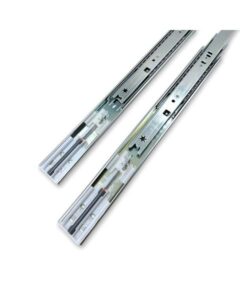
Key Components of an Aluminum Guide Rail System
Aluminum Rail: Extruded or machined aluminum profile
Carriage or Slider: Houses rolling elements or sliding bearings
Bearings or Bushings: Reduce friction and support the load
End Caps & Lubrication Ports: Protect against dust and facilitate maintenance
Mounting Features: Holes or slots for easy installation
The lightweight nature of aluminum allows designers to reduce system mass, improving speed, energy efficiency, and ease of handling.
How Aluminum Guide Rails Work
Aluminum guide rails operate on the principle of guided linear motion:
The aluminum rail is mounted securely to a base
A carriage or slider moves along the rail
Rolling elements (balls or rollers) or sliding bushings reduce friction
The load is distributed along the contact surface for stability
Smooth, repeatable, and controlled linear motion is achieved
Aluminum rails can be paired with ball bearings, roller bearings, or polymer bushings, depending on load and precision requirements.
Types of Aluminum Guide Rails
1. Aluminum Profile Rail
Extruded aluminum with T-slots or mounting channels
Compatible with linear carriages or bearings
Lightweight and versatile for modular systems
Applications: CNC light-duty machines, automation frames, 3D printers
2. Anodized Aluminum Linear Rail
Surface-treated for corrosion and wear resistance
Improves longevity and reduces maintenance
Offers a smooth sliding or rolling surface
Applications: Humid or slightly corrosive environments, laboratory automation
3. Aluminum Round Shaft Rails
Round aluminum rods for linear bushings or sliders
Easy to cut and install
Suitable for lightweight motion systems
Applications: Robotic arms, inspection equipment, conveyors
4. Aluminum Rail with Integrated Bearing Track
Rail includes built-in channels for ball or roller bearings
Simplifies assembly
Reduces the need for separate bearing housings
Applications: Precision automation and modular assembly lines
Advantages of Aluminum Guide Rails
Lightweight: Reduces overall system mass
Corrosion-Resistant: Anodized or alloyed for durability
Easy to Install and Modify: Extrusions can be cut, drilled, or mounted easily
Cost-Effective: Lower manufacturing cost than steel rails
Versatile: Suitable for medium-duty linear motion applications
Low Maintenance: Lighter loads mean less wear and longer service life
Aluminum guide rails are ideal where speed, modularity, and weight reduction are priorities.
Applications of Aluminum Guide Rails
Aluminum guide rails are widely used in industries that require medium-load, lightweight, and flexible linear motion:
CNC Machines: Light milling and routing axes
Automation Equipment: Pick-and-place systems, conveyors
Robotics: Lightweight linear axes
3D Printers: Smooth, precise motion with reduced weight
Laboratory Automation: Sample handling and inspection systems
Packaging Machinery: Light to medium product handling
Their adaptability allows them to be used in space-constrained, portable, and modular systems.
Aluminum Guide Rails vs Steel Linear Rails
| Feature | Aluminum Guide Rail | Steel Linear Rail |
|---|---|---|
| Weight | Lightweight | Heavy |
| Corrosion Resistance | Excellent | Needs coating or stainless steel |
| Rigidity | Medium | High |
| Cost | Lower | Higher |
| Installation | Easy | Requires precise alignment |
| Applications | Light-to-medium load | Medium-to-heavy load |
Aluminum rails are preferred when weight, cost, and corrosion resistance are more important than ultimate load capacity.
How to Select the Right Aluminum Guide Rail
Load Capacity: Consider static and dynamic loads
Rail Length and Travel: Ensure compatibility with stroke requirements
Bearing Type: Choose ball bearings for smooth motion or bushings for simpler systems
Environmental Conditions: Use anodized or coated rails for humid or corrosive environments
Precision Needs: Aluminum rails support moderate to high precision, but steel rails are preferred for ultra-precision applications
Correct selection ensures long-term reliability, smooth motion, and low maintenance.
Installation and Maintenance Tips
Mount rails on a flat, rigid surface
Use correct torque values for mounting screws
Regularly inspect bearings and sliders
Lubricate as recommended, especially for rolling-bearing systems
Keep rails clean from dust, debris, and cutting chips
Proper installation and maintenance maximize service life and reduce operational costs.
Frequently Asked Questions (FAQs)
1. What are aluminum guide rails used for?
They guide linear motion in CNC machines, automation systems, robotics, 3D printers, and light industrial equipment.
2. Can aluminum rails handle heavy loads?
Aluminum rails are best for medium loads. Steel rails are more suitable for heavy-duty applications.
3. Do aluminum guide rails require lubrication?
Yes, rolling-bearing types require periodic lubrication. Sliding bushings may be self-lubricating.
4. Are aluminum guide rails corrosion-resistant?
Yes, anodized or alloyed aluminum provides excellent corrosion resistance.
5. Can aluminum rails be cut or customized?
Yes, aluminum extrusions can be cut, drilled, or modified easily, making them flexible for custom systems.
Conclusion
Aluminum guide rails provide a lightweight, cost-effective, and reliable linear motion solution for a wide range of industrial and automation applications. Their easy installation, corrosion resistance, and moderate load capacity make them ideal for CNC machines, robotics, 3D printing, and packaging equipment. By choosing the right aluminum rail type, bearing system, and configuration, engineers can achieve smooth, precise, and long-lasting linear motion in their designs.