

Introduction
In modern machinery and automation systems, achieving smooth, stable, and repeatable linear movement is essential for precision and efficiency. One of the most widely used solutions for this purpose is the linear sliding rail. From CNC machines and industrial automation to medical devices and packaging equipment, linear sliding rails play a critical role in guiding components along a straight path with controlled friction and reliable load support.
Linear sliding rails are valued for their simple structure, stable operation, and versatility, making them suitable for both light-duty and industrial applications. This article provides a comprehensive overview of linear sliding rails, including their working principles, types, materials, advantages, applications, and selection considerations.
What Is a Linear Sliding Rail?
A linear sliding rail is a mechanical guide system designed to allow a component to move linearly along a fixed path using sliding contact or rolling elements. It typically consists of:
Rail (Guide): A rigid track mounted to a machine base
Slider or Carriage: The moving component that travels along the rail
Sliding or Bearing Interface: Controls friction and supports loads
Mounting Features: Holes or slots for secure installation
Unlike rotary motion systems, linear sliding rails provide straight-line movement with consistent guidance, ensuring accuracy and stability.
How a Linear Sliding Rail Works
Linear sliding rails function by guiding motion through either sliding friction or rolling contact, depending on the design:
The rail is mounted precisely to a rigid surface
The slider or carriage is installed on the rail
The sliding or bearing interface reduces friction
Loads are distributed evenly along the rail
Smooth and controlled linear motion is achieved
This design minimizes vibration and maintains alignment throughout the movement.
Types of Linear Sliding Rails
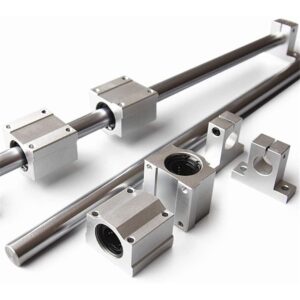
1. Sliding-Type Linear Sliding Rail
Uses plain bearings or polymer liners
Simple structure with fewer moving parts
Moderate friction but excellent stability
Applications: Light machinery, automation fixtures, packaging equipment
2. Ball Bearing Linear Sliding Rail
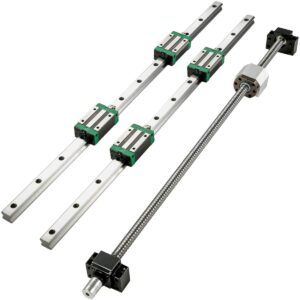
Uses recirculating steel balls
Smooth and low-friction movement
High precision and repeatability
Applications: CNC machines, robotics, precision positioning systems
3. Roller Linear Sliding Rail
Uses cylindrical rollers instead of balls
Higher load capacity and rigidity
Better performance under shock and vibration
Applications: Heavy-duty industrial equipment, gantry systems
4. Miniature Linear Sliding Rail
Compact and lightweight design
Suitable for limited installation space
Lower load capacity but high accuracy
Applications: Medical devices, laboratory automation, optical instruments
Materials and Construction
Linear sliding rails are manufactured from carefully selected materials to ensure durability and performance:
Hardened Carbon Steel: High load capacity and wear resistance
Stainless Steel: Corrosion resistance for harsh environments
Aluminum Alloy: Lightweight applications with lower load demands
Engineering Plastics: Low noise and maintenance for light loads
Precision grinding and surface treatments improve smoothness and extend service life.
Advantages of Linear Sliding Rails
Smooth and Stable Linear Motion
High Load-Carrying Capability (depending on design)
Compact and Space-Efficient Structure
Low Maintenance Requirements
Cost-Effective for Many Applications
Versatile Installation Options
These benefits make linear sliding rails a preferred solution in both industrial and commercial systems.
Applications of Linear Sliding Rails
Linear sliding rails are widely used across various industries:
CNC Machinery: Guiding tool heads and worktables
Industrial Automation: Conveyors, pick-and-place systems
Robotics: Linear axes and motion modules
Packaging Machinery: High-speed material handling
Medical Equipment: Imaging and diagnostic devices
Furniture and Equipment Slides: Controlled and quiet motion
Their adaptability allows them to perform reliably in both precision and heavy-duty environments.
Linear Sliding Rail vs Linear Guide Rail
| Feature | Linear Sliding Rail | Linear Guide Rail |
|---|---|---|
| Motion Type | Sliding or rolling | Rolling (ball/roller) |
| Precision | Medium to high | High |
| Load Capacity | Medium to high | High |
| Cost | Lower to moderate | Higher |
| Maintenance | Low to moderate | Moderate |
| Applications | General linear motion | High-precision machinery |
Linear sliding rails are often chosen when simplicity, stability, and cost control are priorities.
How to Choose the Right Linear Sliding Rail
1. Load Requirements
Consider static, dynamic, and moment loads.
2. Precision Needs
High-precision applications may require ball or roller designs.
3. Travel Length
Ensure the rail length matches the required stroke.
4. Operating Environment
Dust, moisture, and temperature affect material choice.
5. Installation Space
Compact designs are ideal for space-limited systems.
Installation and Maintenance Tips
Mount rails on flat, rigid surfaces
Align rails accurately to avoid binding
Lubricate according to manufacturer recommendations
Clean rails regularly to remove debris
Inspect sliders and bearings for wear
Proper installation and routine maintenance ensure long-term performance and reliability.
Frequently Asked Questions (FAQs)
1. What is a linear sliding rail used for?
It is used to guide components along a straight path with smooth and controlled linear motion.
2. Are linear sliding rails suitable for CNC machines?
Yes, especially ball-bearing and roller types designed for precision and rigidity.
3. Do linear sliding rails require lubrication?
Most designs require lubrication, although some sliding types use self-lubricating materials.
4. Can linear sliding rails handle heavy loads?
Roller-type linear sliding rails are suitable for heavy-duty applications.
5. How long do linear sliding rails last?
With proper installation and maintenance, they can operate reliably for many years.
Conclusion
A linear sliding rail is an essential component for achieving smooth, accurate, and stable linear motion in modern machinery. Its versatility, cost-effectiveness, and wide range of configurations make it suitable for applications ranging from light automation to heavy industrial systems.
By understanding the different types, materials, and selection criteria, engineers and manufacturers can choose the right linear sliding rail to improve performance, extend equipment life, and ensure reliable operation.