

Introduction to Linear Rails
Linear rails are one of the most important components in modern precision machinery. They provide smooth, controlled motion along a straight path and are widely used in automation, robotics, manufacturing equipment, and CNC machines.
Simply put, linear rails guide moving parts with high accuracy and minimal friction. They ensure that machinery moves exactly where it should without wobbling or deviation.
Today, industries rely heavily on linear rails to achieve high precision, speed, and reliability in automated systems. Without them, many advanced manufacturing processes would be impossible.
In this detailed guide, we will explore how linear rails work, their components, types, advantages, applications, and maintenance strategies.
Comprehensive Outline
| Heading Level | Section |
|---|---|
| H1 | Linear Rails: 7 Powerful Insights Into Precision Motion Systems |
| H2 | Introduction to Linear Rails |
| H2 | What Are Linear Rails? |
| H3 | Definition and Core Function |
| H3 | How Linear Motion Systems Work |
| H2 | Key Components of Linear Rails |
| H3 | Rail Track |
| H3 | Carriage or Slider |
| H3 | Ball Bearings or Rollers |
| H3 | Lubrication System |
| H2 | Types of Linear Rails |
| H3 | Ball Bearing Linear Rails |
| H3 | Roller Linear Guides |
| H3 | Miniature Linear Rails |
| H3 | Profile Linear Guides |
| H2 | Working Principle of Linear Rails |
| H3 | Rolling Motion Technology |
| H3 | Load Distribution Mechanism |
| H2 | Advantages of Linear Rails |
| H3 | High Precision Movement |
| H3 | Low Friction Operation |
| H3 | High Load Capacity |
| H3 | Durability and Reliability |
| H2 | Applications of Linear Rails |
| H3 | CNC Machines |
| H3 | Industrial Automation |
| H3 | Robotics |
| H3 | Medical Equipment |
| H3 | Semiconductor Manufacturing |
| H2 | Materials Used in Linear Rails |
| H3 | Hardened Steel |
| H3 | Stainless Steel |
| H3 | Aluminum Alloys |
| H2 | Linear Rails vs Linear Bushings |
| H3 | Performance Differences |
| H3 | Cost and Maintenance Comparison |
| H2 | How to Choose the Right Linear Rails |
| H3 | Load Capacity Requirements |
| H3 | Precision Needs |
| H3 | Environmental Conditions |
| H2 | Installation Guidelines |
| H3 | Surface Preparation |
| H3 | Alignment Procedures |
| H3 | Mounting Best Practices |
| H2 | Maintenance and Lubrication |
| H3 | Preventive Maintenance |
| H3 | Lubrication Techniques |
| H2 | Common Problems and Troubleshooting |
| H3 | Wear and Tear |
| H3 | Contamination |
| H3 | Misalignment Issues |
| H2 | Future Trends in Linear Rail Technology |
| H3 | Smart Motion Systems |
| H3 | Advanced Materials |
| H2 | FAQs About Linear Rails |
| H2 | Conclusion |
What Are Linear Rails?
Definition and Core Function
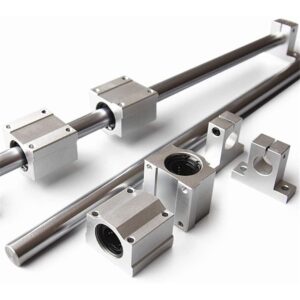
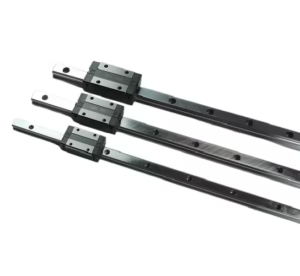
Linear rails are mechanical components that guide moving parts in a straight line with minimal resistance. They consist of a rail track and a moving carriage that travels along the rail using rolling elements such as balls or rollers.
Their primary function is to support and guide loads while allowing smooth linear motion. These systems are essential in equipment where precision movement is required.
For example, in CNC machines, linear rails allow cutting tools to move accurately across materials, ensuring precise machining operations.
The core benefits include:
High precision motion
Reduced friction
Improved machine efficiency
Long operational lifespan
Modern linear rails are engineered with advanced materials and manufacturing techniques to ensure consistent performance even in demanding industrial environments.

How Linear Motion Systems Work
Linear motion systems rely on rolling contact rather than sliding contact. This drastically reduces friction and improves efficiency.
The motion occurs when ball bearings or rollers circulate inside the carriage while moving along the rail track. These rolling elements continuously cycle through internal channels, enabling smooth movement.
The process works like this:
The rail is fixed to a machine frame.
The carriage is mounted on the rail.
Ball bearings roll between the carriage and rail.
The carriage moves smoothly along the track.
This rolling mechanism allows machines to achieve extremely precise movements.
Because of this, linear rails are widely used in automation systems, packaging equipment, semiconductor manufacturing machines, and 3D printers.
Key Components of Linear Rails
Understanding the components of linear rails helps explain why they are so efficient and reliable.
Rail Track
The rail track is the stationary component mounted onto the machine frame. It provides the path along which the carriage moves.
High-quality rail tracks are typically made from hardened steel to ensure durability and wear resistance.
The surface of the rail is precisely ground to maintain extremely tight tolerances.
Key characteristics include:
High rigidity
Smooth surface finish
Precision alignment capability
Carriage or Slider
The carriage (also called a block or slider) is the moving component attached to the machine part that needs motion.
Inside the carriage are recirculating ball bearings or rollers that enable smooth motion along the rail.
Features of modern carriages include:
High load capacity
Compact design
Built-in lubrication channels
Sealing systems to prevent contamination
Ball Bearings or Rollers
Rolling elements are responsible for reducing friction.
Two common types include:
Ball bearings
Provide smooth and quiet motion
Ideal for moderate loads
Widely used in automation equipment
Rollers
Higher load capacity
Greater rigidity
Used in heavy industrial machines
The choice between them depends on load, speed, and accuracy requirements.
Lubrication System
Lubrication is essential for reducing wear and maintaining smooth motion.
Linear rails typically use:
Grease lubrication
Oil lubrication
Automatic lubrication systems
Proper lubrication helps extend the life of the rail and prevents corrosion.
Types of Linear Rails
Linear rails come in several configurations designed for different applications.
Ball Bearing Linear Rails
These are the most common type used in industrial machinery.
They use recirculating ball bearings to reduce friction and support smooth motion.
Advantages include:
High precision
Low friction
Cost effectiveness
They are commonly used in CNC machines, automation equipment, and pick-and-place systems.
Roller Linear Guides
Roller linear guides use cylindrical rollers instead of ball bearings.
Because rollers have a larger contact surface, they offer:
Higher rigidity
Greater load capacity
Improved resistance to deformation
These rails are ideal for heavy-duty industrial machines.
Miniature Linear Rails
Miniature rails are designed for compact equipment where space is limited.
Typical applications include:
Medical devices
Laboratory equipment
Optical instruments
Small robotics systems
Despite their small size, they provide excellent precision.
Profile Linear Guides
Profile linear guides are heavy-duty rails with a rectangular cross-section.
They provide superior strength and rigidity, making them suitable for high-load applications.
These guides are widely used in:
Industrial automation
CNC machining centers
Injection molding machines
Working Principle of Linear Rails
Rolling Motion Technology
The key innovation behind linear rails is rolling motion technology.
Instead of sliding surfaces rubbing against each other, rolling elements carry the load and circulate within the carriage.
This significantly reduces friction and allows smoother motion.
Benefits include:
Lower energy consumption
Reduced heat generation
Improved accuracy
Load Distribution Mechanism
Load distribution plays a crucial role in linear rail performance.
Loads are distributed across multiple rolling elements, ensuring that no single point bears excessive stress.
This design improves:
Load capacity
Stability
Service life
Modern designs use four-point contact systems that distribute forces evenly in multiple directions.

Advantages of Linear Rails
Linear rails offer many advantages that make them essential in precision engineering.
High Precision Movement
Precision is the biggest advantage of linear rails.
They maintain extremely tight motion tolerances, which is critical for CNC machining and semiconductor manufacturing.
Low Friction Operation
Rolling elements drastically reduce friction compared to sliding systems.
This leads to smoother motion and higher efficiency.
High Load Capacity
Despite their compact size, linear rails can support significant loads due to optimized load distribution.
Durability and Reliability
With proper maintenance, linear rails can operate for years without significant performance degradation.
Applications of Linear Rails
Linear rails are used in numerous industries.
CNC Machines
CNC machining centers rely heavily on linear rails to move cutting tools with extreme precision.
Industrial Automation
Automation systems use linear rails for conveyor systems, pick-and-place machines, and robotic arms.
Robotics
Robotic systems require accurate and repeatable motion, making linear rails essential components.
Medical Equipment
Medical imaging devices and surgical robots often use miniature linear rails for precise motion control.
Semiconductor Manufacturing
The semiconductor industry demands ultra-high precision motion systems for chip manufacturing.
Materials Used in Linear Rails
Hardened Steel
Hardened steel is the most common material used because of its strength and wear resistance.
Stainless Steel
Stainless steel rails are used in environments requiring corrosion resistance.
Examples include food processing and medical equipment.
Aluminum Alloys
Aluminum rails are lightweight and often used in smaller automation systems.
Linear Rails vs Linear Bushings
Performance Differences
Linear rails offer higher precision and load capacity compared to linear bushings.
Bushings rely on sliding contact, which produces more friction.
Cost and Maintenance Comparison
Bushings are cheaper but require more maintenance and provide less accuracy.
Linear rails are more expensive but deliver better long-term performance.
How to Choose the Right Linear Rails
Selecting the correct rail system depends on several factors.
Load Capacity Requirements
Determine the maximum load the rail must support.
Heavy loads require roller guides or reinforced rails.
Precision Needs
High-precision applications like CNC machining require premium-grade rails.
Environmental Conditions
Consider exposure to dust, moisture, and temperature variations.
Sealed rails may be necessary in harsh environments.
Installation Guidelines
Surface Preparation
Mounting surfaces must be flat and clean to ensure proper rail alignment.
Alignment Procedures
Misalignment can lead to premature wear and reduced accuracy.
Precision measurement tools should be used during installation.
Mounting Best Practices
Use proper torque settings and follow manufacturer guidelines for mounting bolts.
Maintenance and Lubrication
Preventive Maintenance
Routine inspections help identify wear or contamination early.
Key maintenance steps include:
Checking alignment
Cleaning rails
Inspecting seals
Lubrication Techniques
Proper lubrication reduces friction and extends component lifespan.
Automatic lubrication systems are often used in industrial machines.
Common Problems and Troubleshooting
Wear and Tear
Over time, rails may develop wear patterns due to continuous operation.
Contamination
Dust and debris can damage rolling elements and reduce performance.
Misalignment Issues
Improper installation can cause uneven load distribution and premature failure.
Future Trends in Linear Rail Technology
Smart Motion Systems
Future linear rails may include sensors that monitor wear, temperature, and vibration.
Advanced Materials
New materials and coatings are being developed to improve durability and reduce friction.
FAQs About Linear Rails
1. What are linear rails used for?
Linear rails are used to guide precise linear motion in machines such as CNC equipment, robots, automation systems, and medical devices.
2. How long do linear rails last?
With proper maintenance and lubrication, linear rails can last many years, often exceeding tens of thousands of operating hours.
3. Are linear rails better than linear bushings?
Yes, linear rails provide higher precision, lower friction, and greater load capacity compared to bushings.
4. How often should linear rails be lubricated?
Lubrication intervals depend on operating conditions but are typically recommended every few hundred operating hours.
5. What materials are used in linear rails?
Common materials include hardened steel, stainless steel, and aluminum alloys.
6. Can linear rails handle heavy loads?
Yes. Roller-based linear rails are specifically designed for high-load industrial applications.
Conclusion
Linear rails are fundamental components in modern precision machinery. They enable smooth, accurate, and reliable motion across countless industrial applications.
From CNC machining to robotics and semiconductor manufacturing, linear rails provide the stability and precision required for advanced engineering systems.
As technology continues to evolve, improvements in materials, smart monitoring systems, and manufacturing techniques will further enhance the performance of these critical motion components.
For deeper engineering references, you can explore resources like
https://yhlinear.com/
Understanding how linear rails work—and choosing the right system—can dramatically improve machine performance, efficiency, and reliability.