

The design linear rail groove is one of the most critical aspects in modern motion engineering. It directly affects accuracy, load capacity, friction, and overall system performance in CNC machines, robotics, and industrial automation systems.
A well-designed linear rail groove ensures smooth motion, high rigidity, and long service life—making it a core factor in high-performance mechanical design.
What Is a Linear Rail Groove?
A linear rail groove is the precisely machined channel inside a linear guide rail where rolling elements (such as steel balls or rollers) circulate. This groove defines how smoothly and accurately the system moves.
It is a key structural feature in linear motion guide systems, controlling load distribution and motion stability.
Why Linear Rail Groove Design Is Important
The design linear rail groove directly impacts system performance:
- Determines motion smoothness
- Controls load distribution
- Reduces friction and wear
- Improves system rigidity
- Enhances positioning accuracy
Even small design errors can lead to vibration, misalignment, or premature wear.
Core Principles of Linear Rail Groove Design
1. Contact Angle Optimization
Proper contact angle ensures balanced load distribution between rolling elements and rail surface.
2. Load Distribution Design
Groove geometry must evenly distribute stress across all contact points.
3. Friction Reduction
Smooth curvature minimizes rolling resistance and energy loss.
4. Rigidity Enhancement
Deeper and optimized groove profiles improve structural stiffness.
5. Wear Resistance
Hardened surfaces reduce long-term deformation and wear.
Types of Linear Rail Groove Profiles
Circular Groove Design
- Common in ball-type linear guides
- Provides smooth rolling motion
- Suitable for high-speed applications
Gothic Arch Groove Design
- Higher load capacity
- Better rigidity
- Used in precision CNC systems
V-Shaped Groove Design
- Improved alignment control
- Often used in custom mechanical systems
Custom CNC-Machined Groove
- Designed for specific industrial requirements
- Optimized for special loads or environments
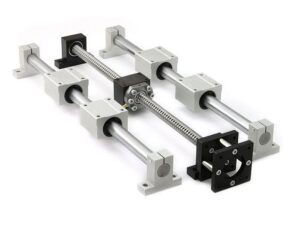
Materials Used in Linear Rail Groove Design
Material selection is crucial for performance:
- Hardened Steel – High durability and wear resistance
- Stainless Steel – Corrosion resistance for harsh environments
- Alloy Steel – Balanced strength and machinability
- Surface Coatings – Improve hardness and reduce friction
Applications of Linear Rail Groove Systems
Proper design linear rail groove engineering is essential in:
- CNC Machines – High-precision cutting systems
- Robotics – Multi-axis motion control
- Automation Equipment – Repetitive industrial processes
- Medical Devices – Precision surgical and diagnostic tools
- Semiconductor Equipment – Ultra-clean and precise motion systems
👉 Explore precision motion components here:
https://yhlinear.com/product
How to Design an Efficient Linear Rail Groove
Step 1: Define Load Requirements
Determine static and dynamic loads.
Step 2: Select Groove Geometry
Choose between circular, gothic arch, or custom profiles.
Step 3: Optimize Contact Angle
Ensure even force distribution.
Step 4: Material Selection
Choose hardened materials for durability.
Step 5: Surface Treatment
Apply polishing or coating to reduce friction.
Common Design Mistakes to Avoid
- Improper groove depth selection
- Poor alignment of rail and carriage
- Ignoring load distribution analysis
- Using low-quality materials
- Inadequate lubrication design
Benefits of Proper Linear Rail Groove Design
- Higher precision motion
- Reduced mechanical wear
- Improved load handling
- Longer service life
- Better system stability
Design Linear Rail Groove vs Standard Rail Design
| Feature | Optimized Groove Design | Standard Design |
|---|---|---|
| Precision | High | Medium |
| Load Capacity | High | Moderate |
| Friction | Low | Higher |
| Durability | Long | Shorter |

Future Trends in Linear Rail Groove Design
Modern engineering is evolving toward:
- AI-assisted design optimization
- Ultra-precision CNC machining
- Advanced surface coatings
- Lightweight high-strength alloys
- Integration with smart monitoring systems
FAQs About Linear Rail Groove Design
1. What is a linear rail groove?
It is the channel in a rail where rolling elements move to enable linear motion.
2. Why is groove design important?
It directly affects precision, load capacity, and system lifespan.
3. What is the best groove shape for precision?
Gothic arch grooves are commonly used for high-precision applications.
4. What materials are used for grooves?
Typically hardened steel or stainless steel.
5. Can groove design affect friction?
Yes, geometry directly impacts rolling resistance.
6. Where can I find linear motion components?
👉 https://yhlinear.com/product
Conclusion
The design linear rail groove is a fundamental engineering factor that determines the performance of any linear motion system. A well-optimized groove design ensures precision, durability, and efficiency in industrial applications.
For high-quality motion components and engineering solutions, visit:
👉 https://yhlinear.com/product