

Modern machinery relies on accurate, smooth, and repeatable movement to achieve high productivity and precision. One of the most important components enabling this performance is the linear bearing and rail system.
Whether used in CNC machining centers, automated production lines, robotic equipment, medical devices, or semiconductor manufacturing, a linear bearing and rail system ensures controlled linear movement with minimal friction and maximum accuracy.
In this guide, we’ll explore how linear bearing and rail systems work, their advantages, types, applications, and how to select the best solution for your project.
What Is a Linear Bearing and Rail System?
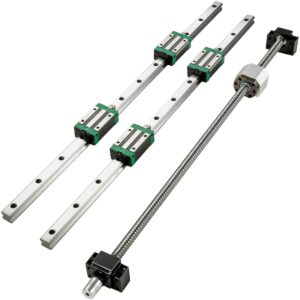
A linear bearing and rail system is a motion control assembly that guides movement along a straight path while supporting loads and maintaining alignment.
A complete system typically consists of:
- Linear guide rail
- Linear bearing block (carriage)
- Rolling elements (balls or rollers)
- Lubrication channels
- End seals
- Mounting hardware
Together, these components create a highly efficient motion platform capable of supporting precise movement under various operating conditions.
How Does a Linear Bearing and Rail System Work?
The system works through rolling contact between the bearing block and guide rail.
Guide Rail
The rail provides:
- Structural support
- Motion guidance
- Precise alignment
It serves as the foundation of the system.
Linear Bearing Block
The bearing block moves along the rail while carrying machine loads.
Its functions include:
- Supporting weight
- Maintaining accuracy
- Reducing friction
Rolling Elements
Most linear bearing and rail systems use:
- Recirculating steel balls
- Cylindrical rollers
These elements move through internal raceways and significantly reduce friction.
Lubrication System
Lubrication helps:
- Minimize wear
- Improve efficiency
- Extend service life
Protective Seals
Seals prevent contamination from:
- Dust
- Debris
- Coolants
- Moisture
Key Benefits of Linear Bearing and Rail Systems
1. High Precision
Linear bearing and rail systems provide excellent positioning accuracy.
This is essential for:
- CNC machining
- Robotics
- Automated manufacturing
2. Smooth Motion
Rolling elements create low-friction movement.
Benefits include:
- Reduced vibration
- Better machine performance
- Improved product quality
3. High Load Capacity
Modern systems support:
- Radial loads
- Axial loads
- Moment loads
4. Excellent Rigidity
High rigidity minimizes deflection and improves stability.
5. Long Service Life
Precision-ground raceways and hardened materials increase durability.
6. High-Speed Operation
Suitable for demanding industrial applications requiring rapid movement.
7. Reduced Maintenance Costs
Efficient design lowers wear and replacement frequency.
8. Improved Productivity
Reliable motion helps maximize machine uptime.
Types of Linear Bearing and Rail Systems
Ball Bearing Linear Bearing and Rail
The most common design.
Advantages
- Low friction
- High speed
- Excellent precision
Applications
- CNC routers
- Packaging systems
- Automation equipment
Roller Linear Bearing and Rail
Uses cylindrical rollers instead of balls.
Advantages
- Greater rigidity
- Higher load capacity
- Better shock resistance
Applications
- Heavy-duty CNC machines
- Industrial robotics
- Large automation systems
Miniature Linear Bearing and Rail
Designed for compact equipment.
Applications
- Medical devices
- Laboratory systems
- Electronics manufacturing
Heavy Duty Linear Bearing and Rail
Built for demanding industrial environments.
Features
- Increased load ratings
- Enhanced durability
- Improved rigidity
Explore industrial-grade solutions:
👉 https://yhlinear.com/product
Applications of Linear Bearing and Rail Systems
CNC Machinery
Linear bearing and rail systems are essential for:
- CNC milling machines
- CNC lathes
- CNC routers
- Grinding equipment
They ensure precise axis movement and machining accuracy.
Industrial Automation
Applications include:
- Assembly lines
- Packaging machinery
- Pick-and-place systems
- Material handling equipment
Robotics
Robotic systems use linear bearing and rail assemblies for:
- Accurate positioning
- Smooth movement
- Repeatable performance
Semiconductor Manufacturing
These systems provide:
- High precision
- Minimal vibration
- Reliable operation
Medical Equipment
Applications include:
- Diagnostic systems
- Imaging devices
- Laboratory automation
How to Choose the Right Linear Bearing and Rail
Load Capacity
Evaluate:
- Static loads
- Dynamic loads
- Shock loads
Choose a system with an appropriate safety margin.
Accuracy Requirements
Select the proper precision grade based on application needs.
| Precision Grade | Typical Application |
|---|---|
| Standard | General Automation |
| High | CNC Machinery |
| Precision | Semiconductor Equipment |
| Ultra Precision | Inspection Systems |
Travel Distance
Longer travel systems may require:
- Additional support
- Larger rail profiles
- Multiple bearing blocks
Speed Requirements
Consider:
- Maximum velocity
- Acceleration
- Duty cycle
Environmental Conditions
Assess exposure to:
- Dust
- Coolants
- Chemicals
- Moisture
Protective seals may be necessary.
Installation Best Practices
Prepare Mounting Surfaces
Ensure surfaces are:
- Flat
- Clean
- Rigid
Maintain Proper Alignment
Poor alignment can cause:
- Increased wear
- Reduced precision
- Higher friction
Apply Correct Fastening Torque
Follow manufacturer recommendations.
Lubricate Before Use
Proper lubrication improves reliability and service life.
Maintenance Tips for Linear Bearing and Rail Systems
Routine maintenance helps maximize performance.
Recommended tasks:
- Clean rail surfaces
- Inspect bearing blocks
- Reapply lubricant
- Check mounting hardware
- Monitor movement quality
Preventive maintenance reduces downtime.
Linear Bearing and Rail vs Traditional Sliding Systems
| Feature | Linear Bearing and Rail | Sliding System |
|---|---|---|
| Friction | Low | High |
| Precision | Excellent | Moderate |
| Speed | High | Limited |
| Load Capacity | High | Moderate |
| Service Life | Long | Shorter |
Internal Links
Strengthen your website’s SEO by linking to relevant resources:
Linear Motion Products
👉 https://yhlinear.com/product
Linear Guide Category
👉 https://yhlinear.com/product-category/linear-guide
YH Linear Homepage
Industrial Motion Components
👉 https://yhlinear.com/product
These internal links help users find related products while improving search engine crawlability.
External Resources
For additional engineering references:
These industry-leading manufacturers provide valuable information on linear motion technology and guide rail design.
FAQs About Linear Bearing and Rail Systems
What is a linear bearing and rail system?
It is a motion control assembly that guides linear movement while supporting loads and maintaining precise alignment.
Where are linear bearing and rail systems used?
They are commonly used in CNC machinery, robotics, industrial automation, semiconductor equipment, and medical devices.
What is the difference between ball and roller systems?
Ball systems offer lower friction and higher speeds, while roller systems provide greater rigidity and load capacity.
Can linear bearing and rail systems handle heavy loads?
Yes. Heavy-duty versions are specifically designed for high-load industrial applications.
Do linear bearing and rail systems require maintenance?
Regular lubrication and cleaning are recommended to ensure long service life and optimal performance.
Where can I buy high-quality linear bearing and rail products?
Browse industrial-grade solutions here:
👉 https://yhlinear.com/product
Conclusion
A linear bearing and rail system is one of the most important components in modern motion control technology. By delivering smooth movement, high accuracy, exceptional rigidity, and long-term durability, these systems help maximize performance across CNC machinery, automation systems, robotics, and advanced manufacturing equipment.
For premium-quality linear motion products and engineering support, visit:
👉 https://yhlinear.com/product
You can also explore more guide rail solutions at:
👉 https://yhlinear.com/product-category/linear-guide
Choosing the right linear bearing and rail system can significantly improve machine accuracy, productivity, and overall operational efficiency.