

Comprehensive Article Outline
| Heading Level | Topic |
|---|---|
| H1 | Linear Bearings: 11 Powerful Benefits, Types, and Applications You Must Know |
| H2 | Introduction to Linear Bearings |
| H3 | What Are Linear Bearings? |
| H3 | Why Linear Bearings Are Essential in Modern Machinery |
| H2 | How Linear Bearings Work |
| H3 | Basic Working Principle |
| H4 | Rolling vs Sliding Motion |
| H3 | Components of a Linear Bearing System |
| H4 | Shaft |
| H4 | Bearing Housing |
| H4 | Ball or Roller Elements |
| H2 | Types of Linear Bearings |
| H3 | Ball Bushing Linear Bearings |
| H3 | Roller Linear Bearings |
| H3 | Plain Linear Bearings |
| H3 | Magnetic Linear Bearings |
| H3 | Fluid Linear Bearings |
| H2 | Materials Used in Linear Bearings |
| H3 | Stainless Steel |
| H3 | Polymer Bearings |
| H3 | Ceramic Bearings |
| H2 | Key Benefits of Using Linear Bearings |
| H3 | High Precision Movement |
| H3 | Reduced Friction |
| H3 | Long Service Life |
| H3 | High Load Capacity |
| H2 | Applications of Linear Bearings |
| H3 | CNC Machines |
| H3 | Medical Equipment |
| H3 | Robotics and Automation |
| H3 | 3D Printers |
| H3 | Industrial Manufacturing Systems |
| H2 | Factors to Consider When Selecting Linear Bearings |
| H3 | Load Capacity |
| H3 | Speed Requirements |
| H3 | Environmental Conditions |
| H3 | Mounting Configuration |
| H2 | Installation and Maintenance Tips |
| H3 | Proper Installation Practices |
| H3 | Lubrication Requirements |
| H3 | Common Maintenance Mistakes |
| H2 | Common Problems and Troubleshooting |
| H3 | Noise and Vibration |
| H3 | Premature Wear |
| H3 | Misalignment Issues |
| H2 | Future Trends in Linear Bearing Technology |
| H3 | Smart Bearings |
| H3 | Self-Lubricating Materials |
| H3 | Advanced Automation Integration |
| H2 | Frequently Asked Questions About Linear Bearings |
| H2 | Conclusion |
Linear Bearings: The Complete Guide
Introduction to Linear Bearings
Linear motion is a fundamental requirement in many machines and industrial systems. From manufacturing equipment to robotics, the ability to move smoothly in a straight line is crucial for precision and efficiency. This is where linear bearings play a vital role.
Linear bearings are specialized mechanical components designed to provide smooth, low-friction motion along a straight path. Unlike traditional bearings that support rotational motion, these bearings allow components to slide or roll along a linear axis with high accuracy.
Industries rely heavily on linear bearings because they help improve machine performance, reduce wear, and enhance operational reliability. Whether it’s in automated production lines or delicate medical devices, linear bearings are a cornerstone of modern engineering.

What Are Linear Bearings?
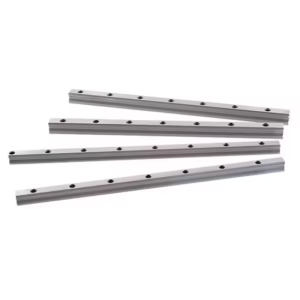
Linear bearings are mechanical devices that enable constrained linear movement while minimizing friction between moving parts. They are typically paired with hardened shafts or rails that guide the motion of a component in a straight direction.
A typical linear bearing system consists of:
A bearing block or carriage
Rolling elements such as balls or rollers
A linear shaft or rail
When the system moves, the rolling elements circulate inside the bearing housing, allowing the carriage to glide smoothly along the rail.
Why Linear Bearings Are Essential in Modern Machinery
Without linear bearings, machines would experience excessive friction and wear when parts slide across surfaces. These components provide several essential advantages:
Smooth motion control
Increased mechanical efficiency
Reduced maintenance requirements
Enhanced positional accuracy
These benefits make linear bearings indispensable in high-precision equipment.
How Linear Bearings Work
Basic Working Principle
The main function of linear bearings is to reduce friction during linear movement. This is achieved through rolling elements or low-friction sliding surfaces that separate moving components.
When a force moves the carriage along the shaft or rail, the rolling elements rotate between the surfaces, drastically reducing friction compared to direct sliding contact.
Rolling vs Sliding Motion
Linear bearings generally operate using one of two mechanisms:
1. Rolling Motion
Rolling elements such as balls or rollers rotate between the rail and carriage. This type offers:
Extremely low friction
High precision
Long operational life
2. Sliding Motion
In this system, surfaces slide against each other but are designed with low-friction materials like polymers or PTFE. Advantages include:
Quiet operation
Simple construction
Resistance to contamination
Components of a Linear Bearing System
A typical linear bearing assembly consists of several key parts that work together to ensure smooth motion.
1. Shaft
The shaft or rail acts as the track for the bearing. It is usually made from hardened steel to withstand continuous motion and heavy loads.
2. Bearing Housing
The housing contains the rolling elements and supports the carriage. It also ensures proper alignment and stability during operation.
3. Ball or Roller Elements
These elements are responsible for reducing friction. They circulate inside the bearing housing as the system moves, enabling smooth and efficient motion.
Types of Linear Bearings
Different applications require different bearing designs. Below are the most common types used in industrial systems.
Ball Bushing Linear Bearings
Ball bushing bearings are among the most widely used linear bearings. They use rows of steel balls that circulate inside the bearing housing.
Advantages
Very low friction
High precision motion
Suitable for high-speed applications
These bearings are commonly used in CNC machines and automation systems.
Roller Linear Bearings
Roller bearings use cylindrical rollers instead of balls. This design allows them to support heavier loads.
Benefits
Higher load capacity
Improved rigidity
Longer life under heavy loads
They are often used in industrial machinery and heavy-duty equipment.
Plain Linear Bearings
Plain bearings rely on sliding surfaces instead of rolling elements. They are usually made from polymer materials.
Key features
Low maintenance
Quiet operation
Good resistance to dirt and debris
These are ideal for environments where lubrication is difficult.
Magnetic Linear Bearings
Magnetic bearings eliminate mechanical contact by using magnetic fields to support the moving part.
Advantages
No mechanical wear
Ultra-high precision
Extremely low friction
However, they are expensive and mainly used in specialized equipment.
Fluid Linear Bearings
Fluid bearings use a thin layer of liquid or air to support the moving component.
These bearings offer:
Exceptional accuracy
Very smooth motion
Minimal vibration
They are commonly found in high-precision instruments.
Materials Used in Linear Bearings
The performance of linear bearings depends heavily on the materials used in their construction.
Stainless Steel
Stainless steel is commonly used due to its:
High strength
Corrosion resistance
Durability
It is ideal for industrial environments.
Polymer Bearings
Polymer materials are increasingly popular because they provide:
Self-lubrication
Lightweight construction
Resistance to contamination
These bearings are widely used in medical and food-processing equipment.
Ceramic Bearings
Ceramic components are used in high-performance systems because they offer:
Extremely low friction
High temperature resistance
Reduced wear
However, they are more expensive than traditional materials.
Key Benefits of Using Linear Bearings
Linear bearings offer numerous advantages that improve machine performance.
High Precision Movement
They enable highly accurate motion, which is essential in manufacturing processes such as CNC machining and semiconductor production.
Reduced Friction
Rolling elements dramatically reduce friction, allowing machines to operate more efficiently and consume less energy.
Long Service Life
High-quality bearings are designed to withstand millions of cycles without significant wear.
High Load Capacity
Certain types of linear bearings can support substantial loads while maintaining smooth motion.
Applications of Linear Bearings
Linear bearings are used across many industries due to their versatility.
CNC Machines
Computer numerical control machines rely on linear bearings for accurate tool positioning and smooth axis movement.
Medical Equipment
Medical devices such as MRI scanners and surgical robots use linear bearings for precise movement.
Robotics and Automation
Robots depend on linear bearings to achieve smooth, controlled motion along their axes.
3D Printers
Most desktop 3D printers use linear bearings to guide the movement of print heads and build platforms.
Industrial Manufacturing Systems
Automated assembly lines and packaging machines rely heavily on linear bearing systems.
Factors to Consider When Selecting Linear Bearings
Choosing the right linear bearing requires careful evaluation of several factors.
Load Capacity
The bearing must support the weight and forces acting on the system.
Speed Requirements
High-speed applications require bearings with low friction and high durability.
Environmental Conditions
Dust, moisture, and temperature can affect bearing performance.
Mounting Configuration
Different machines require different mounting arrangements.
Installation and Maintenance Tips
Proper installation and maintenance significantly extend the life of linear bearings.
Proper Installation Practices
Ensure accurate alignment
Avoid contamination during installation
Use appropriate mounting hardware
Lubrication Requirements
Lubrication reduces wear and prevents corrosion. Many bearings require periodic lubrication with grease or oil.
Common Maintenance Mistakes
Over-lubrication
Ignoring contamination
Improper alignment
Avoiding these mistakes ensures optimal performance.
Common Problems and Troubleshooting
Even high-quality bearings can develop problems over time.
Noise and Vibration
This often indicates contamination, wear, or improper installation.
Premature Wear
Poor lubrication or excessive loads can cause early bearing failure.
Misalignment Issues
Misalignment can increase friction and damage the bearing system.
Future Trends in Linear Bearing Technology
The field of motion control continues to evolve.
Smart Bearings
Sensors integrated into bearings can monitor temperature, vibration, and wear.
Self-Lubricating Materials
Advanced polymers are reducing the need for manual lubrication.
Automation Integration
Modern linear bearings are being designed specifically for robotics and automated manufacturing systems.
Frequently Asked Questions About Linear Bearings
1. What are linear bearings used for?
Linear bearings are used to support smooth and precise linear motion in machines such as CNC equipment, robotics, and 3D printers.
2. How do linear bearings reduce friction?
They use rolling elements like balls or rollers that rotate between surfaces, minimizing direct contact.
3. What is the difference between linear and rotary bearings?
Linear bearings enable motion in a straight line, while rotary bearings allow rotational movement around an axis.
4. Do linear bearings require lubrication?
Many linear bearings require periodic lubrication, although some polymer bearings are self-lubricating.
5. How long do linear bearings last?
With proper installation and maintenance, linear bearings can last millions of motion cycles.
6. Where can I learn more about bearing technology?
You can explore technical resources from organizations like
https://www.astbearings.com/linear-bearings.html for detailed engineering information.
Conclusion
Linear bearings are essential components in modern machinery, enabling precise and efficient linear motion. From industrial automation to advanced robotics, these devices play a crucial role in improving performance and reliability.
By understanding the different types, materials, and applications of linear bearings, engineers and technicians can select the best solutions for their systems. With proper installation and maintenance, linear bearings can deliver long-lasting, high-performance motion control.