

When it comes to achieving flawless linear motion in mechanical systems, few components rival the efficiency and precision of a linear guide bearing. From industrial robots to medical devices, these bearings serve as the foundation for accurate, smooth, and repeatable linear movement. They minimize friction, enhance stability, and ensure long-lasting performance even under heavy loads or harsh conditions.
This in-depth guide explores everything about linear guide bearings—their design, types, working principles, advantages, and practical applications across industries.
Understanding Linear Guide Bearing
A linear guide bearing is a mechanical component designed to facilitate smooth and precise linear movement along a straight path. It supports a load while allowing motion in a single direction with minimal resistance. Unlike plain sliding bearings, which operate on surface contact, linear guide bearings employ rolling elements—such as steel balls or rollers—to drastically reduce friction.
They are essential for machinery requiring accurate positioning, rigidity, and high repeatability, such as CNC machines, industrial robots, semiconductor equipment, and precision measuring instruments.
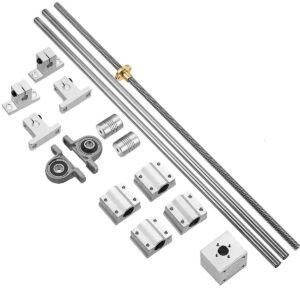
Main Components of a Linear Guide Bearing
Every linear guide bearing system is composed of high-precision parts that work in harmony to deliver consistent motion performance:
Guide Rail: A hardened and polished track that defines the direction of motion.
Carriage (or Slider): The moving element that carries the load and travels along the rail.
Rolling Elements: Usually stainless steel or chrome steel balls or rollers that reduce friction between the rail and carriage.
End Caps and Seals: Prevent contamination by blocking dust, dirt, or debris from entering the system.
Retainer or Cage: Holds the rolling elements in position to prevent them from colliding and ensures uniform motion.
Lubrication System: Integrated grease fittings or self-lubricating components ensure smooth operation and extended life.
Together, these elements deliver a balance of speed, precision, and durability.
How a Linear Guide Bearing Works
The working principle of a linear guide bearing revolves around rolling contact mechanics. When the carriage moves along the guide rail, the rolling elements inside circulate continuously within the carriage. This rolling action replaces sliding friction with rolling friction—resulting in smoother, quieter, and more efficient motion.
The rolling elements evenly distribute the load over multiple contact points, which reduces localized stress and increases the bearing’s lifespan. This design also minimizes backlash, ensuring the system maintains precise alignment even after long-term use.
Types of Linear Guide Bearings
Different linear guide bearing types serve varying applications and design needs. The most common classifications include:
Ball-Type Linear Guide Bearings
Use recirculating steel balls to achieve low friction and high-speed motion. Ideal for precision equipment like CNC machines, laser cutters, and 3D printers.
Roller-Type Linear Guide Bearings
Employ cylindrical rollers instead of balls. They provide higher rigidity and load capacity, making them suitable for heavy industrial machinery and automotive production lines.
Needle Roller Linear Bearings
Compact and lightweight, offering high load-carrying ability in limited spaces. Often used in compact robotics and automated medical devices.
Plain or Sleeve Linear Bearings
Rely on sliding contact using self-lubricating materials like bronze or polymer. Suitable for applications where lubrication must be minimized, such as clean rooms or food processing.
Miniature Linear Guide Bearings
Small-scale versions used in precision instruments, electronics manufacturing, and laboratory automation.
Key Advantages of Linear Guide Bearings
Exceptional Accuracy
Linear guide bearings maintain consistent positioning accuracy due to their precise construction and rolling contact mechanism. They eliminate play and misalignment even during high-speed operations.
Low Friction and Energy Efficiency
Rolling motion significantly reduces friction compared to traditional sliding mechanisms. This results in smoother movement, reduced energy consumption, and less heat generation.
High Load Capacity
With multiple rolling elements sharing the load, linear guide bearings can carry heavy loads while maintaining stability and rigidity.
Long Service Life
Precision-ground raceways, durable materials, and proper lubrication extend the lifespan of these bearings, reducing maintenance costs.
Vibration Reduction
Their ability to absorb shock and dampen vibration makes them ideal for systems requiring steady, noise-free operation.
Ease of Installation and Maintenance
Modern linear guide bearings are designed for easy integration into mechanical assemblies, featuring standardized mounting holes and self-lubricating systems.
Applications of Linear Guide Bearings
Linear guide bearings are integral to modern industrial and technological systems. Their versatility makes them suitable for:
CNC Machines: Enabling accurate, repeatable positioning of cutting tools and worktables.
Robotics: Providing smooth and controlled motion for robotic arms and manipulators.
3D Printers: Guiding the print head and platform with precision and stability.
Medical Equipment: Ensuring sterile, reliable motion in imaging devices and surgical robots.
Semiconductor Manufacturing: Allowing precise wafer movement in contamination-free environments.
Packaging and Automation Systems: Streamlining assembly lines and reducing operational friction.
Optical Inspection Systems: Maintaining alignment and minimizing vibration for high-precision measurement.
Design Considerations for Choosing Linear Guide Bearings
Selecting the right linear guide bearing involves balancing multiple design and operational factors:
Load and Force
Determine both the static and dynamic load capacities. Heavy machinery may require roller-type bearings for better stiffness.

Speed and Acceleration
Consider the maximum velocity and acceleration the system will experience. High-speed applications require smooth raceways and adequate lubrication.
Accuracy and Repeatability
Choose precision-ground rails and carriages for applications demanding micron-level accuracy.
Environment
For dusty, wet, or chemical-prone environments, opt for sealed or stainless steel bearings.
Maintenance Requirements
Select bearings with built-in lubrication systems or self-lubricating liners to minimize maintenance.
Mounting Configuration
Ensure the mounting surface is flat and rigid to prevent misalignment and premature wear.
Performance Comparison: Linear Guide Bearing vs. Plain Bearing
| Feature | Linear Guide Bearing | Plain Bearing |
|---|---|---|
| Friction | Very Low | High |
| Precision | Extremely High | Moderate |
| Load Capacity | High | Moderate |
| Maintenance | Low | Medium |
| Noise Level | Quiet | Louder |
| Suitable Applications | Precision machinery, robotics, CNC | Low-speed, low-accuracy systems |
The comparison highlights why linear guide bearings are preferred for high-performance and precision-driven environments.
Installation and Alignment Tips
To achieve optimal performance, follow these installation guidelines:
Prepare the Surface: Ensure the mounting surface is clean, flat, and free from burrs.
Align Rails Accurately: Misalignment causes uneven load distribution and wear.
Torque Fasteners Properly: Tighten evenly to prevent deformation.
Lubricate Before Use: Apply appropriate lubricant to reduce friction.
Perform Initial Testing: Slide the carriage manually to confirm smooth, resistance-free motion.
Maintenance and Care
Although linear guide bearings are durable, regular maintenance ensures consistent performance and extends service life.
Routine Cleaning: Remove dust and contaminants periodically.
Lubrication: Apply fresh grease or oil according to the operating environment and manufacturer’s guidelines.
Inspection: Check rolling elements and raceways for pitting, scratches, or corrosion.
Seal Replacement: Replace worn seals to maintain internal cleanliness.
Load Monitoring: Avoid overloading, which can shorten the bearing’s lifespan.
Common Problems and Solutions
| Issue | Possible Cause | Solution |
|---|---|---|
| Rough Movement | Misalignment or contamination | Realign and clean the bearing |
| Noise or Vibration | Lack of lubrication | Reapply proper lubricant |
| Uneven Wear | Excessive load or poor mounting | Check alignment and load balance |
| Corrosion | Moisture or chemical exposure | Use stainless steel bearings |
| Seizure or Binding | Over-tightened fasteners | Adjust torque and re-align rails |
Recent Innovations in Linear Guide Bearings
The evolution of linear guide bearing technology has brought significant advancements:
Self-Lubricating Systems: Bearings with built-in oil reservoirs that automatically distribute lubrication.
Smart Bearings: Integrated sensors monitor load, temperature, and wear in real time.
Lightweight Composite Designs: Use of polymer and aluminum alloys to reduce weight and improve efficiency.
Ultra-Low-Friction Coatings: Advanced surface treatments minimize wear and eliminate micro-corrosion.
Miniaturization: Compact designs for micro-automation and nanotechnology applications.
These innovations make modern linear guide bearings smarter, cleaner, and more efficient than ever.
Environmental Benefits
Linear guide bearings are built for longevity, which reduces waste and the need for frequent replacements. Stainless steel versions are recyclable and resistant to contamination, contributing to sustainable manufacturing practices. Additionally, self-lubricating systems minimize the release of oils or greases into the environment.
Cost and Value Analysis
While linear guide bearings may have a higher initial cost compared to plain bearings, their longer service life, reduced maintenance, and superior accuracy make them more economical in the long run. In industries where downtime is costly, investing in high-quality linear guide bearings pays off exponentially.
Future Trends
The future of linear guide bearings lies in smart automation and predictive maintenance. IoT integration will enable bearings to self-report wear or lubrication levels, reducing manual inspections. Additionally, hybrid materials and magnetic levitation systems are being explored to push the boundaries of friction-free motion.

Frequently Asked Questions
What is a linear guide bearing used for?
It facilitates precise linear motion in machines, ensuring accuracy and smooth operation in applications like CNCs, robotics, and automation systems.
What is the difference between a linear guide and a bearing?
A linear guide provides the path or track for motion, while the bearing is the element that allows smooth movement along that path.
Do linear guide bearings need lubrication?
Yes. Regular lubrication is essential to reduce friction and prevent wear, though some models are self-lubricating.
Can linear guide bearings handle heavy loads?
Absolutely. Roller-type linear guide bearings are specifically designed to carry heavy loads with minimal deflection.
Are linear guide bearings suitable for clean-room environments?
Yes, stainless steel and sealed designs are ideal for contamination-free environments like semiconductor and medical applications.
How long do linear guide bearings last?
Depending on the operating conditions, they can last several years with proper maintenance and alignment.
Conclusion
The linear guide bearing is the heartbeat of precision motion systems—quietly delivering stability, smoothness, and accuracy across countless industries. Its superior design, low friction, and robust construction make it indispensable in automation, robotics, and precision manufacturing. By selecting the right type and maintaining it properly, you ensure that your machinery performs efficiently, reliably, and for years to come.
Suggested Internal Links
Understanding Linear Motion Components
Guide to Choosing Linear Bearings
Maintenance Checklist for CNC Systems
Suggested External Links
Industry Standards for Linear Motion Systems
Bearing Material Comparison Chart
Advances in Smart Industrial Automation