Linear Motion Guide: A Comprehensive Guide to Components, Applications, and Selection

1. Introduction to Linear Motion Guides

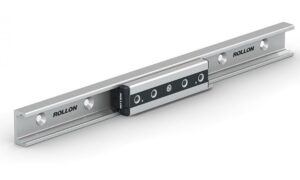
linear motion guideis a precision mechanical system designed to facilitate smooth, controlled linear movementof components along a defined path. These guides are essential in machinery and automation systems where accurate, repeatable, and low-friction linear motionis required.
Unlike simple sliding mechanisms, linear motion guides use bearings, rails, and carriagesto ensure high rigidity, load capacity, and precision. They are widely used in CNC machines, 3D printers, robotics, automation, and industrial equipment.

2. How Does a Linear Motion Guide Work?

A linear motion guide consists of three main components:
  1. Guide Rail (Track)– A rigid, precision-machined rail that provides the linear path.
  2. Carriage (Slider/Block)– A moving component that holds the bearing systemand attaches to the load.
  3. Bearings (Rolling or Sliding Elements)– Reduce friction between the carriage and rail, enabling smooth motion.

Key Motion Mechanisms:

  • Rolling Motion (Ball or Roller Bearings)– Provides low friction, high speed, and precision(most common).
  • Sliding Motion (Bushings or Sleeve Bearings)– Simpler, lower-cost but higher friction (used in light-duty applications).
The carriage moves along the railvia rolling elements (balls or rollers) that distribute loads evenly, ensuring stability and accuracy.

3. Types of Linear Motion Guides

Linear motion guides come in various designs based on load capacity, precision, and application requirements.

(1) Based on Bearing Type

Type
Description
Best For
Ball Guide (Rolling)
Uses steel balls for low friction and high precision.
CNC machines, 3D printers, robotics.
Roller Guide (Cylindrical Rolling Elements)
Uses cylindrical rollers for higher load capacity.
Heavy-duty machinery, presses.
Slide Guide (Bushings/Sleeve Bearings)
Uses sliding friction (no rolling elements).
Simple, low-cost applications.

(2) Based on Rail & Carriage Design

  • Profiled Rail Guides (Square Rails)– High rigidity, precision, and load capacity (used in CNCs).
  • Round Rail Guides (Shaft-Based)– More flexible, easier to install (used in 3D printers, light automation).
  • Miniature Linear Guides– Compact, used in medical devices and precision instruments.

(3) Based on Precision Grade

  • Standard Precision– General automation, light loads.
  • High Precision (H-grade)– CNC machines, high-accuracy applications.
  • Ultra-High Precision (P-grade)– Semiconductor manufacturing, metrology.

4. Key Components of a Linear Motion Guide

(1) Guide Rail (Track)

  • Made of hardened steel (often chrome-plated or stainless steel).
  • Precision-ground for straightness and surface finish.
  • Available in square (profiled) or round (shaft) configurations.

(2) Carriage (Slider/Block)

  • Houses the bearing balls/rollers.
  • May include preloaded bearingsfor zero backlash.
  • Attached to the moving part of the machine.

(3) Bearings (Rolling Elements)

  • Ball Bearings (Most Common)– Low friction, high speed.
  • Roller Bearings– Higher load capacity.
  • Recirculating Bearings– Allow continuous motion over long distances.

5. Advantages of Linear Motion Guides

✅ High Precision & Repeatability– Ensures accurate positioning (micron-level in some cases).
✅ High Load Capacity– Can handle radial, axial, and moment loads.
✅ Low Friction & Smooth Motion– Reduces wear and energy consumption.
✅ Long Service Life– Hardened materials resist wear.
✅ Rigid & Stable– Minimal deflection under load.

6. Disadvantages & Limitations

❌ Higher Cost Than Simple Slides– Precision engineering increases expenses.
❌ Requires Proper Alignment– Misalignment can cause binding or premature wear.
❌ Maintenance Needed– Lubrication and inspection are required for longevity.

7. Applications of Linear Motion Guides

Linear motion guides are used in industries requiring precise, reliable linear movement:
Industry
Application
Why Linear Motion Guides?
CNC Machining
Linear axes (X, Y, Z)
High rigidity, precision, and load capacity.
3D Printing
Print head movement
Smooth, backlash-free motion.
Automation & Robotics
Linear actuators, pick-and-place
High load capacity, durability.
Medical Equipment
Surgical robots, diagnostic devices
Clean, precise motion.
Semiconductor Manufacturing
Wafer handling
Ultra-high precision (nanometer-level).
Aerospace & Defense
Precision positioning systems
High reliability under extreme conditions.

8. How to Select the Right Linear Motion Guide

When choosing a linear motion guide, consider:
  1. Load Requirements(Radial, Axial, Moment Loads)
  2. Travel Distance & Speed
  3. Environmental Conditions(Dust, Moisture, Temperature)
  4. Precision Needs(Standard vs. High Precision)
  5. Mounting Space & Installation Constraints
Key Specifications to Check:
  • Rail/Rod Diameter(6mm to 50mm+ common)
  • Rail Length(Customizable)
  • Carriage Size & Load Rating
  • Accuracy Class (H, P, etc.)
  • Lubrication Type (Oil, Grease, Maintenance-Free)

9. Installation & Maintenance Tips

Installation Best Practices

✔ Ensure Proper Alignment– Use a straightedge or laser alignment tool.
✔ Preload Bearings (if applicable)– Reduces play and improves stiffness.
✔ Secure Mounting– Use rigid brackets to prevent vibration.

Maintenance Guidelines

🔧 Regular Lubrication(Oil or Grease, depending on bearing type)
🔧 Inspect for Wear & Misalignment– Check for scoring or binding.
🔧 Clean Dust & Debris– Prevents abrasive wear.
🔧 Replace Worn Components– Avoid system failure.

10. Linear Motion Guide vs. Linear Guide Shaft vs. Linear Rail

Feature
Linear Motion Guide
Linear Guide Shaft
Linear Rail
Design
Carriage + Rail + Bearings
Shaft + Bushing/Bearing
Rail + Integrated Carriage
Load Capacity
High (distributed)
Moderate
Very High
Precision
High (up to P-grade)
Good (H-grade)
Highest (best rigidity)
Cost
Medium to High
Low to Medium
High
Best For
Automation, CNC, Robotics
Lightweight, cost-sensitive apps
Heavy-duty, high-precision machinery

11. Conclusion: Why Linear Motion Guides Are Essential

Linear motion guides are fundamental in modern machinery, providing smooth, precise, and reliable linear movement. Whether in CNC machines, robotics, or 3D printing, selecting the right guide—based on load, speed, precision, and environment—ensures optimal performance.

Key Takeaways:

  • Ball guidesare best for precision and speed.
  • Roller guidesare ideal for heavy loads.
  • Slide guidesare suitable for simple, low-cost applications.
  • Proper installation and maintenanceextend lifespan.

Need Help Choosing a Linear Motion Guide?

If you’re designing a new system or upgrading an existing one, consider:
  • Load requirements(static/dynamic)
  • Precision needs(micron-level vs. general use)
  • Environment(dust, moisture, temperature)
author avatar
wang, tingting

Related Post

Powerful Insights About Heavy Duty Linear Guide Rail Systems for Industrial Precision
Expert Insights on CNC Linear Guide Rail Systems for Unmatched Machining Precision
Powerful Insights About CNC Linear Guide Systems for Precision Machining
Game-Changing Insights About Bearing Rails for Precision Linear Motion
Proven Advantages of Ball Bearing Linear Guide Systems for Precision Machinery
Essential Facts About Rollers and Rails for High-Precision Linear Motion
Powerful Insights into Rails and Rollers for Precision Linear Motion
Expert Secrets to Mastering Linear Bearing for Smooth Motion Systems

Related Cases

Related Products

Product center

About Us

Hot Product

Latest Articles

Scroll to Top