

Outline for Long-Form Article on Linear Rail and Bearings
| Main Heading | Sub-Headings |
|---|---|
| Introduction to Linear Rail and Bearings | Historical evolution, Importance in industry |
| Linear Rail and Bearings | Definition, Core functions, Everyday examples |
| Design and Structure of Linear Rail and Bearings | Rails, Bearings, Carriage blocks, Retainer systems |
| Types of Linear Rail and Bearings | Profile rail systems, Round rail systems, Roller-type bearings, Ball-type bearings |
| Working Principle of Linear Rail and Bearings | Rolling motion, Friction reduction, Load distribution |
| Advantages of Linear Rail and Bearings | High precision, Smooth motion, Long life span, Cost-efficiency |
| Applications of Linear Rail and Bearings | CNC machines, Robotics, Medical equipment, Packaging, Aerospace |
| Materials Used in Linear Rail and Bearings | Stainless steel, Alloy steel, Ceramics, Polymers |
| Key Features of Linear Rail and Bearings | High load capacity, Quiet operation, Low maintenance |
| Installation Guidelines for Linear Rail and Bearings | Alignment, Mounting techniques, Lubrication practices |
| Maintenance of Linear Rail and Bearings | Cleaning, Regular lubrication, Preventive inspection |
| Linear Rail and Bearings vs Other Bearing Systems | Ball bushings, Plain bearings, Guide blocks |
| Common Issues in Linear Rail and Bearings | Noise, Vibration, Misalignment, Contamination |
| Troubleshooting Linear Rail and Bearings Failures | Root cause analysis, Quick fixes, Preventive measures |
| Innovations in Linear Rail and Bearings Technology | Self-lubrication, Smart sensors, Coatings |
| Linear Rail and Bearings in CNC Machines | Accurate cutting, Stability, Reduced vibration |
| Linear Rail and Bearings in Robotics | Repeatability, Smooth motion, Load optimization |
| Energy Efficiency of Linear Rail and Bearings | Power savings, Reduced wear, Eco-friendly designs |
| Cost-Benefit Analysis of Linear Rail and Bearings | Upfront costs, Long-term savings |
| Future Trends in Linear Rail and Bearings | AI integration, Miniaturization, Sustainable materials |
| Case Studies with Linear Rail and Bearings | Automotive industry, Aerospace, Semiconductor manufacturing |
| Safety Considerations in Linear Rail and Bearings Usage | Load safety, Operator protection |
| Global Market of Linear Rail and Bearings | Growth trends, Leading manufacturers, Industry outlook |
| FAQs about Linear Rail and Bearings | Six FAQs with detailed answers |
| Conclusion on Linear Rail and Bearings | Key takeaways and industry impact |
| Suggestions for Internal & External Links | Inbound and outbound link recommendations |
Introduction to Linear Rail and Bearings
In the world of modern machinery, where precision and efficiency are essential, linear rail and bearings play a crucial role. They provide smooth, controlled movement in a straight line, reducing friction and enabling machines to perform repetitive, high-accuracy tasks. Without them, many of today’s advanced manufacturing, robotics, and automation systems would grind to a halt.
Historically, engineers relied on simple sliding surfaces for linear motion. While effective for basic tasks, these methods caused excessive wear and consumed more energy. The introduction of rolling elements—specifically linear bearings mounted on rails—revolutionized motion technology by dramatically improving efficiency, accuracy, and service life.
Today, linear rail and bearings are found in industries ranging from aerospace to healthcare, powering everything from CNC machines to robotic surgery devices. Their importance cannot be overstated—they are the quiet workhorses ensuring that precision engineering continues to advance.
Linear Rail and Bearings
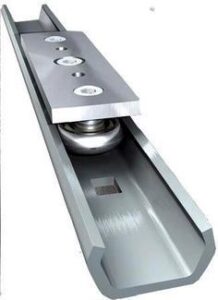
At their core, linear rail and bearings are motion systems designed to provide smooth linear travel.
Linear Rail: A hardened, precision-ground rail that acts as a guide.
Linear Bearing (or carriage block): A component fitted with rolling elements (balls or rollers) that moves along the rail.
Together, they eliminate sliding friction by enabling rolling contact, which reduces resistance and increases accuracy.
Everyday examples include:
The moving head of a 3D printer.
The X-Y axis in a CNC milling machine.
The smooth sliding of industrial automation arms.
Design and Structure of Linear Rail and Bearings
A typical system includes several key elements:
Rails: The guiding tracks, usually made of hardened steel.
Bearings: Recirculating balls or rollers that provide friction-free movement.
Carriage Blocks: The moving platform that supports the load.
Retainer Systems: Hold the rolling elements in place and prevent misalignment.
This design ensures a balance between load-carrying capacity, precision, and durability.
Types of Linear Rail and Bearings
Profile Rail Systems: Offer high rigidity and precision. Common in CNC machining.
Round Rail Systems: Provide flexibility, often used where alignment tolerance is needed.
Roller-Type Bearings: Handle higher loads with line contact.
Ball-Type Bearings: Provide smoother, quieter motion with point contact.
The choice depends on application requirements like load, speed, and accuracy.
Working Principle of Linear Rail and Bearings
The principle is simple yet highly effective:
Rolling Motion: Recirculating balls or rollers move between the rail and the carriage block.
Friction Reduction: Rolling friction replaces sliding friction, requiring less force.
Load Distribution: Forces are evenly spread across multiple rolling elements.
This ensures machines operate efficiently with minimal energy loss.
Advantages of Linear Rail and Bearings
The benefits are far-reaching:
High Precision: Ensures repeatable, accurate movement.
Smooth Motion: Reduces vibration for delicate operations.
Long Life Span: With proper lubrication, they last years under heavy use.
Cost-Efficiency: Lower maintenance reduces total cost of ownership.
High Load Capacity: Can carry significant weights without performance loss.
Compact Design: Saves space in modern machines.
For industries where microns matter, these advantages make all the difference.
Applications of Linear Rail and Bearings
CNC Machines: Enable accurate tool positioning for milling, drilling, and cutting.
Robotics: Allow repeatable, smooth movements in robotic arms.
Medical Equipment: Used in imaging systems and surgical robots.
Packaging Systems: Provide high-speed, reliable motion.
Aerospace: Used in flight simulators and testing systems.
Their versatility makes them indispensable across multiple sectors.
Materials Used in Linear Rail and Bearings
Stainless Steel: Durable, corrosion-resistant.
Alloy Steel: Strong and capable of withstanding high loads.
Ceramics: Lightweight, wear-resistant, ideal for high speeds.
Polymers: Used for cages or retainers to reduce noise and friction.
Material choice affects strength, weight, and environmental resistance.

Key Features of Linear Rail and Bearings
High Load Capacity: Can withstand heavy forces.
Quiet Operation: Essential for cleanrooms and labs.
Low Maintenance: Self-lubricating options reduce downtime.
Stability: Maintain alignment even under continuous stress.
These features ensure optimal performance in demanding applications.
Installation Guidelines for Linear Rail and Bearings
Alignment: Rails must be precisely aligned to avoid uneven wear.
Mounting Surfaces: Ensure clean, flat, and rigid surfaces.
Lubrication: Apply manufacturer-recommended lubricants.
Handling: Avoid dust contamination during installation.
Following proper guidelines extends system life.
Maintenance of Linear Rail and Bearings
Cleaning: Regularly remove dust and debris.
Lubrication: Reapply oil or grease as needed.
Inspection: Look for signs of wear, noise, or vibration.
Replacement: Change worn parts promptly to avoid downtime.
Preventive maintenance is cheaper than corrective repairs.
Linear Rail and Bearings vs Other Bearing Systems
Ball Bushings: Simpler but less rigid.
Plain Bearings: Cheaper but generate higher friction.
Guide Blocks: Work for light-duty but not high-precision tasks.
Linear rail and bearings are the superior choice for accuracy and durability.
Common Issues in Linear Rail and Bearings
Noise: Usually caused by contamination or poor lubrication.
Vibration: Can result from misalignment or damage.
Misalignment: Leads to uneven wear and reduced accuracy.
Contamination: Dust and debris accelerate wear.
Identifying these early saves costly repairs.
Troubleshooting Linear Rail and Bearings Failures
Check Alignment: Realign if wear patterns are uneven.
Inspect Lubrication: Reapply or change lubricant.
Clean Environment: Remove contaminants.
Monitor Load: Ensure rated load isn’t exceeded.
Systematic troubleshooting restores performance quickly.
Innovations in Linear Rail and Bearings Technology
Self-Lubricating Bearings: Reduce maintenance cycles.
Smart Sensors: Enable real-time monitoring of wear.
Advanced Coatings: Nanocoatings increase lifespan.
Lightweight Composites: Improve efficiency without losing strength.
Innovation continues to drive higher performance standards.

Linear Rail and Bearings in CNC Machines
Accurate Tool Cutting: Maintains high precision.
Reduced Vibration: Improves product finish.
Reliability: Ensures repeatable, high-quality results.
They are the backbone of CNC machining performance.
Linear Rail and Bearings in Robotics
Repeatability: Essential for robotic assembly lines.
Smooth Motion: Reduces errors in delicate tasks.
Load Optimization: Handles payloads efficiently.
Without them, robotic automation would be far less effective.
Energy Efficiency of Linear Rail and Bearings
Lower Power Usage: Rolling friction requires less energy.
Reduced Wear: Extends system life.
Eco-Friendly Designs: Support sustainable manufacturing.
They’re not just efficient—they’re environmentally friendly too.
Cost-Benefit Analysis of Linear Rail and Bearings
Upfront Cost: Higher than simpler systems.
Maintenance Savings: Longer service life offsets investment.
Downtime Reduction: Prevents costly production delays.
In the long term, they’re a highly cost-effective solution.
Future Trends in Linear Rail and Bearings
AI Integration: Predictive maintenance through machine learning.
Miniaturization: Bearings for micro-robots and electronics.
Sustainable Materials: Recyclable and biodegradable options.
The future promises smarter, greener, and smaller systems.
Case Studies with Linear Rail and Bearings
Automotive Industry: Ensures precision in assembly lines.
Aerospace: Supports high-accuracy testing equipment.
Semiconductor Manufacturing: Enables ultra-clean, precise movement.
These real-world examples highlight their universal impact.
Safety Considerations in Linear Rail and Bearings Usage
Load Safety: Avoid overloading.
Operator Protection: Use guards and shields.
Regular Inspections: Prevent sudden failures.
Safety ensures both machine longevity and worker protection.
Global Market of Linear Rail and Bearings
Growth Trends: Driven by automation and robotics.
Leading Manufacturers: THK, HIWIN, NSK, Bosch Rexroth, SKF.
Industry Outlook: Expected CAGR of 6–8% in the next decade.
The market continues to expand as industries demand precision.
FAQs about Linear Rail and Bearings
What are linear rails and bearings used for?
They provide precise, smooth linear motion in machines and automation systems.
Which industries use them most?
Industries like robotics, aerospace, CNC machining, and medical technology.
Are they expensive?
They may cost more initially, but long-term benefits outweigh the price.
Do they require lubrication?
Yes, although self-lubricating designs are available.
How long do they last?
With maintenance, they can last for years in heavy-duty use.
What’s the difference between ball and roller bearings in linear rails?
Ball bearings offer smoother motion, while roller bearings handle heavier loads.
Conclusion on Linear Rail and Bearings
Linear rail and bearings may seem like small components, but their impact on industry is enormous. From CNC machines to robotic arms, they ensure smooth, accurate, and efficient motion. Their advantages—precision, durability, and cost savings—make them the gold standard in motion technology.
As industries move toward smarter automation and sustainability, innovations in linear rail and bearing technology will continue to shape the future. Businesses that adopt them gain not only efficiency but also a competitive edge.
Suggestions for Internal & External Links
Inbound Links:
CNC Machine Technology Guide
Robotics in Industrial Automation
Understanding Linear Motion Systems
Outbound Links: