

Outline for the Article
| Main Headings | Sub-Headings |
|---|---|
| Introduction to Linear Guide | Importance in modern engineering |
| What is a Linear Guide | Basic definition and concept |
| History of Linear Guide Technology | From early mechanical systems to advanced rails |
| Working Principle of Linear Guides | Motion, friction reduction, and load capacity |
| Types of Linear Guides | Ball-type linear guides, Roller-type linear guides |
| Key Components of a Linear Guide | Rail, block, rolling elements |
| Linear Guide vs Linear Bearing | Differences and similarities |
| Advantages of Using Linear Guides | Precision, efficiency, durability |
| Disadvantages of Linear Guides | Limitations and maintenance needs |
| Applications of Linear Guides in Automation | Robotics, CNC machines, packaging industry |
| Linear Guide in 3D Printing | Importance for precision |
| Heavy-Duty Industrial Applications | Aerospace, automotive, medical devices |
| How to Select the Right Linear Guide | Load, speed, and accuracy considerations |
| Material and Design Options | Steel, stainless steel, coated guides |
| Lubrication and Maintenance of Linear Guides | Best practices |
| Installation Process of Linear Guides | Step-by-step overview |
| Common Problems with Linear Guides | Noise, wear, misalignment |
| Troubleshooting Linear Guide Issues | Easy fixes and preventive methods |
| Latest Innovations in Linear Guide Systems | Smart sensors, IoT integration |
| Future of Linear Guide Technology | Trends for automation and AI-driven industries |
| Cost Factors of Linear Guides | Pricing elements and value analysis |
| How Long Do Linear Guides Last? | Durability and lifespan insights |
| Top Manufacturers of Linear Guides | Global leaders in precision systems |
| Linear Guide vs Linear Actuator | Choosing the right one |
| Environmental Impact of Linear Guides | Sustainability in design |
| Conclusion | Final thoughts |
| FAQs | Practical questions with answers |
Introduction to Linear Guide
Linear guides are the unsung heroes of modern engineering. Whenever a machine part needs to move smoothly along a straight path with high precision, a linear guide is the hidden mechanism making it happen. From CNC machines to medical scanners, these devices are everywhere. Without them, precision motion would be much harder, less efficient, and more error-prone.
As industries race towards higher automation, linear guides have become indispensable. They allow machines to operate with reduced friction, higher accuracy, and longer service life. But what exactly is a linear guide, and why is it so crucial? Let’s dive in.
What is a Linear Guide
A linear guide is a mechanical system designed to provide smooth, precise, and controlled linear motion. It usually consists of a rail and a block with rolling elements like balls or rollers that reduce friction while carrying heavy loads.
Think of it as the “track and wheels” of precision machinery. Just as a train moves reliably on rails, machine components travel effortlessly on linear guides. They ensure accuracy, reduce wear, and extend the life of industrial systems.
In essence, a linear guide is not just about motion; it is about precision motion with stability.
History of Linear Guide Technology
The idea of guiding objects along a straight path dates back to ancient civilizations. Early craftsmen used wooden grooves and sliding mechanisms for basic motion control. However, friction was always a major challenge.
In the Industrial Revolution, machines demanded more precision. Engineers experimented with metal slides and oil-based lubrication to reduce wear. The real breakthrough came with the development of rolling elements—balls and rollers—that drastically reduced friction.
By the late 20th century, linear guides had become standardized with rails and blocks. Today, with computer numerical control (CNC) and robotics, linear guides are indispensable for achieving micrometer-level accuracy.
Working Principle of Linear Guides
Linear guides function on a straightforward principle:
A rail provides a straight track.
A block or carriage houses rolling elements (balls or rollers).
These rolling elements circulate as the block moves, minimizing friction.
This system ensures:
Low resistance to motion
High precision even under heavy loads
Smooth movement over long distances
Compared to plain sliding, rolling elements make linear guides far more efficient and long-lasting.
Types of Linear Guides
Not all linear guides are the same. They differ based on their rolling elements and design.
Ball-type Linear Guides
These use tiny steel balls inside the block that circulate in endless loops. They are popular due to high precision and relatively low cost.Roller-type Linear Guides
Instead of balls, these use cylindrical rollers, which provide more contact area. This allows them to handle heavier loads and offer greater rigidity.
Both types are common in automation, with the choice depending on load capacity and accuracy requirements.
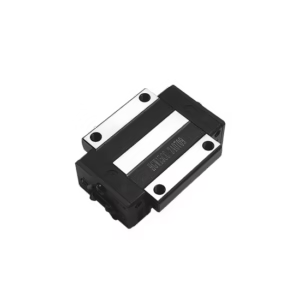
Key Components of a Linear Guide
A typical linear guide consists of:
Rail: A hardened steel track that serves as the foundation.
Block/Carriage: The moving part that slides along the rail.
Rolling Elements: Balls or rollers inside the block.
End Caps & Retainers: To keep rolling elements circulating smoothly.
Seals: Prevent dust and dirt from entering.
These components work together to ensure precise and reliable motion.
Linear Guide vs Linear Bearing
Though often confused, they are not the same.
Linear Guides: Provide precision movement along a rigid rail with rolling elements. They can handle high loads and are more accurate.
Linear Bearings: Usually sleeve-style bushings that slide along a shaft. They are cheaper and suitable for lighter loads.
Simply put, linear guides are for heavy-duty, high-accuracy tasks, while linear bearings are for simpler, lower-cost applications.
Advantages of Using Linear Guides
Why do industries rely so heavily on linear guides? The reasons are clear:
Precision: Achieve accuracy in microns.
Efficiency: Minimal friction reduces energy loss.
Durability: Hardened steel and rolling design extend service life.
Load Capacity: Handle heavy forces in industrial applications.
Versatility: Fit for automation, robotics, and even medical devices.
Disadvantages of Linear Guides
Despite their benefits, linear guides come with certain drawbacks:
Higher cost compared to plain bearings
Maintenance required for lubrication
Sensitive to contamination like dust and dirt
Alignment critical—misalignment leads to failure
Still, their advantages often outweigh these limitations in demanding industries.
Applications of Linear Guides in Automation
Automation relies on precision, and linear guides deliver just that. Common uses include:
Robotics – For arm movement and positioning
CNC Machines – Ensuring cutting tools move with accuracy
Packaging Machines – Smooth, repetitive, high-speed movements
Semiconductor Manufacturing – Where microns make a difference
Without linear guides, these systems would lose efficiency and precision.
Linear Guide in 3D Printing
3D printers require flawless, repeatable movement to build layer by layer. Linear guides provide the stability needed for:
Smooth extrusion
Accurate layer placement
Reduced vibration
Hobbyist and professional 3D printers alike use them for consistent results.
Heavy-Duty Industrial Applications
Linear guides also shine in industries where precision and strength matter most:
Aerospace: Aircraft assembly, satellite component alignment
Automotive: Robotics in car manufacturing
Medical Devices: MRI scanners, surgical robots
Defense: Precision weapon systems and radar equipment
Their adaptability makes them critical in both lightweight and heavy-duty fields.
How to Select the Right Linear Guide
Choosing the right guide depends on multiple factors:
Load Capacity: Can it handle the force applied?
Speed: Higher speeds require smoother guides.
Accuracy: Needed tolerance levels.
Environment: Exposure to dust, humidity, or chemicals.
Budget: High precision often comes at higher costs.
Always balance application requirements with guide specifications.
Material and Design Options
Not all guides are made equal. Common materials include:
Carbon Steel: Strong and durable, but prone to rust.
Stainless Steel: Corrosion-resistant, ideal for cleanrooms.
Coated Steel: Combines strength with surface protection.
Designs may vary too—some optimized for compact size, others for ultra-heavy loads.
Lubrication and Maintenance of Linear Guides
Lubrication is essential for smooth performance. Without it, friction increases, leading to wear.
Best practices include:
Use manufacturer-recommended lubricants.
Apply grease or oil at scheduled intervals.
Keep seals intact to prevent contamination.
Regular maintenance ensures long-lasting, efficient operation.
Installation Process of Linear Guides
Installing linear guides requires precision. Steps generally include:
Preparation: Clean the rail and mounting surface.
Alignment: Ensure rails are parallel and straight.
Mounting: Secure rails and blocks with recommended torque.
Testing: Check for smooth, consistent motion.
Even a minor misalignment can cause premature failure.
Common Problems with Linear Guides
Some typical issues include:
Noise: Often caused by lack of lubrication.
Wear Marks: Indicate contamination or misalignment.
Stick-Slip Motion: Happens if lubrication is poor.
Excessive Play: Shows wear inside the rolling elements.
Troubleshooting Linear Guide Issues
Solutions to common problems:
Noise → Re-lubricate and check seals.
Wear → Inspect for dust contamination.
Stick-slip → Use proper lubricant.
Play → Replace worn blocks or rails.
Preventive checks can save costly downtime.
Latest Innovations in Linear Guide Systems
Modern linear guides are evolving:
Smart Sensors for real-time monitoring.
IoT-enabled Guides that detect wear and lubrication needs.
Self-lubricating Materials reducing maintenance.
Lightweight Carbon Fiber Rails for aerospace and robotics.
Innovation ensures linear guides remain relevant in Industry 4.0.
Future of Linear Guide Technology
Looking ahead, linear guides will become:
More integrated with AI for predictive maintenance.
Eco-friendly, using sustainable materials.
Capable of nanometer-level precision for next-gen electronics.
The future promises smarter, greener, and more precise linear guides.
Cost Factors of Linear Guides
Prices vary based on:
Material (steel vs stainless steel)
Size and load rating
Accuracy grade
Brand reputation
Basic guides may cost a few dollars, while high-end precision models can reach thousands.
How Long Do Linear Guides Last?
With proper care, a linear guide can last 5–10 years or more. Lifespan depends on:
Load conditions
Speed of operation
Lubrication quality
Environmental exposure
Many manufacturers provide lifespan calculations based on usage.
Top Manufacturers of Linear Guides
Global leaders include:
THK (Japan)
HIWIN (Taiwan)
NSK (Japan)
Bosch Rexroth (Germany)
SKF (Sweden)
These companies set the industry standard in precision and durability.
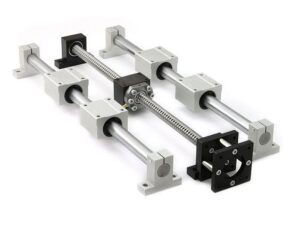
Linear Guide vs Linear Actuator
While both offer motion, they are different:
Linear Guide: Provides smooth motion but requires an external drive.
Linear Actuator: Combines guide + motor for powered movement.
In short, guides are passive, actuators are active.
Environmental Impact of Linear Guides
Sustainability is a growing concern. Manufacturers are:
Using recyclable materials
Reducing lubricant waste
Developing energy-efficient coatings
This ensures industries meet green standards while maintaining performance.
Conclusion
A linear guide is much more than a mechanical part—it’s the foundation of precision movement in modern technology. From CNC machining to robotics and aerospace, these systems make accuracy possible. Though they require investment and maintenance, their reliability and efficiency justify their widespread use.
As technology advances, linear guides will evolve with smarter, more sustainable solutions, continuing to play a central role in automation and engineering.
FAQs
What is a linear guide used for?
A linear guide is used to enable smooth, precise motion in machines such as CNC equipment, 3D printers, and industrial robots.
How does a linear guide work?
It works by using rolling elements like balls or rollers that reduce friction as a block slides along a rail.
What is the difference between a linear guide and a linear bearing?
A linear guide uses rails and blocks for precision, while a linear bearing slides on a shaft and is better for lighter loads.
How long do linear guides last?
With proper lubrication and maintenance, they can last 5–10 years or more.
Do linear guides need lubrication?
Yes, lubrication is essential to reduce friction, prevent wear, and extend service life.
Are linear guides expensive?
Prices vary depending on material, size, and brand. Entry-level models are affordable, but high-precision guides can be costly.