

The linear rail guide stands as one of the most critical components in precision engineering. Whether it’s a CNC machine carving intricate parts or a robotic arm assembling microchips, the linear rail guide ensures movement that is smooth, accurate, and consistent. It’s the silent workhorse in countless mechanical systems where straight-line motion must be achieved with minimal friction and maximum precision.
In this detailed guide, we’ll uncover how linear rail guides work, their types, components, applications, and how to choose the right one for your system.
Understanding Linear Rail Guide
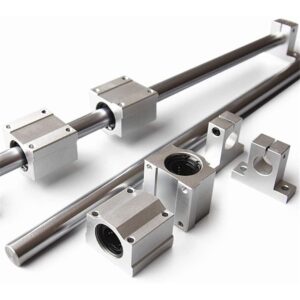
A linear rail guide, also known as a linear motion guide or linear bearing rail, is a mechanical system designed to enable smooth and precise linear movement of components. It consists primarily of a rail and a carriage (or block) that moves along the rail’s path with rolling or sliding elements in between to reduce friction.
The main goal of a linear rail guide is to provide motion with minimal resistance while maintaining accuracy, rigidity, and stability. Unlike traditional sliding systems, linear rail guides maintain consistent precision even under high loads and continuous use.
Core Components of a Linear Rail Guide
A typical linear rail guide assembly includes several precision-engineered elements working together:
Rail: A hardened steel or stainless steel track that defines the linear motion path.
Carriage (Block or Slider): The part that moves along the rail, supporting and carrying the load.
Rolling Elements: Steel balls or rollers that roll between the rail and carriage, enabling low-friction movement.
End Caps and Seals: Protect the internal mechanism from dust, debris, or moisture.
Retainer or Cage: Keeps the rolling elements properly spaced and aligned within the carriage.
Lubrication Ports: Allow easy application of grease or oil to maintain smooth motion over time.
Every component is manufactured to tight tolerances to ensure precision alignment and consistent movement.
How a Linear Rail Guide Works
The working principle of a linear rail guide is based on rolling contact rather than sliding contact. When the carriage moves along the rail, the internal rolling elements (usually steel balls or cylindrical rollers) circulate between the raceways. This rolling action drastically reduces friction compared to sliding surfaces, resulting in:
Smooth, stable motion
Reduced wear
Lower heat generation
Higher positioning accuracy
This mechanism is why linear rail guides are widely used in automation systems, robotics, and precision instruments where accuracy and reliability are paramount.
Types of Linear Rail Guides
There are various types of linear rail guides designed to meet specific performance requirements:
Ball-Type Linear Rail Guides
Use recirculating steel balls between the rail and carriage. They offer high precision, low friction, and are suitable for high-speed applications such as CNC machinery and 3D printers.
Roller-Type Linear Rail Guides
Use cylindrical rollers instead of balls, increasing the contact area between rail and carriage. They provide higher rigidity and load capacity, ideal for heavy-duty industrial applications.
Miniature Linear Rail Guides
Compact and lightweight designs for small-scale systems such as medical devices, semiconductor equipment, and inspection machines.
Flat or Low-Profile Linear Rails
Engineered for limited space applications, offering a sleek profile without compromising strength or precision.
Self-Lubricating Linear Rails
Feature built-in lubrication systems or polymer liners that reduce maintenance needs and extend service life.
Advantages of Using Linear Rail Guides
High Precision and Accuracy
Linear rail guides are designed for applications that require consistent, repeatable motion. Their ground raceways ensure micron-level accuracy in positioning.
Low Friction and Smooth Motion
Rolling elements drastically reduce resistance, resulting in smooth and silent operation even under heavy loads.
High Load Capacity
Because of their contact geometry, linear rail guides can handle both vertical and horizontal loads with excellent rigidity.
Durability and Long Lifespan
Made from hardened steel or stainless steel, these guides can endure millions of cycles with minimal wear when properly maintained.
Easy Maintenance
Modern designs feature self-lubricating mechanisms and sealed bearings, minimizing downtime and service costs.
Versatile Design
Linear rail guides can be customized to fit a wide range of industrial, medical, and technological applications.
Applications of Linear Rail Guides
Linear rail guides are used across industries that rely on precise, repeatable motion. Common applications include:
CNC Machines: For accurate positioning of cutting heads and worktables.
3D Printers: Provide stable and smooth movement for print heads and platforms.
Robotics: Ensure accurate motion control for robotic arms and manipulators.
Automation Equipment: Used in conveyor systems, pick-and-place machines, and packaging equipment.
Medical Devices: Enable precise movements in surgical robots, imaging devices, and laboratory instruments.
Semiconductor Manufacturing: Support contamination-free motion in clean-room environments.
Inspection Systems: Allow high-accuracy scanning and measurement in optical and metrology equipment.
Design Considerations for Linear Rail Guides
When selecting a linear rail guide, consider the following critical factors:
Load Capacity
Determine both static and dynamic loads. Heavy machinery requires guides with higher load ratings and rigidity.
Accuracy Requirements
High-precision applications such as CNC milling demand rail guides with tight tolerances and minimal backlash.
Speed and Acceleration
For fast-moving automation systems, select guides capable of withstanding high acceleration forces without vibration.
Operating Environment
If the guide operates in a corrosive, wet, or clean-room environment, stainless steel or coated rails may be necessary.
Maintenance Accessibility
Consider how easy it is to lubricate and inspect the system without significant downtime.
Mounting Configuration
Ensure proper flatness and alignment of the mounting surface to prevent uneven wear and loss of precision.

Performance Comparison: Linear Rail vs. Shaft Guide
| Feature | Linear Rail Guide | Shaft Guide |
|---|---|---|
| Precision | Very High | Moderate |
| Load Capacity | High | Medium |
| Friction | Very Low | Moderate |
| Rigidity | Excellent | Fair |
| Maintenance | Low | Moderate |
| Cost | Higher | Lower |
| Typical Application | CNC, Robotics, Automation | Light machinery, DIY systems |
Linear rail guides outperform shaft guides in almost every aspect where precision and durability are essential.
Installation and Alignment Tips
Proper installation determines the longevity and accuracy of a linear rail guide system. Follow these best practices:
Ensure the mounting surface is flat and clean before installation.
Use a dial indicator or alignment gauge to achieve perfect rail parallelism.
Torque fasteners evenly to avoid stress deformation of the rail.
Apply lubrication before the first operation.
Test the carriage movement manually to ensure smooth travel without resistance or binding.
Maintenance and Care
Though linear rail guides are low-maintenance, periodic inspection ensures consistent performance:
Lubrication: Use high-quality grease or oil, and reapply based on operational conditions.
Cleaning: Remove dust and debris to prevent damage to rolling elements.
Visual Inspection: Check for pitting, scratches, or corrosion.
Load Testing: Ensure that applied loads do not exceed manufacturer specifications.
Replace Seals: If seals or scrapers show wear, replace them promptly to protect the system.
Proper care can easily double the lifespan of your linear rail guide.
Common Issues and Troubleshooting
| Problem | Likely Cause | Recommended Solution |
|---|---|---|
| Irregular Motion | Misalignment or contamination | Realign rail and clean system |
| Excessive Noise | Lack of lubrication | Apply proper lubricant |
| Premature Wear | Overloading | Reduce load or upgrade guide type |
| Vibration | Loose mounting bolts | Re-torque and secure mounting |
| Rust or Corrosion | Exposure to moisture | Use stainless steel or apply anti-corrosion treatment |
Modern Innovations in Linear Rail Guide Technology
The evolution of linear rail guide design has introduced several new features that boost performance and reliability:
Smart Rail Systems: Integration of sensors for real-time condition monitoring.
Self-Lubricating Mechanisms: Built-in reservoirs that distribute lubricant automatically.
Compact Miniature Guides: Designed for micro-scale automation and robotics.
Noise Reduction Designs: Improved rolling element geometry for quieter operation.
Hybrid Material Combinations: Use of ceramics and polymers to reduce weight and friction.
These innovations are transforming how linear motion is achieved across industries.
Choosing Between Ball and Roller Linear Guides
| Feature | Ball Guide | Roller Guide |
|---|---|---|
| Contact Type | Point Contact | Line Contact |
| Friction | Very Low | Slightly Higher |
| Load Capacity | Medium | High |
| Stiffness | Moderate | Excellent |
| Precision | High | Very High |
| Ideal Application | Light to Medium Loads | Heavy-Duty Applications |
If your system demands high speed and low friction, ball-type guides are ideal. For heavy loads and superior rigidity, roller-type guides are the best choice.
Benefits of Linear Rail Guides in Automation
In automation systems, linear rail guides are indispensable. Their ability to maintain accuracy under load, operate silently, and perform in continuous cycles makes them vital for:
Increased production efficiency
Improved product consistency
Reduced maintenance costs
Enhanced machine lifespan
They are the backbone of reliable, precise, and smooth automation processes.

Environmental Impact and Sustainability
Linear rail guides made of stainless steel or treated materials contribute to sustainability by offering longer service life and recyclability. Their minimal lubrication needs also reduce environmental pollution from oil and grease waste.
Future Trends in Linear Rail Guide Systems
The next generation of linear guides will feature IoT connectivity, allowing real-time performance tracking and predictive maintenance. Integration with AI-based monitoring systems will further enhance reliability and reduce downtime. Additionally, lightweight composite materials will continue to improve energy efficiency in automation and robotics.
Frequently Asked Questions
What is a linear rail guide used for?
It provides precise linear motion for machinery components in CNC machines, automation systems, and robotics.
How is a linear rail different from a linear bearing?
A linear rail uses a guided rail and block system, whereas a linear bearing typically slides along a cylindrical shaft.
Do linear rail guides require lubrication?
Yes, lubrication is crucial for smooth operation and long service life, though some designs use self-lubricating technology.
Can linear rail guides handle vertical loads?
Absolutely. Their design allows them to handle both vertical and horizontal loads efficiently.
What materials are used in linear rail guides?
Most are made of hardened carbon steel or stainless steel for strength and corrosion resistance.
Are linear rail guides suitable for outdoor use?
Yes, but stainless steel or coated versions are recommended to prevent rust and wear in outdoor environments.
Conclusion
A linear rail guide is far more than a simple motion component—it’s the foundation of precision in modern engineering. From CNC machining to medical robotics, these guides ensure smooth, stable, and accurate motion that meets the demands of high-performance industries. Their superior rigidity, load capacity, and reliability make them indispensable wherever motion control matters most.
By understanding their design, benefits, and maintenance requirements, engineers can select the perfect linear rail guide to enhance efficiency, accuracy, and longevity across countless applications.
Suggested Internal Links
Understanding Linear Motion Systems
Guide to Choosing the Right Linear Bearing
Best Practices for CNC Machine Maintenance
Suggested External Links
ISO Standards for Linear Motion Components
Advances in Smart Motion Control Systems
Material Selection for Precision Engineering