

Modern industrial machinery requires motion systems that can handle large loads, high speeds, and continuous operation while maintaining precision and stability. In applications such as CNC machining, industrial automation, and heavy material handling, standard linear motion systems may not provide sufficient strength or durability. This is where heavy duty linear rails play a critical role.
Heavy duty linear rails are specially engineered linear guide systems designed to support high loads, shock forces, and demanding operating conditions. They provide smooth linear motion while maintaining high rigidity and accuracy, making them essential components in heavy industrial equipment.
This article explores the design, structure, types, materials, advantages, applications, and selection considerations of heavy duty linear rails.
What Is a Heavy Duty Linear Rail?
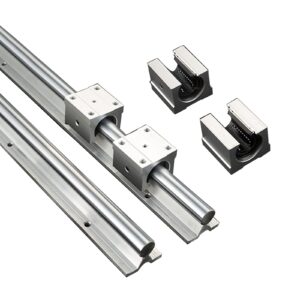
A heavy duty linear rail is a robust linear motion guide designed to support large loads and withstand high mechanical stress. It consists of a hardened rail and a bearing block (carriage) that moves along the rail using rolling elements such as balls or rollers.
Unlike standard linear guides, heavy duty rails are designed with:
Larger rail profiles
Reinforced bearing blocks
Higher load capacity
Greater rigidity
Improved resistance to vibration and impact
These characteristics make them suitable for heavy industrial applications where precision and durability are required.
Structure of a Heavy Duty Linear Rail System
A heavy duty linear rail system typically consists of several key components working together to provide reliable motion.
Guide Rail
The guide rail is the fixed track that provides the linear path for the bearing block.
Key features include:
Precision-ground raceways
High-strength hardened steel construction
Mounting holes for secure installation
High rigidity to support heavy loads
Bearing Block (Carriage)
The bearing block moves along the rail and carries the load. It houses the rolling elements that reduce friction.
Features of heavy duty bearing blocks include:
Larger contact surfaces
Reinforced housing
High load distribution capability
Enhanced stability under heavy loads
Rolling Elements
Heavy duty linear rails may use either steel balls or cylindrical rollers.
Rollers generally provide:
Higher load capacity
Greater rigidity
Better resistance to shock loads
Ball or Roller Recirculation System
The recirculation system allows rolling elements to move continuously inside the bearing block as the carriage travels along the rail.
This ensures:
Smooth motion
Consistent load distribution
Reduced wear
Sealing System
Heavy duty rails often include advanced seals to prevent contaminants from entering the bearing system. These seals protect against:
dust
metal chips
coolant fluids
How Heavy Duty Linear Rails Work
Heavy duty linear rails operate using rolling contact between the rail and the bearing block.
Basic Working Process
The rail is mounted securely to a machine frame.
The bearing block is attached to the moving component.
Rolling elements are positioned between the rail and the carriage.
As force is applied, the carriage moves along the rail.
Rolling elements circulate within internal channels to maintain continuous motion.
Because rolling friction is significantly lower than sliding friction, the system allows smooth motion even under heavy loads.
Types of Heavy Duty Linear Rails
Heavy duty linear rails are available in several configurations depending on load requirements and application needs.
Ball-Type Heavy Duty Linear Rails
These rails use recirculating steel balls.
Features:
Smooth motion
lower friction
high speed capability
Applications:
CNC machining centers
industrial automation
Roller-Type Heavy Duty Linear Rails
Roller rails use cylindrical rollers instead of balls.
Features:
higher load capacity
increased rigidity
improved shock resistance
Applications:
heavy machine tools
large gantry systems
metal processing equipment
Wide Heavy Duty Linear Rails
Wide rails provide additional stability by increasing the contact area between the rail and carriage.
Applications:
large automation systems
heavy robotic systems
High Rigidity Linear Rails
These rails are designed for applications requiring maximum stiffness and minimal deflection.
Applications:
precision machining
heavy milling machines
Materials Used in Heavy Duty Linear Rails
The materials used in heavy duty rails are selected to ensure strength, durability, and resistance to wear.
Hardened Alloy Steel
Most heavy duty rails are made from hardened alloy steel to provide:
high strength
excellent wear resistance
long service life
Stainless Steel
Used in environments where corrosion resistance is necessary.
Common applications include:
food processing equipment
pharmaceutical machinery
Reinforced Bearing Housing Materials
Bearing blocks may use high-strength steel or aluminum alloys for improved durability and weight optimization.
Advantages of Heavy Duty Linear Rails
Heavy duty linear rails provide numerous advantages compared with standard linear guide systems.
High Load Capacity
They can support large loads in multiple directions, including vertical and horizontal forces.
High Rigidity
Reinforced structures minimize deflection and vibration during operation.
Smooth Motion
Rolling elements ensure smooth and efficient linear movement.
High Precision
Precision-ground rails provide accurate positioning and repeatability.
Long Service Life
Durable materials and optimized load distribution extend system lifespan.
Resistance to Shock Loads
Heavy duty rails are designed to withstand impacts and vibration.
Industrial Applications of Heavy Duty Linear Rails
Heavy duty linear rails are widely used across many industrial sectors.
CNC Machine Tools
Large CNC machines rely on heavy duty rails to guide machine axes and support heavy cutting operations.
Industrial Automation
Heavy duty rails are used in automated production lines that move large components.
Gantry Systems
Gantry machines require strong rails capable of supporting large structures and loads.
Robotics
Industrial robots performing heavy lifting or welding operations often use heavy duty linear rails.
Material Handling Equipment
Conveyors, lifting systems, and automated storage systems use linear rails to move heavy materials efficiently.
Metal Processing Equipment
Machines used in metal cutting, forming, and stamping rely on high-rigidity linear guide systems.
Heavy Duty Linear Rails vs Standard Linear Rails
| Feature | Heavy Duty Linear Rails | Standard Linear Rails |
|---|---|---|
| Load Capacity | Very high | Moderate |
| Rigidity | High | Medium |
| Shock Resistance | Excellent | Limited |
| Rail Size | Larger profiles | Smaller profiles |
| Industrial Use | Heavy machinery | Light to medium applications |
Heavy duty rails are designed specifically for large machines and demanding environments.
Selecting the Right Heavy Duty Linear Rail
Choosing the correct heavy duty rail requires careful consideration of several factors.
Load Requirements
Calculate both static and dynamic loads to ensure the rail can support the system.
Rail Length
Longer rails may require additional support to prevent deflection.
Speed and Acceleration
High-speed applications require rails with optimized rolling systems.
Environmental Conditions
Dust, coolant, and high temperatures may require specialized sealing and materials.
Precision Requirements
High-precision machines require rails with tight manufacturing tolerances.
Installation and Maintenance
Proper installation and maintenance are essential for reliable operation.
Installation Tips
Ensure mounting surfaces are flat and rigid
Align rails carefully to prevent binding
Tighten bolts according to manufacturer specifications
Maintenance Practices
Apply lubrication regularly
Clean rails to remove debris and contaminants
Inspect bearings and seals periodically
These steps help maintain performance and extend the lifespan of the linear rail system.
Frequently Asked Questions
What makes a linear rail “heavy duty”?
Heavy duty linear rails are designed with larger profiles, reinforced bearing blocks, and higher load capacities compared with standard rails.
Can heavy duty rails handle shock loads?
Yes, they are specifically engineered to withstand vibration, impact forces, and heavy mechanical stress.
Are roller rails stronger than ball rails?
Roller rails generally offer higher load capacity and rigidity than ball-type rails.
Do heavy duty rails require lubrication?
Yes, proper lubrication reduces friction and ensures long service life.
Where are heavy duty rails commonly used?
They are widely used in CNC machines, gantry systems, robotics, industrial automation, and heavy manufacturing equipment.
Conclusion
Heavy duty linear rails are essential components in modern industrial machinery that requires high load capacity, precision, and durability. Their robust design allows them to handle demanding applications involving heavy loads, high speeds, and continuous operation.
By understanding the structure, types, materials, and selection criteria of heavy duty linear rails, engineers and manufacturers can design reliable linear motion systems that deliver consistent performance and long service life.