

In modern mechanical engineering and industrial automation, precise linear motion is essential for achieving accurate positioning, smooth operation, and high productivity. Many machines require components that move along a straight path with minimal friction and high stability. One of the key components enabling this functionality is the linear bearing slide rail.
A linear bearing slide rail combines a guide rail with a linear bearing mechanism, allowing moving parts to slide or roll along a straight path efficiently. These systems are widely used in industries such as CNC machining, robotics, automation, packaging equipment, and medical devices.
This article provides a comprehensive overview of linear bearing slide rails, including their structure, working principles, types, materials, advantages, and applications.
What Is a Linear Bearing Slide Rail?
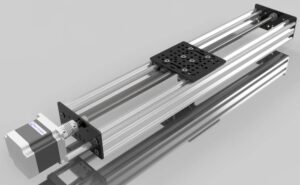
A linear bearing slide rail is a mechanical guiding system that allows components to move smoothly and accurately along a straight track. It consists of a linear rail (guide track) and a bearing block or carriage that slides along the rail using rolling elements.
The rolling elements—typically steel balls or cylindrical rollers—reduce friction between the rail and the bearing block, enabling smooth and efficient motion.
Main Functions
Linear bearing slide rails perform several important tasks in mechanical systems:
Guide movement along a straight path
Support loads during motion
Reduce friction and wear
Maintain alignment and stability
Enable precise and repeatable positioning
Because of these functions, linear bearing slide rails are essential components in modern precision machinery.
Structure of a Linear Bearing Slide Rail System
A typical linear bearing slide rail system consists of several key components.
Guide Rail
The guide rail is the fixed track mounted to a machine frame or base. It provides the pathway for the moving bearing block.
Features include:
Precision-ground raceways
High-strength hardened steel construction
Mounting holes for secure installation
Bearing Block (Carriage)
The bearing block, also called the carriage or slider, moves along the rail and carries the load.
Key features include:
Internal rolling elements
Load distribution channels
High structural rigidity
Rolling Elements
Rolling elements inside the bearing block are responsible for reducing friction. These may include:
Steel balls
Cylindrical rollers
The rolling elements circulate within the bearing block, allowing continuous motion.
Ball or Roller Recirculation System
In recirculating linear bearings, rolling elements move through internal channels and return to the starting position as the carriage travels along the rail.
This ensures:
Continuous motion
even load distribution
minimal wear
Seals and End Caps
Seals protect the bearing system from contaminants such as dust, debris, and coolant fluids. End caps guide the rolling elements within the bearing block.
How Linear Bearing Slide Rails Work
Linear bearing slide rails operate through a rolling contact mechanism that significantly reduces friction.
Basic Working Process
The rail is mounted securely on a machine structure.
The bearing block is attached to the moving component.
Rolling elements are positioned between the rail and the bearing block.
As the carriage moves, the rolling elements roll along the rail.
The rolling elements circulate inside the bearing block through return channels.
Because rolling friction is much lower than sliding friction, the system enables smooth, efficient, and precise motion.
Types of Linear Bearing Slide Rails
Linear bearing slide rails are available in various designs to suit different applications and load requirements.
Ball-Type Linear Bearing Slide Rails
Ball-type rails use recirculating steel balls to reduce friction.
Features:
Smooth motion
low friction
high speed capability
Applications:
CNC machines
robotics
3D printers
Roller-Type Linear Bearing Slide Rails
These rails use cylindrical rollers instead of balls.
Features:
higher load capacity
increased rigidity
better resistance to shock loads
Applications:
heavy industrial machinery
gantry systems
large automation equipment
Round Shaft Linear Slide Rails
Round shaft rails consist of cylindrical shafts combined with linear bearings.
Features:
simple design
easy installation
cost-effective
Applications:
light machinery
packaging equipment
small automation systems
Miniature Linear Bearing Slide Rails
Miniature rails are compact systems designed for small devices and precision equipment.
Features:
small size
lightweight design
high precision
Applications:
medical equipment
electronics manufacturing
laboratory instruments
Materials Used in Linear Bearing Slide Rails
Material selection is important for durability, performance, and environmental resistance.
Hardened Steel
Most rails and rolling elements are made from hardened steel to provide:
high strength
excellent wear resistance
long service life
Stainless Steel
Stainless steel rails are used in environments requiring corrosion resistance, such as:
food processing equipment
pharmaceutical machinery
medical devices
Aluminum
Aluminum is often used for rail housings or support structures due to its lightweight properties.
Engineering Plastics
Some bearing components use high-performance plastics to reduce weight and provide self-lubrication.
Advantages of Linear Bearing Slide Rails
Linear bearing slide rails provide several benefits compared to traditional sliding systems.
Low Friction
Rolling elements significantly reduce friction, improving efficiency and reducing energy consumption.
High Precision
Precision-ground rails ensure accurate and repeatable movement.
High Load Capacity
Many linear slide systems can support heavy loads in multiple directions.
Smooth Motion
Rolling contact ensures stable and vibration-free movement.
Long Service Life
High-quality materials and lubrication extend the lifespan of the system.
Versatility
Available in many sizes and configurations to suit different industrial applications.
Industrial Applications
Linear bearing slide rails are widely used across many industries.
CNC Machine Tools
They guide machine axes and cutting tools to ensure precise machining.
Industrial Automation
Assembly lines use linear slide rails to move components efficiently and accurately.
Robotics
Robotic systems rely on linear rails to achieve controlled motion and positioning.
Semiconductor Manufacturing
High-precision linear slide rails are essential in semiconductor production equipment.
Packaging Machinery
Packaging machines use slide rails to move products quickly and consistently.
Medical Equipment
Diagnostic machines and imaging systems require smooth and precise linear movement.
Linear Bearing Slide Rails vs Traditional Sliding Guides
| Feature | Linear Bearing Slide Rails | Sliding Guides |
|---|---|---|
| Friction | Low | Higher |
| Accuracy | High | Moderate |
| Speed | High | Lower |
| Maintenance | Lower | Higher |
| Durability | Long service life | Shorter lifespan |
Linear bearing slide rails provide superior performance and efficiency for modern machines.
How to Choose the Right Linear Bearing Slide Rail
Selecting the appropriate system requires evaluating several factors.
Load Capacity
Determine the weight and forces the rail system must support.
Precision Requirements
High-precision machines require rails with tight tolerances.
Speed and Motion
High-speed applications require low-friction rolling systems.
Environmental Conditions
Dust, humidity, and chemicals may require sealed or corrosion-resistant rails.
Installation Space
Compact machines may require miniature linear slide rails.
Installation and Maintenance
Proper installation and maintenance are essential for reliable operation.
Installation Guidelines
Ensure mounting surfaces are flat and rigid
Align rails accurately during installation
Tighten mounting bolts evenly
Maintenance Tips
Lubricate rails regularly
Keep rails clean and free from debris
Inspect bearings periodically for wear
Routine maintenance helps maintain performance and extend service life.
Frequently Asked Questions
What is a linear bearing slide rail?
A linear bearing slide rail is a system that allows smooth and controlled linear motion using a rail and a bearing block with rolling elements.
What industries use linear bearing slide rails?
They are widely used in CNC machining, robotics, industrial automation, packaging equipment, and medical devices.
Are linear bearing slide rails suitable for heavy loads?
Yes, heavy-duty versions are designed to support large loads and high mechanical stress.
Do linear slide rails require lubrication?
Yes, lubrication helps reduce friction and prolong the lifespan of the bearing system.
How long do linear bearing slide rails last?
With proper installation and maintenance, they can operate reliably for many years.
Conclusion
Linear bearing slide rails are essential components in modern machinery, enabling smooth, precise, and efficient linear motion. Their ability to reduce friction, support heavy loads, and maintain accurate alignment makes them indispensable in industries such as CNC machining, robotics, automation, and medical equipment.
By understanding the structure, types, materials, and selection criteria of linear bearing slide rails, engineers and manufacturers can design high-performance motion systems that deliver reliability, precision, and long-term durability.