

In the world of mechanical engineering, automation, and precision manufacturing, achieving smooth, accurate, and reliable linear motion is essential. At the heart of this capability lies the linear bearing guide—a fundamental component that supports and directs the movement of loads along a straight path. Whether in CNC machines, 3D printers, industrial robots, or medical devices, linear bearing guides play a critical role in ensuring performance, longevity, and efficiency.
In this comprehensive, SEO-optimized guide, we’ll explore what a linear bearing guide is, how it works, its types, benefits, applications, selection criteria, and maintenance tips.
What Is a Linear Bearing Guide?
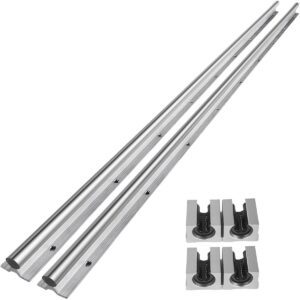
A linear bearing guide is a mechanical assembly that enables linear (straight-line) motion between two parts while supporting a load. It consists of a rail (or shaft) and a bearing block (or carriage) that moves along the rail with minimal friction.
Unlike rotary bearings that allow spinning motion, linear bearing guides are specifically engineered for translational movement, making them indispensable in systems where precision positioning and smooth travel are required.
How Does a Linear Bearing Guide Work?
The working principle of a linear bearing guide is based on reducing friction and guiding motion along a fixed axis:
- Rail and Carriage AssemblyThe rail is mounted to a stationary base, while the bearing block is attached to the moving load.
- Bearing ElementsInside the block, rolling elements (balls or rollers) circulate between the block and the rail, distributing the load evenly.
- Low-Friction MovementAs the drive system (such as a lead screw, belt, or linear motor) actuates the load, the bearing elements roll along the raceways of the rail, producing smooth, controlled motion.
- Repeatable PositioningThe stiffness and precision of the guide ensure that the load returns to the same position repeatedly, which is critical in machining and automation.
Types of Linear Bearing Guides
There are several configurations, each suited to different applications:
1. Recirculating Ball Linear Guides
- Description: Bearings with balls that recirculate within the block.
- Features: High load capacity, low noise, smooth motion.
- Best For: CNC machines, industrial robots, high-precision stages.
2. Roller-Type Linear Guides
- Description: Uses cylindrical rollers instead of balls.
- Features: Higher rigidity and load capacity, better for heavy-duty applications.
- Best For: Presses, large machine tools, construction equipment.
3. Plain (Sliding) Linear Bearings
- Description: No rolling elements; relies on a low-friction polymer or metal bushing sliding along a shaft.
- Features: Simple, cost-effective, self-lubricating options available.
- Best For: Light-load, low-speed applications like 3D printers and consumer appliances.
4. Linear Guide Rails with Integrated Encoders
- Description: Rail systems with position feedback devices built in.
- Features: Enables real-time position monitoring for closed-loop control.
- Best For: Robotic arms, semiconductor manufacturing, high-accuracy positioning systems.
Key Benefits of Linear Bearing Guides
1. High Precision and Repeatability
Linear guides provide micron-level accuracy, essential for tasks like PCB drilling, laser cutting, and pick-and-place operations.
2. Low Friction and High Efficiency
Rolling elements minimize energy loss, allowing motors to operate more efficiently and extend service life.
3. Load Capacity in Multiple Directions
They support radial, axial, and moment loads, making them versatile for complex motion systems.
4. Quiet Operation
Recirculating ball and roller guides produce minimal noise, suitable for cleanroom and medical environments.
5. Long Service Life
High-quality linear guides can endure millions of cycles with proper lubrication and maintenance.
Applications of Linear Bearing Guides
Linear bearing guides are found in nearly every industry that requires controlled linear motion:
- Manufacturing: CNC milling machines, lathes, grinding machines.
- Automation: Robotic arms, conveyor systems, packaging machinery.
- Electronics: Pick-and-place machines, soldering robots, wafer handlers.
- Medical: MRI scanners, surgical robots, diagnostic equipment.
- Transportation: Train door actuators, elevator systems.
- Consumer Products: 3D printers, camera sliders, high-end furniture mechanisms.
How to Choose the Right Linear Bearing Guide
Selecting the appropriate guide ensures optimal performance and durability:
- Load RequirementsDetermine static and dynamic loads, including radial, axial, and moment forces.
- Travel LengthEnsure the rail length accommodates the full range of motion plus allowances for mounting.
- Precision GradeChoose from standard, precision, or high-precision grades depending on positional accuracy needs.
- EnvironmentConsider contaminants (dust, coolant), temperature extremes, and corrosion risks—select stainless steel or sealed guides if needed.
- Mounting ConfigurationOptions include bolt-down, tapped holes, or custom brackets; match to your mechanical design.
- Lubrication SystemDecide between grease lubrication, oil mist, or maintenance-free sealed systems.
Maintenance Tips for Longevity
- Regular Lubrication – Apply recommended lubricant to prevent wear and corrosion.
- Inspect for Contamination – Keep rails and carriages free of dust, metal shavings, and chemicals.
- Check Preload and Alignment – Misalignment causes uneven wear and reduces accuracy.
- Monitor Noise and Vibration – Unusual sounds may indicate worn bearings or poor mounting.
- Follow Manufacturer Guidelines – Adhere to service intervals and replacement schedules.
Emerging Trends in Linear Bearing Guides
- Smart Guides with IoT Sensors – Embedded sensors monitor load, temperature, and wear in real time.
- Ceramic and Hybrid Bearings – Reduce weight and increase corrosion resistance.
- Modular and Customizable Systems – Quick-assembly designs for rapid prototyping.
- Eco-Friendly Lubrication – Biodegradable greases and dry-running polymers for green manufacturing.
Conclusion
The linear bearing guide is a cornerstone of modern motion control, enabling the precise, efficient, and reliable movement of countless machines and devices. By understanding the different types, benefits, and selection criteria, engineers and designers can optimize their systems for performance, durability, and cost-effectiveness.
Whether you’re building a high-speed CNC router, an automated assembly line, or a next-generation medical device, choosing the right linear bearing guide is a decision that directly impacts success.