

Introduction
In today’s high-precision industries like CNC machining, robotics, and automation, linear motion plays a crucial role. Smooth, accurate, and efficient linear movement is essential for machinery that performs tasks like cutting, printing, assembly, and handling delicate components. A key component enabling this smooth linear motion is the linear ball bearing.
Linear ball bearings are designed to support smooth movement along a linear path while minimizing friction and wear. They rely on ball elements that recirculate within the bearing housing to reduce friction and provide precise motion control.
In this article, we’ll take an in-depth look at linear ball bearings, including how they work, their types, materials, advantages, applications, and how to select the right one for your needs.
What Are Linear Ball Bearings?
A linear ball bearing is a type of bearing used to allow movement along a straight line. Unlike traditional rotary bearings that allow components to spin, linear ball bearings provide translational motion by enabling smooth movement along a rail or shaft.
These bearings use steel balls that circulate inside a bearing housing. The balls act as rolling elements between the bearing block and the guide rail, reducing friction and enabling precise linear movement. As the bearing block moves along the rail, the balls rotate, minimizing wear and increasing speed.
Key Components of a Linear Ball Bearing System:
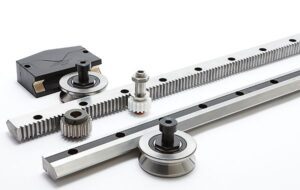
Guide Rail (Shaft): A hardened, precision-ground track along which the bearing block moves.
Bearing Block (Carriage): The housing that contains the steel balls and moves along the rail.
Steel Balls: These rolling elements reduce friction and allow smooth movement between the bearing block and the rail.
Ball Return System: A channel inside the bearing block that guides the steel balls in a circular motion, ensuring continuous recirculation.
Seals: Prevent contaminants like dirt and dust from entering the bearing system.
How Do Linear Ball Bearings Work?
Linear ball bearings work through a rolling contact mechanism. Instead of sliding against the rail like traditional bearings, linear ball bearings use recirculating ball elements to reduce friction. Here’s a breakdown of how they operate:
Rail and Bearing Block Interaction: The bearing block (carriage) is mounted to the moving component. It contains several steel balls that sit between the bearing block and the rail.
Movement: When force is applied, the bearing block moves along the guide rail. The balls roll between the bearing block and the rail, replacing sliding friction with rolling friction.
Ball Recirculation: The ball return system inside the bearing block ensures that the balls circulate continuously as the block moves along the rail, reducing wear and maintaining smooth motion.
The rolling motion of the steel balls minimizes friction, allowing for higher speeds and greater accuracy compared to traditional sliding bearings.
Types of Linear Ball Bearings
Several types of linear ball bearings exist to suit different applications, from light-duty systems to heavy-duty industrial machinery.
1. Standard Linear Ball Bearings
Standard linear ball bearings consist of a simple design where the steel balls circulate between the bearing block and the rail. These are the most common type and are often used in general-purpose applications.
Advantages: Cost-effective, smooth motion, low friction.
Applications: CNC machines, 3D printers, robotic arms.
2. Flanged Linear Ball Bearings
Flanged linear ball bearings have an integrated flange or mounting bracket that makes them easier to mount onto machine structures. They provide additional stability compared to non-flanged versions.
Advantages: Easier installation, better alignment, increased rigidity.
Applications: Robotics, industrial machinery, assembly lines.
3. Miniature Linear Ball Bearings
Miniature linear ball bearings are smaller and lighter than standard linear ball bearings, designed for compact machines or applications with limited space.
Advantages: High precision in small spaces, lightweight, compact.
Applications: Medical devices, electronics assembly, laboratory equipment.
4. Open Linear Ball Bearings
Open linear ball bearings don’t have any external seals or shields, allowing for easier lubrication and maintenance. However, they can be more susceptible to contamination from dirt or dust.
Advantages: Easy to clean and maintain, cost-effective.
Applications: Heavy-duty applications, material handling systems.
5. Closed Linear Ball Bearings
Closed linear ball bearings come with seals or shields to protect the internal components from contaminants like dust and dirt, making them more suitable for clean environments.
Advantages: Protection from contamination, extended service life.
Applications: CNC machines, robotics, medical equipment.
Materials Used in Linear Ball Bearings
Material selection is critical to the performance and durability of linear ball bearings. Here are the common materials used:
1. Hardened Steel
Commonly used for: Rail and ball materials.
Benefits: Provides high strength and wear resistance, making it ideal for heavy-duty applications.
2. Stainless Steel
Commonly used for: Bearings and races in environments exposed to moisture and corrosion.
Benefits: Excellent corrosion resistance, ideal for clean and humid environments.
3. Ceramic Balls
Commonly used for: Bearings in high-performance and high-temperature environments.
Benefits: Lower weight, high speed, and excellent resistance to wear and corrosion.
4. Plastic (Engineering Plastics)
Commonly used for: Lighter load-bearing applications.
Benefits: Lightweight, cost-effective, self-lubricating, and resistant to corrosion.
Advantages of Linear Ball Bearings
Linear ball bearings provide several advantages over traditional sliding bearings or other motion systems. These include:
1. Low Friction
The use of rolling balls significantly reduces friction compared to traditional sliding systems, enabling smooth, efficient movement.
2. High Precision and Repeatability
With precise machining and low backlash, linear ball bearings allow for highly accurate and repeatable motion, making them ideal for precision applications.
3. High Speed
Linear ball bearings support high-speed motion without compromising accuracy, making them ideal for automated and CNC systems.
4. Durability
Ball bearings are resistant to wear, and the recirculating design helps to extend the lifespan of the bearing system.
5. Load Distribution
Linear ball bearings evenly distribute load across the balls, enabling them to support both radial and axial loads.
6. Versatility
Linear ball bearings are available in various sizes, designs, and materials to suit different load, speed, and environmental conditions.
Applications of Linear Ball Bearings
Linear ball bearings are used across a wide range of industries where smooth, precise motion is required.
1. CNC Machines
Used to guide the tool heads and machine axes, linear ball bearings ensure that CNC machines operate with high accuracy and repeatability.
2. Robotics
Robots rely on linear ball bearings for precise, controlled movements along specific axes, whether for assembly, material handling, or manipulation.
3. Industrial Automation
In automated manufacturing and packaging lines, linear ball bearings are used to position parts, move components, and support high-speed processes.
4. Medical Devices
Medical imaging devices, diagnostic machines, and surgical robots often use linear ball bearings for precise positioning.
5. 3D Printing
In 3D printers, linear ball bearings ensure smooth movement of the print head and the bed, contributing to high-quality print results.
6. Material Handling Systems
Linear ball bearings are used in conveyors, elevators, and other material handling systems where reliable linear motion is needed.
Selecting the Right Linear Ball Bearing
Choosing the right linear ball bearing requires evaluating several factors:
1. Load Capacity
Ensure the bearing can support the static and dynamic loads of the application.
2. Accuracy Requirements
Consider whether high precision and low backlash are required for the specific motion task.
3. Speed and Acceleration
High-speed applications need linear bearings with low friction and high rigidity.
4. Environmental Conditions
Consider factors like temperature, moisture, or dust that may affect bearing performance. Stainless steel or sealed bearings are recommended in harsh conditions.
5. Space Constraints
In compact systems, miniature or slim-line linear ball bearings may be required.
Maintenance and Care
Regular maintenance ensures that linear ball bearings continue to perform optimally.
Lubrication: Periodic lubrication reduces friction and prevents premature wear. Choose appropriate grease or oil based on the application.
Cleaning: Keep the bearings and rails free from contaminants to ensure smooth movement. Regularly clean the bearing system if working in dusty or dirty environments.
Inspection: Regularly check for wear, misalignment, and other issues to prevent premature failure.
Conclusion
Linear ball bearings are indispensable components in modern machinery, automation systems, and precision equipment. Their ability to reduce friction, support high speeds, and provide accurate movement makes them ideal for a wide range of applications, from CNC machines and robotics to medical devices and 3D printing.
By understanding the structure, types, materials, and benefits of linear ball bearings, you can select the right system for your specific needs, ensuring optimal performance, reliability, and longevity.