

Linear Guide Rails: Complete Guide to Precision Motion and Industrial Automation
Linear guide rails are essential mechanical components used to achieve smooth, accurate, and low-friction linear motion in modern industrial systems. They are widely used in CNC machines, robotics, automation equipment, and precision manufacturing systems where accuracy and stability are critical.
At the core of this technology are the Linear Bearing and the Linear Guide Rail, which work together to provide controlled movement along a defined path with minimal resistance.

Introduction to Linear Guide Rails
Linear guide rails are fundamental to modern motion control systems.
What Are Linear Guide Rails
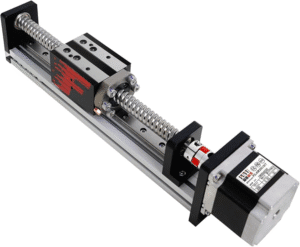
Linear guide rails are mechanical systems that allow a carriage (or block) to move smoothly along a rigid rail with high precision using rolling elements such as balls or rollers.
Key characteristics include:
- High positioning accuracy
- Smooth linear motion
- Excellent load handling
- Long service life
Importance in Modern Engineering
Linear guide rails are essential for:
- Automated manufacturing systems
- Precision machining tools
- Robotics and AI-driven machines
- Semiconductor production equipment
They ensure efficiency, repeatability, and stability in demanding environments.
Working Principle of Linear Guide Rails ⚙️
Rolling Element Mechanism
Inside the carriage, steel balls or rollers circulate between the rail and block, reducing direct sliding friction.
Load Distribution System
The load is evenly distributed across multiple rolling elements, which increases stability and reduces wear.
Key Components of Linear Guide Rails
Guide Rail
A hardened, precision-machined track that provides the motion path.
Carriage (Block)
The moving component that carries loads and machinery parts.
Rolling Elements
Balls or rollers that enable smooth motion with minimal friction.
Types of Linear Guide Rails
Ball-Type Linear Guide Rails
Offer high-speed and low-friction movement for precision applications.
Roller-Type Linear Guide Rails
Provide higher rigidity and load capacity for heavy-duty systems.
Miniature Linear Guide Rails
Designed for compact and micro-scale precision equipment.
Materials Used in Linear Guide Rails 🏗️
Hardened Steel
Provides excellent wear resistance and durability.
Stainless Steel
Used in corrosive or cleanroom environments.
Aluminum Structures
Lightweight support systems for specialized applications.
Advantages of Linear Guide Rails 🌟
High Precision Movement
Ensures accurate positioning in high-performance machines.
Low Friction Operation
Reduces energy loss and heat generation.
High Load Capacity
Supports heavy industrial equipment efficiently.
Applications of Linear Guide Rails 🏭
CNC Machinery
Used for cutting, milling, and precision machining.
Robotics and Automation
Enable smooth and repeatable robotic motion.
Medical Equipment
Used in imaging systems and surgical devices.
Semiconductor Manufacturing
Supports ultra-precise wafer handling systems.
How to Choose the Right Linear Guide Rails 🔍
Load Requirements
Consider both dynamic and static load capacities.
Accuracy and Speed
Select based on required precision and operating speed.
Environmental Conditions
Choose corrosion-resistant or sealed systems for harsh environments.
Maintenance and Lubrication 🛠️
Proper maintenance includes:
- Regular lubrication of rails
- Cleaning dust and debris
- Checking alignment and wear
Common Problems and Troubleshooting ⚠️
- Noise or vibration: Lack of lubrication or misalignment
- Uneven motion: Contaminants in the rail system
- Wear: Overloading or poor maintenance
Future Trends in Linear Motion Systems 🚀
Smart Linear Systems
Integration of sensors for real-time monitoring.
Self-Lubricating Technology
Reduces maintenance requirements significantly.
AI-Driven Motion Control
Improves accuracy and predictive maintenance.
Lightweight High-Strength Materials
Enhance speed and efficiency in modern machines.
Frequently Asked Questions
What are linear guide rails?
They are precision components that allow smooth linear motion in machines.
Where are they used?
CNC machines, robotics, medical devices, and semiconductor equipment.
What is the difference between ball and roller types?
Ball types offer speed, roller types offer higher load capacity.
Do linear guide rails need maintenance?
Yes, lubrication and cleaning are essential.
How long do they last?
With proper care, they can last many years.
Are they interchangeable?
Not always; compatibility depends on size and design.
Conclusion
Linear guide rails are a cornerstone of modern precision engineering, enabling smooth, accurate, and efficient motion control. Built around advanced Linear Bearing and Linear Guide Rail systems, they are essential in automation, robotics, and advanced manufacturing.
As technology evolves, linear guide rails will continue to become smarter, more efficient, and more integrated with digital systems, driving the future of high-precision motion control. ⚙️