

Outline
| Headings & Subheadings | LSI / Related Keywords |
|---|---|
| Introduction to Linear Bearing Rails | precision motion, linear guideways |
| What Are Linear Bearing Rails | linear guides, motion rails |
| Design and Structure of Linear Bearing Rails | carriage, raceways, rolling elements |
| How Linear Bearing Rails Work | rolling contact, friction reduction |
| Types of Linear Bearing Rails | profile rails, round shaft rails |
| Advantages of Linear Bearing Rails | precision, rigidity, load capacity |
| Linear Bearing Rails vs. Linear Ball Bearings | comparison, performance |
| Materials and Coatings | stainless steel, hardened steel, coatings |
| Applications in CNC and Robotics | automation, machine tools, packaging |
| Choosing the Right Linear Bearing Rails | load, precision, environment |
| Installation Guidelines | alignment, torque, lubrication |
| Maintenance Tips | cleaning, inspection, replacement |
| Common Problems and Solutions | wear, noise, misalignment |
| Innovations in Linear Bearing Rails | self-lubricating, smart sensing |
| Leading Manufacturers | YH Linear, THK, HIWIN, NSK |
| FAQs | lubrication, life, selection |
| Conclusion | precision, durability, performance |
Introduction to Linear Bearing Rails
In the world of modern manufacturing and industrial automation, linear bearing rails are indispensable components that enable precise, smooth, and repeatable motion. Whether in CNC machines, robotics, or laboratory automation, these rails ensure stability and accuracy in every movement.
A linear bearing rail allows motion along a straight path with minimal friction. The system uses rolling elements—such as balls or rollers—to support heavy loads while maintaining smooth, consistent travel. By integrating this technology, industries achieve greater precision, reliability, and operational efficiency.
Manufacturers like YH Linear, THK, and HIWIN are renowned for their innovative linear bearing rail designs that combine high rigidity, corrosion resistance, and long service life.
What Are Linear Bearing Rails
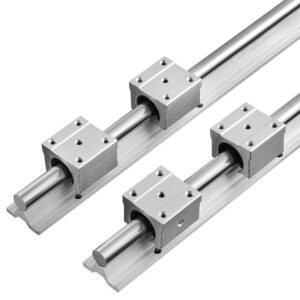
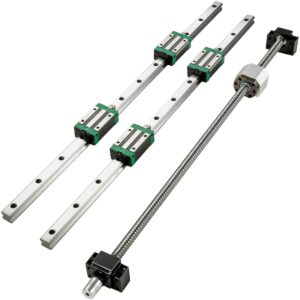
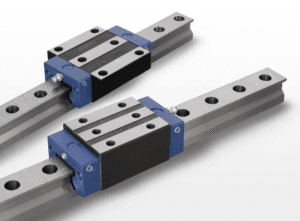
Linear bearing rails are precision-engineered motion components designed to provide linear guidance to moving machine parts. The system typically includes two main elements: a rail and a bearing block (carriage). Inside the carriage are rolling elements—balls or rollers—that move within precision-ground raceways.
This rolling mechanism minimizes friction and wear, ensuring accurate, high-speed movement. As a result, linear bearing rails are vital in applications that require both precision and load-bearing capability, such as CNC routers, milling machines, and industrial robots.
Design and Structure of Linear Bearing Rails
The performance and durability of a linear bearing rail depend on its internal structure and the quality of materials used. The primary components include:
Rail (Guideway): The linear track along which the carriage moves. Made from hardened or stainless steel.
Carriage (Bearing Block): Houses the rolling elements and ensures stable travel.
Rolling Elements: Precision steel balls or cylindrical rollers that minimize friction.
End Caps and Seals: Keep dust and debris out of the system.
Lubrication System: Ensures smooth movement and prevents metal-to-metal contact.
Together, these components deliver exceptional stiffness, accuracy, and long-term reliability under dynamic loads.
How Linear Bearing Rails Work
Linear bearing rails operate on the principle of rolling motion. As the carriage moves along the rail, the steel balls or rollers roll within raceways, providing nearly frictionless linear movement.
This design converts sliding friction into rolling friction—dramatically reducing resistance, heat, and wear. The result is smoother operation, lower power consumption, and enhanced positional accuracy.
Some linear rails feature recirculating rolling elements, which continuously loop through the carriage, allowing endless linear motion without losing performance.
Types of Linear Bearing Rails
Linear bearing rails come in several configurations based on design and application needs:
Profiled Linear Rails: Offer high rigidity and precision, ideal for CNC and heavy machinery.
Round Shaft Rails: Simplify installation and alignment, often used in light-duty applications.
Miniature Linear Rails: Compact systems for semiconductor or medical devices.
Wide-Body Rails: Designed for high-moment loads and greater stability.
Flanged Linear Rails: Provide easy mounting and better alignment.
Selecting the right rail type depends on load requirements, precision needs, and environmental conditions.
Advantages of Linear Bearing Rails
High Precision: Maintain consistent linear motion with micron-level accuracy.
Exceptional Rigidity: Resist deflection under heavy loads.
Reduced Friction: Rolling contact reduces wear and extends life.
Load Versatility: Can support vertical, horizontal, and inverted orientations.
Smooth and Silent Motion: Ideal for high-speed automation.
Long Lifespan: With proper lubrication, they operate reliably for millions of cycles.
Compact Design: Saves installation space while delivering superior strength.
These features make linear bearing rails the preferred choice for engineers designing precise, reliable motion systems.
Linear Bearing Rails vs. Linear Ball Bearings
| Feature | Linear Bearing Rails | Linear Ball Bearings |
|---|---|---|
| Structure | Rail and carriage | Shaft and bearing sleeve |
| Load Capacity | High | Medium |
| Rigidity | Excellent | Moderate |
| Precision | Very high | High |
| Installation | Fixed alignment | Easy alignment |
| Cost | Slightly higher | More economical |
| Applications | CNC, automation | 3D printers, light-duty tools |
In short, linear bearing rails deliver higher precision and load capacity, making them ideal for professional-grade industrial applications.
Materials and Coatings
The materials used in linear bearing rails determine their strength, wear resistance, and environmental compatibility. Common materials include:
High-Carbon Steel: Ensures strength and rigidity.
Stainless Steel: Provides corrosion resistance in humid or cleanroom conditions.
Aluminum Carriages: Reduce overall system weight.
Chrome Plating: Enhances smoothness and durability.
Nickel Coating: Protects against corrosion and contamination.
Choosing the right material ensures optimal performance in diverse environments—from factory floors to medical facilities.
Applications in CNC and Robotics
Linear bearing rails are widely used in precision industries, including:
CNC Machining: For tool head and table positioning.
Industrial Robots: Enable accurate and repeatable motion.
Packaging Equipment: Ensure fast, stable operations.
Semiconductor Fabrication: Maintain high precision under cleanroom conditions.
3D Printers: Deliver stable and quiet motion for detailed work.
Medical Devices: Used in imaging systems and laboratory automation.
In every application, linear bearing rails contribute to smoother performance, higher productivity, and reduced maintenance.
Choosing the Right Linear Bearing Rails
| Selection Factor | Recommendation |
|---|---|
| Load Requirements | Match static and dynamic loads accurately |
| Speed and Acceleration | Ensure compatibility with motion profile |
| Environment | Use stainless or coated rails for harsh environments |
| Precision Tolerance | Select grade according to application demands |
| Installation Space | Choose compact or flanged designs when necessary |
Proper selection guarantees maximum system life and performance efficiency.
Installation Guidelines
Ensure base surfaces are flat, parallel, and free of burrs.
Use precise torque settings when tightening screws.
Apply preload carefully to avoid deformation.
Check smoothness of motion before operation.
Always apply recommended lubricants to the raceways.
A correct installation process ensures consistent accuracy and long-term stability.
Maintenance Tips
To keep linear bearing rails in top condition:
Lubricate regularly with manufacturer-approved grease.
Inspect seals and replace if worn or damaged.
Clean surfaces to remove dust and chips.
Check preload and alignment during routine maintenance.
Monitor noise or vibration as early signs of wear.
Following these steps prevents breakdowns and extends operational life.
Common Problems and Solutions
| Issue | Possible Cause | Solution |
|---|---|---|
| Vibration or Noise | Contamination | Clean and re-lubricate |
| Uneven Movement | Misalignment | Re-level rails |
| Wear Marks | Insufficient lubrication | Apply proper grease |
| Corrosion | Exposure to moisture | Use stainless steel or coatings |
| Reduced Accuracy | Loose mounting bolts | Retighten and realign |
Regular inspection ensures consistent performance and safety.
Innovations in Linear Bearing Rails
Recent advancements are revolutionizing linear bearing rail technology:
Self-Lubricating Systems: Reduce maintenance time.
Embedded Sensors: Monitor temperature and load for predictive maintenance.
Hybrid Ceramic Rolling Elements: Provide lower friction and higher speeds.
Smart Rail Designs: Integrate IoT monitoring for industrial automation.
Lightweight Composites: Increase energy efficiency and reduce inertia.
These innovations enhance performance and ensure longer service intervals.
Leading Manufacturers
YH Linear: Specializes in high-precision, heavy-duty linear bearing rails.
THK: Pioneer in linear motion systems.
HIWIN: Offers efficient, durable, and cost-effective solutions.
NSK Motion Systems: Focuses on advanced bearing technology.
Bosch Rexroth: Renowned for industrial-grade motion solutions.
These manufacturers uphold global standards in precision, reliability, and service.
FAQs
What are linear bearing rails used for?
They guide moving components along a straight path with high precision and low friction.
Do linear bearing rails need lubrication?
Yes, lubrication minimizes wear and ensures long-lasting performance.
Can linear bearing rails be used vertically?
Yes, provided they are properly preloaded and supported.
How long do linear bearing rails last?
With proper care, they can last for millions of motion cycles.
Are linear bearing rails interchangeable between brands?
Some models are, but always verify size and tolerance compatibility.
Conclusion
Linear bearing rails represent the pinnacle of motion precision and reliability. From CNC machines to robotic systems, they ensure stable, friction-free movement that powers modern automation.
For superior durability and accuracy, YH Linear provides top-quality linear bearing rails engineered to meet the toughest industrial standards — guaranteeing performance, efficiency, and long service life.