

Linear motion has become the heart of modern machinery, and linear guide ball bearings play a vital role in achieving it. Whether you’re designing a CNC machine, robotic arm, or medical imaging device, these guides deliver precision, smoothness, and efficiency that no other component can match. In this comprehensive guide, we’ll explore every aspect of linear guide ball bearings — from how they work to how you can choose, use, and maintain them effectively.
Understanding Linear Guide Ball Bearing
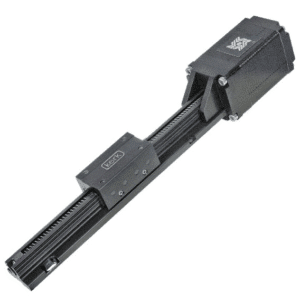
A linear guide ball bearing is a mechanical device that enables smooth, precise, and low-friction linear movement. It consists of a stationary rail and a moving block (carriage) that travels along it. Inside the block, small steel balls roll between raceways, creating an ultra-smooth motion path.
Unlike sliding bearings, which rely on surface contact, linear guide ball bearings depend on rolling elements. This rolling action minimizes friction, enhances accuracy, and allows high-speed motion without wear or binding.
Main Components of Linear Guide Ball Bearing
Every linear guide ball bearing is made of several meticulously engineered components:
Guide Rail: A hardened steel rail that acts as the stationary track.
Carriage or Block: The moving part that holds the rolling balls.
Recirculating Balls: Spherical bearings that roll between the rail and block, providing smooth motion.
Ball Retainer or Cage: Prevents the balls from colliding and maintains even spacing.
End Caps & Seals: Protect against dust, debris, and lubricant leakage.
Lubrication Port: Supplies grease or oil to reduce wear and ensure longevity.
Together, these elements allow the carriage to glide effortlessly along the rail, even under significant loads.
How a Linear Guide Ball Bearing Works
The working principle of a linear guide ball bearing revolves around recirculating ball movement. As the carriage moves, the steel balls roll along the raceway. When a ball exits one end, it’s guided through a return channel inside the block and re-enters the raceway at the opposite end.
This closed-loop movement ensures continuous rolling with minimal resistance, which enables high accuracy and repeatable motion over long travel distances.
Design and Structural Features
Linear guide ball bearings come with several design features that optimize performance:
Four-Row Design: Most modern guides use four rows of recirculating balls for load support in all directions.
Contact Angle: Usually around 45°, ensuring equal load capacity vertically and horizontally.
Preload Settings: Preload removes internal clearance, improving rigidity and stability.
Surface Hardening: Rails and blocks are surface-treated for wear resistance.
Caged Ball System: Reduces friction, noise, and ball collisions for smoother motion.
Each design element contributes to precision, rigidity, and extended operational life.
Advantages of Using Linear Guide Ball Bearings
High Precision: Achieve micron-level accuracy in movement.
Low Friction: Rolling motion drastically reduces resistance.
Durability: Hardened materials and quality seals ensure long service life.
Rigidity: Excellent support for loads and moments in multiple directions.
Compactness: High load capacity in a small, lightweight design.
Smooth Operation: Ideal for automation requiring fast and quiet motion.
These advantages make them indispensable in modern manufacturing and robotics.
Linear Guide Ball Bearing vs Linear Bushing
| Feature | Linear Guide Ball Bearing | Linear Bushing |
|---|---|---|
| Friction | Very low | Moderate |
| Load Capacity | High (multi-directional) | Moderate (axial only) |
| Accuracy | Extremely high | Moderate |
| Maintenance | Low | Medium |
| Cost | Higher | Lower |
| Applications | CNC, robotics, precision tools | Simpler automation setups |
While bushings work well for simpler systems, linear guide ball bearings dominate in applications demanding accuracy, repeatability, and strength.

Applications of Linear Guide Ball Bearings
Linear guide ball bearings are found in numerous high-precision industries:
CNC Machines: For precise tool path movement.
Robotics: Smooth articulation and axis motion.
Medical Equipment: Imaging machines, scanners, and lab automation.
Semiconductor Manufacturing: Cleanroom-compatible motion systems.
3D Printers and Plotters: For accurate positioning.
Packaging & Automation Lines: Continuous high-speed operations.
These industries rely on linear guides for consistent performance under dynamic loads.
Types of Linear Guide Ball Bearings
Standard Type: General-purpose use with balanced load capacity.
Flanged Type: For easy mounting without additional brackets.
Wide Type: Provides higher moment load resistance.
Compact Type: For limited-space applications.
Long Block Type: Increases stability for longer travel distances.
Caged Ball Type: Reduces friction and extends lifespan.
Choosing the correct type ensures optimal performance and longevity for your application.
Material Considerations
The material determines the durability and environmental adaptability of the bearing:
Carbon Steel: Common and affordable, suitable for dry environments.
Alloy Steel: Provides higher strength and fatigue resistance.
Stainless Steel: Excellent for humid or corrosive environments.
Ceramic Balls: Offer lower friction and higher corrosion resistance.
Selecting the right material helps match operational conditions like humidity, temperature, and load.
Performance Parameters
A linear guide ball bearing’s efficiency is defined by specific performance parameters:
Static Load Rating: Maximum load it can withstand without permanent deformation.
Dynamic Load Rating: Load that ensures a certain lifespan during continuous motion.
Moment Load Capacity: Ability to handle torque loads in roll, pitch, and yaw directions.
Running Accuracy: Straightness and smoothness of travel.
Stiffness: Resistance to deflection under load.
Speed Capability: Maximum operating speed based on lubrication and preload.
These specifications help engineers match a bearing’s capacity to operational demands.
Importance of Preload
Preload eliminates the tiny clearance between balls and raceways. While it enhances rigidity and reduces vibration, excessive preload increases friction and wear. Therefore, choosing the right preload class — light, medium, or heavy — is essential for balance between smoothness and stiffness.
Lubrication and Maintenance
Proper lubrication is the lifeline of a linear guide ball bearing. It prevents metal-to-metal contact and minimizes heat and wear. Use the following practices:
Use recommended grease or oil.
Re-lubricate periodically based on operating environment.
Avoid over-lubrication to prevent buildup.
Keep the seals clean and intact.
With consistent maintenance, a linear guide ball bearing can last millions of cycles without performance loss.
Installation Tips
To ensure maximum performance:
Mount on a flat and rigid base.
Align rails parallel to each other.
Use proper torque on mounting bolts.
Avoid contamination during assembly.
Perform test runs to detect misalignment.
Even slight errors in alignment can drastically reduce lifespan and increase friction.
Common Problems and Their Causes
| Problem | Possible Cause | Solution |
|---|---|---|
| Rough Movement | Misalignment or dirt | Re-align and clean guide |
| Excessive Noise | Lack of lubrication | Re-lubricate or replace lubricant |
| Vibration | Uneven preload | Adjust preload properly |
| Wear Marks | Contaminants | Replace seals, clean rail |
| Play or Looseness | Ball or raceway wear | Replace block or rail |
Early detection and correction of these problems prevent costly downtime.
Testing and Inspection Methods
Visual Check: Look for corrosion, wear, or debris.
Motion Test: Slide carriage manually for rough spots.
Sound Test: Listen for rattling or squeaks.
Load Test: Verify rigidity under operational load.
Lubricant Check: Ensure clean, consistent grease flow.
Regular inspection prolongs the bearing’s operational reliability.
Environmental Protection
Dust, moisture, and chemical exposure are enemies of linear guide ball bearings. Protective measures include:
Seals and Wipers: Prevent ingress of contaminants.
Bellows or Covers: Shield the rails from external elements.
Corrosion-Resistant Materials: Use stainless or coated rails in humid areas.
Lubrication Film: Acts as a barrier against oxidation.
Proper protection maintains both smoothness and precision.
Selecting the Right Linear Guide Ball Bearing
When choosing the ideal guide, consider:
Load and moment conditions
Travel length and speed
Required precision and stiffness
Environmental factors (temperature, moisture, dust)
Space and mounting restrictions
Maintenance accessibility
Selecting the correct model ensures maximum life, reliability, and performance for your machinery.
Applications in Automation and Robotics
In robotics and automation, linear guide ball bearings provide repeatable positioning, silent operation, and compact performance. Robots rely on them for precision in every axis, while automation lines use them for reliability during continuous motion.

Innovations in Linear Guide Ball Bearing Technology
Modern advancements have introduced:
Ball Chain Systems: Reduce friction and noise.
Self-Lubricating Blocks: Minimize maintenance.
Magnetically Sealed Designs: Protect against microscopic debris.
Lightweight Materials: Use of aluminum or polymer components for speed-focused systems.
These innovations continue to redefine linear motion performance.
Future Trends
The future points toward smart bearings — integrated with sensors to monitor temperature, vibration, and load in real-time. This predictive maintenance trend ensures minimal downtime and optimized performance.
Linear Guide Ball Bearing
In the ever-evolving field of mechanical motion, the linear guide ball bearing remains a cornerstone of precision engineering. From small-scale 3D printers to massive industrial CNC machines, its role in enhancing motion control, reliability, and speed is unmatched. Proper selection, care, and maintenance ensure not only smooth movement but also extended operational life and machine accuracy.
Frequently Asked Questions
What makes a linear guide ball bearing better than a sliding guide?
Rolling motion significantly reduces friction, ensuring smoother and more accurate movement compared to sliding surfaces.
How often should I lubricate my linear guide ball bearing?
It depends on the environment and usage, but typically every 6 months or after 1000 hours of operation.
Can I use linear guides in vertical applications?
Yes, but ensure correct preload and load direction compatibility to prevent slippage.
Why is preload important in linear guides?
Preload enhances rigidity and precision by eliminating internal clearances between the balls and raceways.
What happens if a linear guide is misaligned?
Misalignment increases stress on the balls, leading to premature wear, vibration, and failure.
Are linear guide ball bearings suitable for cleanrooms?
Yes, many stainless-steel or sealed models are designed for clean environments like semiconductor or medical industries.
Conclusion
The linear guide ball bearing is a triumph of mechanical engineering — offering unmatched precision, rigidity, and smooth motion. From compact automation systems to heavy-duty machine tools, these components remain at the heart of precision motion. When correctly selected, installed, and maintained, they not only increase machine performance but also extend operational life, ensuring reliability and consistency in every application.
Inbound Link Suggestions
Link to: “CNC Machine Linear Motion Systems”
Link to: “How to Maintain Industrial Bearings for Longevity”
Outbound Link Suggestions
Link to: “ISO Standards for Bearing Design”
Link to: “Guide to Lubrication in Precision Systems”