

Comprehensive Outline for the Topic “Linear Rail”
| Heading Level | Section Title | Description |
|---|---|---|
| H1 | Linear Rail: Powerful Benefits and Essential Insights for Precision Motion Systems | Main topic introduction |
| H2 | What Is a Linear Rail? | Definition and basic overview |
| H3 | Key Components of a Linear Rail System | Rail, carriage, bearings, seals |
| H3 | How Linear Rail Systems Work | Motion mechanics and load distribution |
| H2 | History and Evolution of Linear Rail Technology | Development timeline |
| H3 | Early Mechanical Guide Systems | Traditional sliding guides |
| H3 | Modern Precision Linear Guides | Advanced engineering materials |
| H2 | Types of Linear Rail Systems | Main categories |
| H3 | Ball Bearing Linear Rails | Smooth high-speed movement |
| H3 | Roller Linear Rails | Heavy-load applications |
| H3 | Miniature Linear Rails | Compact precision systems |
| H2 | Advantages of Using a Linear Rail | Performance benefits |
| H3 | High Precision and Accuracy | Reduced motion errors |
| H3 | Low Friction Movement | Efficient energy use |
| H3 | High Load Capacity | Industrial strength capabilities |
| H2 | Common Applications of Linear Rail Systems | Industries and equipment |
| H3 | CNC Machines and Automation | Manufacturing uses |
| H3 | Robotics and Industrial Automation | Robotic arms and movement |
| H3 | Medical Equipment | Precision imaging systems |
| H2 | Linear Rail vs Traditional Guide Systems | Comparison |
| H3 | Performance Differences | Accuracy and durability |
| H3 | Cost and Maintenance | Financial considerations |
| H2 | Materials Used in Linear Rail Manufacturing | Engineering materials |
| H3 | Hardened Steel | Durability and strength |
| H3 | Stainless Steel | Corrosion resistance |
| H3 | Aluminum Alloys | Lightweight designs |
| H2 | How to Choose the Right Linear Rail | Selection criteria |
| H3 | Load Capacity Requirements | Weight and forces |
| H3 | Environmental Conditions | Dust, moisture, temperature |
| H3 | Speed and Accuracy Needs | Motion requirements |
| H2 | Installation Guidelines for Linear Rail Systems | Setup best practices |
| H3 | Alignment and Mounting | Precision installation |
| H3 | Lubrication and Maintenance | Ensuring long life |
| H2 | Maintenance Tips for Linear Rail Systems | Preventive care |
| H3 | Cleaning Procedures | Removing debris |
| H3 | Lubrication Schedules | Reducing wear |
| H2 | Future Trends in Linear Rail Technology | Emerging innovations |
| H3 | Smart Linear Motion Systems | Sensor integration |
| H3 | Industry 4.0 Automation | Intelligent manufacturing |
| H2 | Frequently Asked Questions About Linear Rail | Common user queries |
| H2 | Conclusion | Final thoughts |
Linear Rail: Powerful Benefits and Essential Insights for Precision Motion Systems
What Is a Linear Rail?
A linear rail is a mechanical component designed to guide motion in a straight line with minimal friction and high precision. It is widely used in automation systems, manufacturing equipment, robotics, and precision machinery.
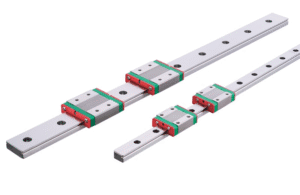
A typical linear rail system consists of a rail mounted on a surface and a moving carriage (or block) that travels along the rail. Inside the carriage are rolling elements—usually ball bearings or rollers—that allow smooth and controlled motion.
Linear rails are essential in modern engineering because they enable machines to move components with extremely high accuracy. From CNC machining centers to semiconductor manufacturing equipment, precision linear motion is critical for performance.
Key Components of a Linear Rail System
A linear rail assembly includes several important parts that work together to deliver smooth movement.
1. Rail (Guide Rail)
The rail is the fixed track that the carriage travels along. It is typically made from hardened steel for durability and precision.
2. Carriage or Block
The carriage is the moving part that slides along the rail. It contains bearings that roll along grooves in the rail.
3. Bearings (Balls or Rollers)
Rolling elements reduce friction between the carriage and rail. These bearings allow smooth and accurate movement.
4. End Seals and Lubrication Ports
These components protect internal parts from dust and contamination while allowing lubrication to reach the bearings.
Together, these components form a motion system that provides consistent, low-friction movement.
How Linear Rail Systems Work
The working principle of a linear rail is simple but highly engineered.
Inside the carriage, rolling bearings circulate through a closed loop path. As the carriage moves along the rail, the bearings roll along the contact surfaces, reducing friction significantly compared with sliding mechanisms.
This rolling motion provides several advantages:
Smooth and consistent travel
High positioning accuracy
Reduced wear
Greater load capacity
Because the bearings distribute loads evenly across the rail surface, the system can support heavy loads while maintaining precise motion.
History and Evolution of Linear Rail Technology
Early Mechanical Guide Systems
Before modern linear rails were developed, machines relied on plain sliding guides. These guides used metal surfaces sliding against each other with lubrication.
While functional, these early systems had limitations:
Higher friction
Lower precision
Faster wear
Frequent maintenance requirements
As industrial machinery became more advanced, engineers needed more accurate motion control systems.
Modern Precision Linear Guides
The modern linear rail emerged with the development of recirculating ball bearing technology. These systems significantly reduced friction and improved precision.
Today’s linear rails use:
Precision-ground hardened steel
Advanced bearing systems
Integrated lubrication channels
High-tolerance manufacturing
These improvements allow linear rails to operate in demanding environments such as semiconductor fabrication, robotics, and aerospace engineering.
Types of Linear Rail Systems
Different applications require different types of linear rail designs.
Ball Bearing Linear Rails
Ball bearing linear rails are the most common type used in industrial equipment.
They use recirculating ball bearings inside the carriage to create smooth motion along the rail.
Key features include:
High speed capability
Low friction
High positioning accuracy
Moderate load capacity
These systems are widely used in CNC machines, 3D printers, and automation equipment.
Roller Linear Rails
Roller linear rails use cylindrical rollers instead of ball bearings.
Rollers provide a larger contact surface, allowing the system to handle heavier loads.
Advantages include:
Higher load capacity
Greater rigidity
Improved durability
These rails are commonly used in heavy machinery and industrial automation systems.
Miniature Linear Rails
Miniature linear rails are designed for compact applications that require precise motion but limited space.
They are commonly used in:
Medical devices
Laboratory equipment
Semiconductor manufacturing
Precision optics
Despite their small size, miniature rails still provide excellent accuracy and smooth motion.
Advantages of Using a Linear Rail
Linear rails offer numerous benefits that make them essential in modern mechanical systems.
High Precision and Accuracy
One of the biggest advantages of a linear rail is its exceptional positioning accuracy.
Precision-ground rails and rolling bearings allow machines to move with minimal deviation from the intended path. This precision is critical for industries such as CNC machining and semiconductor manufacturing.
Low Friction Movement
Because linear rails use rolling bearings instead of sliding surfaces, friction is dramatically reduced.
Lower friction leads to:
Smoother motion
Reduced power consumption
Less wear on components
Longer system life
High Load Capacity
Linear rails are designed to support significant loads while maintaining precise movement.
Their ability to distribute forces across multiple bearings allows them to handle:
Vertical loads
Horizontal loads
Moment loads
This versatility makes them suitable for heavy industrial machinery.
Common Applications of Linear Rail Systems
Linear rails are used across many industries where precise linear motion is required.
CNC Machines and Automation
Computer numerical control (CNC) machines rely heavily on linear rails to guide cutting tools and workpieces.
These rails ensure that movements are accurate and repeatable, which is essential for producing high-quality components.
Robotics and Industrial Automation
Robotic systems frequently use linear rails to control motion along a single axis.
Examples include:
Robotic arms
Pick-and-place machines
Automated assembly systems
These systems require precise positioning and reliable motion control.
Medical Equipment
Medical imaging and diagnostic machines often rely on linear rails.
Examples include:
CT scanners
MRI machines
Laboratory automation equipment
Precision movement ensures accurate imaging and reliable operation.
Linear Rail vs Traditional Guide Systems
Performance Differences
Compared with traditional sliding guides, linear rails provide several advantages:
| Feature | Linear Rail | Sliding Guide |
|---|---|---|
| Friction | Very Low | High |
| Accuracy | Very High | Moderate |
| Maintenance | Low | Higher |
| Wear Rate | Low | High |
These differences make linear rails the preferred choice for high-precision machinery.
Cost and Maintenance
While linear rails may cost more initially, they often provide lower total operating costs due to reduced maintenance and longer lifespan.
Proper lubrication and cleaning can extend their service life significantly.
Materials Used in Linear Rail Manufacturing
Hardened Steel
Most industrial linear rails are made from hardened steel because of its:
High strength
Excellent wear resistance
Long operational life
Stainless Steel
Stainless steel rails are used in environments where corrosion resistance is important, such as food processing or medical equipment.
Aluminum Alloys
Aluminum rails are lightweight and suitable for applications where weight reduction is important.
How to Choose the Right Linear Rail
Selecting the right linear rail depends on several factors.
Load Capacity Requirements
Understanding the load your system will carry is critical.
Consider:
Static loads
Dynamic loads
Moment loads
Choosing a rail with insufficient load capacity can lead to premature failure.
Environmental Conditions
Environmental factors can significantly impact rail performance.
Consider:
Dust or debris
Moisture
Temperature extremes
Chemical exposure
Sealed or stainless steel rails may be required in harsh environments.
Speed and Accuracy Needs
High-speed automation systems require rails designed for rapid movement while maintaining precision.
Installation Guidelines for Linear Rail Systems
Alignment and Mounting
Proper alignment is critical for optimal performance.
Best practices include:
Using precision mounting surfaces
Ensuring rails are parallel
Applying proper torque to mounting bolts
Incorrect installation can lead to premature wear and reduced accuracy.
Lubrication and Maintenance
Lubrication reduces friction and protects bearings from wear.
Manufacturers typically recommend:
Grease lubrication for standard applications
Oil lubrication for high-speed systems
Regular lubrication extends service life significantly.
Maintenance Tips for Linear Rail Systems
Maintaining a linear rail system ensures reliable performance over time.
Cleaning Procedures
Debris and contaminants can damage bearings and reduce precision.
Maintenance should include:
Wiping rails with clean cloths
Removing metal chips or dust
Checking seals for damage
Lubrication Schedules
Consistent lubrication is essential.
Typical schedules include:
Weekly lubrication for heavy-duty systems
Monthly lubrication for light-duty equipment
Always follow manufacturer recommendations.
Future Trends in Linear Rail Technology
Smart Linear Motion Systems
Modern systems increasingly integrate sensors that monitor:
Load
Temperature
Vibration
Wear
These smart systems help predict maintenance needs and reduce downtime.
Industry 4.0 Automation
Linear motion technology plays a key role in Industry 4.0 manufacturing.
Advanced automation systems rely on precise linear movement for efficient production.
A helpful engineering resource for further study can be found here:
https://www.thk.com/?q=us/node/559

Frequently Asked Questions About Linear Rail
1. What is the purpose of a linear rail?
A linear rail guides motion in a straight line with high precision and low friction, making it essential for automation and precision machinery.
2. What industries use linear rails the most?
Industries such as manufacturing, robotics, semiconductor production, medical equipment, and aerospace frequently use linear rails.
3. What is the difference between linear rails and linear bearings?
Linear rails are the guide tracks, while linear bearings are the rolling components that move along the rails.
4. How long do linear rails last?
With proper lubrication and maintenance, linear rails can last many years or millions of cycles depending on the application.
5. Are linear rails better than sliding guides?
Yes. Linear rails provide lower friction, higher precision, and longer lifespan compared to traditional sliding guides.
6. Do linear rails require regular lubrication?
Yes. Lubrication reduces wear and ensures smooth movement of the bearings.
Conclusion
Linear rails are fundamental components in modern mechanical systems that require precise, reliable motion control. Their low friction, high accuracy, and strong load-handling capabilities make them indispensable in industries such as robotics, automation, CNC machining, and medical technology.
As manufacturing continues to advance toward smarter automation and Industry 4.0 systems, the role of linear rails will only become more critical. By selecting the right rail system, installing it correctly, and maintaining it regularly, engineers can ensure long-lasting performance and precision.