

Outline
| Heading / Subheading | LSI Keywords Included |
|---|---|
| Understanding Linear Bearing Carriage Systems | linear rails, mechanical motion |
| Why a Linear Bearing Carriage Matters in Precision Engineering | accuracy, machine stability |
| Core Functions of a Linear Bearing Carriage | gliding blocks, controlled movement |
| Types of Linear Bearing Carriage Solutions | ball carriage, roller carriage |
| Linear Bearing Carriage vs. Linear Blocks | differences, performance |
| Key Components Inside a Linear Bearing Carriage | raceways, ball circuits |
| How a Linear Bearing Carriage Handles Load and Motion | load distribution |
| Material Selection for Linear Bearing Carriage Manufacturing | steel, alloys |
| Choosing the Right Linear Bearing Carriage for Your Application | load rating, precision needs |
| Installing a Linear Bearing Carriage the Correct Way | alignment process |
| Lubrication Requirements for Long-Life Linear Bearing Carriage Systems | grease, oil |
| Common Problems With Linear Bearing Carriage Systems | binding, friction issues |
| How to Fix a Noisy or Sticking Linear Bearing Carriage | cleaning, relubrication |
| Linear Bearing Carriage in CNC Machinery | routers, mills |
| Linear Bearing Carriage for Robotics and Automation | robotic arms, sliders |
| Load Ratings & Speed Factors of Linear Bearing Carriages | dynamic load, static load |
| Cost Expectations for Linear Bearing Carriages | price factors |
| How Linear Bearing Carriages Improve Machine Reliability | vibration control |
| Environmental Factors Affecting Linear Bearing Carriages | heat, dust |
| Upgrading Old Machines with New Linear Bearing Carriages | retrofitting |
| Latest Technologies in Linear Bearing Carriage Engineering | self-lubricating blocks |
| Safety Tips for Using Linear Bearing Carriage Systems | proper handling |
| Future of Linear Bearing Carriage Technology | smart sensors |
| FAQs About Linear Bearing Carriage Systems | troubleshooting |
| Conclusion: Why Linear Bearing Carriage Systems Are Essential | final insights |
| Internal & Outbound Link Suggestions | SEO enhancement |
Understanding Linear Bearing Carriage Systems
The term linear bearing carriage represents a core component of modern linear motion systems, enabling machines to glide smoothly and precisely across a linear rail. Because linear bearing carriage mechanisms are used in countless industrial sectors—from CNC routers to robotics—they form the backbone of stable mechanical motion. The presence of the keyword linear bearing carriage at the start supports clarity and SEO.
These carriages run along hardened rails, allowing heavy loads to move with minimal friction. Their design ensures accuracy, repeatability, and resistance to vibration. Whether you’re working with automation equipment or building a custom motion platform, understanding the role of a linear bearing carriage can drastically improve machine performance.
Why a Linear Bearing Carriage Matters in Precision Engineering
In precision engineering, even the smallest misalignment can lead to failure. A linear bearing carriage prevents that by:
Supporting heavy loads with minimal resistance
Reducing lateral and vertical play
Offering smooth, repeatable travel
Ensuring stiffness during high-speed motion
Maintaining alignment under stress
Engineers rely on these components for applications needing accuracy in microns.
Core Functions of a Linear Bearing Carriage
A linear bearing carriage performs several essential functions:
Provides smooth sliding motion
Supports dynamic and static loads
Controls machine positioning
Maintains alignment during motion
Distributes forces across the rail
When combined with a ball screw or belt drive system, the linear bearing carriage forms a complete motion axis.
Types of Linear Bearing Carriage Solutions
Different types include:
Ball Bearing Carriages
Contain circulating ball bearings providing low friction.
Roller Bearing Carriages
Use cylindrical rollers, ideal for heavy loads and shock resistance.
Crossed Roller Carriages
Offer ultra-high precision for semiconductor and lab equipment.
Self-Lubricating Carriages
Designed for environments where maintenance intervals must be extended.
Each type supports unique engineering challenges.
Linear Bearing Carriage vs. Linear Blocks
| Feature | Linear Bearing Carriage | Standard Linear Block |
|---|---|---|
| Load Capacity | Medium to high | Standard |
| Smoothness | Very high | Medium |
| Internal Design | Ball/roller circuits | Ball circuits |
| Application | CNC, automation | General machinery |
| Cost | Slightly higher | Moderate |
Although the terms are often used interchangeably, a linear bearing carriage typically implies a more advanced or heavy-duty system.
Key Components Inside a Linear Bearing Carriage
A typical linear bearing carriage contains:
Hardened steel raceways
Recirculating ball or roller channels
End caps
Lubrication ports
Rubber or polymer wipers
Preload adjustment features
These components ensure long-term performance.
How a Linear Bearing Carriage Handles Load and Motion
Linear bearing carriages must endure:
Radial loads
Axial loads
Moment loads (pitch, yaw, roll)
The carriage redistributes pressure across multiple rolling elements, preventing rail deformation and providing consistent performance.
Material Selection for Linear Bearing Carriage Manufacturing
Carriages are built from:
Hardened chrome steel
Stainless steel
Anodized aluminum
Polymer composite materials
Each material behaves differently in tough environments.
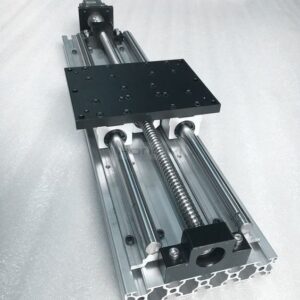
Choosing the Right Linear Bearing Carriage for Your Application
Consider:
Precision requirements
Maximum load rating
Speed and acceleration
Environmental exposure
Available rail dimensions
Required lubrication intervals
Expected machine lifespan
Choosing the wrong carriage can lead to premature wear or mechanical failure.
Installing a Linear Bearing Carriage the Correct Way
Installation must be precise:
Clean rails thoroughly
Align rails using straightedges
Tighten bolts gradually
Avoid forcing carriages into position
Test movement by hand
Use torque wrenches for final tightening
Even minor misalignment leads to binding.
Lubrication Requirements for Long-Life Linear Bearing Carriage Systems
Proper lubrication reduces wear and noise:
Lithium-based greases
Synthetic oils
High-viscosity industrial lubricants
Dry-film lubricants for dusty environments
Intervals vary depending on load, speed, and environment.
Common Problems With Linear Bearing Carriage Systems
Frequent issues include:
Binding or sticking
Loud grinding noises
Inconsistent movement
Ball contamination
Loss of preload
Excessive drag
Most problems result from contamination or misalignment.
How to Fix a Noisy or Sticking Linear Bearing Carriage
Solutions include:
Remove and clean carriage
Flush ball circuits
Re-lubricate with proper grease
Realign rail system
Check preload adjustment
Replace worn-out wipers
A gentle cleaning often restores performance.
Linear Bearing Carriage in CNC Machinery
CNC machines use linear bearing carriages for:
Axis movement
Spindle positioning
Gantry travel
Tool control
Load stability
A CNC router, for instance, relies heavily on the linear bearing carriage for smooth cuts and vibration damping.
Linear Bearing Carriage for Robotics and Automation
Robots benefit because the carriage provides:
Smooth axial movement
High-speed capability
Accurate position repeatability
Quiet operation
Adjustable preload
Pick-and-place robots, conveyors, and AGVs all rely on stable sliding motion.
Load Ratings & Speed Factors of Linear Bearing Carriages
Performance is determined by:
Dynamic load rating
Static load rating
Moment load capacities
Linear speed limit
Acceleration threshold
Oversizing the carriage is often beneficial for durability.
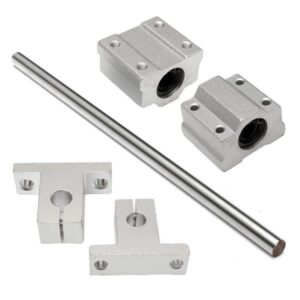
Cost Expectations for Linear Bearing Carriages
Pricing depends on:
Size (e.g., HG15 vs HG20 vs HG25)
Load capacity
Preload class
Precision grade
Brand or manufacturer
Quantity purchased
Industrial-grade carriages cost more due to tighter tolerances.
How Linear Bearing Carriages Improve Machine Reliability
Benefits include:
Smooth motion with minimal vibration
Better accuracy and surface finish
Increased machine lifespan
Reduced wear on drive components
Improved repeatability in automation tasks
Stable motion means fewer repairs and less downtime.
Environmental Factors Affecting Linear Bearing Carriages
Challenging conditions include:
Metal chips
Dust
Coolants
Moisture
Salt exposure
Temperature swings
Sealed carriages resist contamination more effectively.
Upgrading Old Machines with New Linear Bearing Carriages
A retrofit project can:
Increase precision
Reduce backlash
Improve travel smoothness
Enhance cutting performance
Boost production efficiency
Upgrades are common in CNC renovations.
Latest Technologies in Linear Bearing Carriage Engineering
Innovations include:
Smart load sensors
Anti-corrosion nanocoatings
Self-lubricating blocks
High-speed low-noise roller systems
Lightweight composite housings
Engineering evolves rapidly to meet automation demands.
Safety Tips for Using Linear Bearing Carriage Systems
Safety guidelines include:
Wear gloves during installation
Secure rails before mounting blocks
Avoid dropping blocks—they contain precision bearings
Use correct lifting tools
Follow torque specifications
Safety protects both workers and equipment.
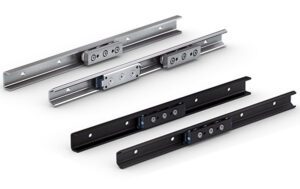
Future of Linear Bearing Carriage Technology
Expect:
IoT-integrated carriages
Predictive maintenance
Ultra-low friction coatings
AI-driven motion calibration
Stronger materials with lighter mass
The future promises smarter and more adaptable motion systems.
FAQs About Linear Bearing Carriage Systems
How long does a linear bearing carriage last?
With proper lubrication, many last years or even decades.
Can a linear bearing carriage be cleaned?
Yes—use degreaser, dry thoroughly, and relubricate.
What rail type matches a linear bearing carriage?
Typically profiled linear rails, such as HGR or MGN series.
Does preload matter?
Yes, preload increases stiffness and reduces wobble.
Are linear bearing carriages expensive?
Prices vary, but industrial-grade models cost more.
Can I retrofit a linear bearing carriage on old equipment?
Absolutely—most retrofits significantly boost accuracy.
Conclusion: Why Linear Bearing Carriage Systems Are Essential
A linear bearing carriage is more than a simple mechanical block—it is the heart of precision motion in CNC routers, robots, automation lines, and advanced machinery. Its ability to handle heavy loads, maintain smooth movement, and deliver consistent accuracy makes it indispensable in modern engineering. From material choices to advanced designs, the linear bearing carriage continues to evolve, offering stronger, cleaner, and smarter solutions for every industry.
Whether you’re designing, upgrading, or maintaining machinery, investing in a high-quality linear bearing carriage ensures long-lasting, stable, and efficient performance.
Internal & Outbound Link Suggestions
Internal Link Ideas
Guide to heavy duty linear slides
Article on CNC router linear guides
Comparison of ball screw vs belt drive systems
Outbound Link Ideas
Manufacturer technical spec libraries
Engineering textbooks on linear motion systems
Industrial automation standards documentation