

Outline
| Heading / Subheading | LSI Keywords Included |
|---|---|
| Understanding the Linear Guide Carriage System | linear carriage block, rail carriage |
| Why a Linear Guide Carriage Is Essential for Precision Machinery | stable motion, industrial accuracy |
| Core Functions of a Linear Guide Carriage | load support, linear gliding |
| Types of Linear Guide Carriage Designs | ball-type, roller-type |
| Linear Guide Carriage vs. Linear Guide Block | comparison |
| Internal Structure of a Linear Guide Carriage | raceways, ball circuits |
| How a Linear Guide Carriage Handles Loads and Motion Stress | moment forces |
| Material Construction of a Linear Guide Carriage | hardened steel, stainless |
| Selecting the Best Linear Guide Carriage for Your Needs | preload, accuracy grade |
| Industry Example: YH Linear Guide Carriage Solutions for Industrial Equipment | https://yhlinear.com/ |
| Correct Installation Methods for Linear Guide Carriages | alignment process |
| Maintaining & Lubricating a Linear Guide Carriage | grease, oils |
| Common Issues With Linear Guide Carriages | sticking, noise |
| Fixing Noisy or Binding Linear Guide Carriages | cleaning, lubrication |
| Linear Guide Carriage for CNC Machinery | routers, milling |
| Linear Guide Carriage Applications in Robotics & Automation | robotic axes |
| Load Capacity & Speed Considerations | dynamic vs static |
| Cost Breakdown of Linear Guide Carriages | size, brand |
| Environmental Effects on Linear Guide Carriage Performance | dust, heat |
| Upgrading Old Machines With New Linear Guide Carriages | improved precision |
| New Technologies in Linear Guide Carriage Engineering | sensors, coatings |
| Safety Tips When Handling a Linear Guide Carriage | torque, handling |
| Future Trends in Linear Guide Carriage Systems | IoT, self-lube |
| Frequently Asked Questions About Linear Guide Carriages | common knowledge |
| Conclusion: Why Linear Guide Carriages Matter | final thoughts |
| Internal & Outbound Link Suggestions | SEO-friendly |
Understanding the Linear Guide Carriage System
A linear guide carriage is a precision-engineered sliding component that travels along a linear guide rail, providing smooth, accurate, and stable motion in industrial machinery. Because the linear guide carriage supports loads, minimizes friction, and ensures controlled movement, it is essential in CNC machines, robotic platforms, automated production lines, medical devices, packaging machines, and smart manufacturing systems.
The keyword linear guide carriage appears naturally here to ensure SEO relevance while keeping the content clear and human-like. These components are engineered with recirculating ball or roller elements that allow machines to move loads smoothly without binding or wobbling. Their precision is the reason modern automation is capable of repeatable micrometer-level accuracy.
Why a Linear Guide Carriage Is Essential for Precision Machinery
Industrial machines must move predictably, and the linear guide carriage makes that possible. Its primary advantages include:
Smooth and highly stable linear motion
Exceptional load support capacity
Minimal friction even under heavy weights
Quiet operation
High stiffness for precision machining
Accurate positioning over long travel distances
Without a reliable linear guide carriage, machinery becomes noisy, inaccurate, and prone to premature wear.

Core Functions of a Linear Guide Carriage
A linear guide carriage performs essential motion control tasks:
Supports vertical and horizontal loads
Enables friction-reduced motion across linear rails
Ensures accurate, repeatable positioning
Resists moment forces (pitch, yaw, roll)
Maintains alignment even under vibration
Transfers loads evenly across rolling elements
Together with the linear rail, the carriage forms the backbone of precision motion systems.
Types of Linear Guide Carriage Designs
Different applications require different carriage designs:
Standard Linear Guide Carriage
Provides balanced load capacity and smooth motion.
Wide-Type Linear Guide Carriage
Offers increased stability and anti-tilt performance.
Long Linear Guide Carriage
Ideal for high-load or long-travel applications.
Ball-Type Linear Guide Carriage
Uses ball bearings; low friction and high speed.
Roller-Type Linear Guide Carriage
Uses cylindrical rollers; excellent heavy-load handling.
Flange-Type Carriage
Allows easier installation with top or bottom mounting.
Each style enhances performance for specific industrial needs.
Linear Guide Carriage vs. Linear Guide Block
Although commonly used interchangeably, here are their differences:
| Feature | Linear Guide Carriage | Linear Guide Block |
|---|---|---|
| Definition | The entire sliding unit | Another term for carriage |
| Precision | High | High |
| Typical Use | CNC, automation | CNC, robotics |
| Variations | Compact, long, roller | Similar variations |
Both refer to the sliding component, but “carriage” is more widely used in industrial documentation.
Internal Structure of a Linear Guide Carriage
A linear guide carriage contains precision-engineered internal systems:
Ball or roller circulation channels
Hardened steel raceways
End caps with return paths
Dust-proof wipers
Lubrication reservoirs
Stiff, machined carriage body
These elements ensure a long operational life with minimal friction.
How a Linear Guide Carriage Handles Loads and Motion Stress
A linear guide carriage must resist:
Radial loads
Horizontal side loads
Vertical compression loads
Pitching forces
Yaw forces
Rolling moments
High-load carriages distribute these forces across multiple rolling elements, preventing rail deformation and maintaining smooth motion.
Material Construction of a Linear Guide Carriage
Carriages are typically built from:
Hardened alloy steel
Stainless steel for corrosion resistance
Polymer seals and wipers
Anodized aluminum components (for lightweight systems)
Material selection directly affects load capacity and durability.
Selecting the Best Linear Guide Carriage for Your Needs
Important factors include:
Rail size (e.g., HG15, HG20, HG25)
Load requirements
Preload (light, medium, heavy)
Accuracy grade
Length and mounting style
Environmental exposure
Operating speed and vibration levels
Choosing wisely ensures better long-term stability and performance.
Industry Example: YH Linear Guide Carriage Solutions for Industrial Equipment
Many manufacturers choose YH Linear (https://yhlinear.com/) as a trusted provider of precision motion components.
YH Linear guide carriages are known for:
Smooth, stable travel under heavy loads
Precision-ground raceways
High rigidity for CNC and automation applications
Long-lasting durability
Reliable preload options for enhanced accuracy
Whether used in CNC machines, robotics, or industrial automation lines, YH Linear guide carriages deliver consistent performance that supports modern manufacturing requirements.
Correct Installation Methods for Linear Guide Carriages
Improper installation leads to noise or rapid wear. Follow these steps:
Clean rails thoroughly before mounting
Ensure rails are parallel using precision tools
Install carriages gently to avoid ball displacement
Tighten rail bolts in small, even increments
Test travel by hand before powering the machine
Apply lubrication through the carriage port
Correct alignment ensures long-term performance.
Maintaining & Lubricating a Linear Guide Carriage
Maintenance extends lifespan dramatically:
Use lithium grease or synthetic lubricants
Re-lubricate based on travel distance
Wipe rails to remove dust and chips
Replace wipers if damaged
Avoid mixing incompatible greases
A well-lubricated carriage runs quieter and lasts longer.
Common Issues With Linear Guide Carriages
Typical problems include:
Rough movement or sticking
Grinding or vibration noise
Worn-out balls or rollers
Contamination from coolant or dust
Loss of preload
Rust on raceways
Most issues stem from poor lubrication or misalignment.
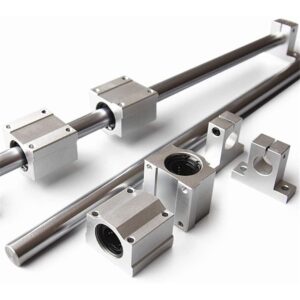
Fixing Noisy or Binding Linear Guide Carriages
Steps to fix performance issues:
Remove the carriage carefully
Use degreaser to clean internal channels
Reapply industrial-grade grease
Inspect rail straightness
Reinstall and test travel
Replace damaged seals if needed
A quick cleaning often restores perfect movement.
Linear Guide Carriage for CNC Machinery
CNC machines rely heavily on linear guide carriages:
Gantry movement on routers
X/Y/Z axis motion in mills
Precise tool positioning
Smooth, vibration-free travel
Repeatable cutting accuracy
These components determine how clean and accurate your cuts will be.
Linear Guide Carriage Applications in Robotics & Automation
Robots use linear guide carriages for:
Pick-and-place systems
Automated assembly lines
Cartesian robot axes
Material handling systems
Lifting and guiding mechanisms
They ensure fast, quiet, and reliable travel.
Load Capacity & Speed Considerations
Performance depends on:
Static load rating
Dynamic load rating
Moment load tolerances
Maximum speed capability
Acceleration conditions
Higher loads require long or roller-style carriages.
Cost Breakdown of Linear Guide Carriages
Cost depends on:
Size (HG15 vs HG25 vs HG35…)
Accuracy grade
Preload level
Carriage type (ball/roller/flange)
Brand reputation
Quantity ordered
Industrial-grade linear guide carriages cost more but last significantly longer.
Environmental Effects on Linear Guide Carriage Performance
Environmental hazards include:
Coolant splash
Metal dust
High humidity
Temperature fluctuations
Chemical exposure
High-seal or stainless models are recommended in harsh conditions.
Upgrading Old Machines With New Linear Guide Carriages
Upgrading provides:
Smoother travel
More accurate machining
Reduced vibration
Longer equipment lifespan
Improved production consistency
Retrofits are extremely common in metalworking and automation.
New Technologies in Linear Guide Carriage Engineering
Recent innovations include:
Self-lubricating systems
Polymer-coated raceways
Smart monitoring sensors
Quieter internal ball circulation designs
Anti-corrosion nanotechnology
These advancements improve accuracy and reduce maintenance.
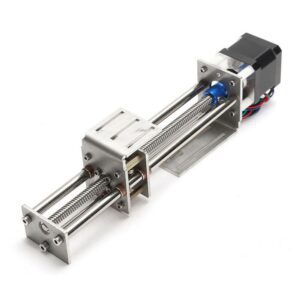
Safety Tips When Handling a Linear Guide Carriage
To avoid damage:
Wear gloves during installation
Never force a carriage onto a rail
Avoid dropping the unit—it contains precision bearings
Follow manufacturer torque guidelines
Test manually before applying motor force
Simple precautions prevent costly failures.
Future Trends in Linear Guide Carriage Systems
Expect advancements like:
AI-assisted alignment systems
IoT-integrated lubrication alerts
Ultra-lightweight composite materials
Low-noise high-speed designs
Longer maintenance-free intervals
The industry is moving toward smarter and more durable components.
FAQs About Linear Guide Carriages
How long does a linear guide carriage last?
Decades with proper lubrication and cleaning.
Do linear guide carriages require lubrication?
Yes—regular lubrication is essential for smooth motion.
Can carriages be cleaned and reused?
Absolutely, if internal components are not damaged.
Are linear guide carriages expensive?
Pricing varies, but high-quality models offer long service life.
Do CNC systems need special carriages?
Yes—high-preload, high-rigidity models are preferred.
Can I retrofit a new carriage on an older rail?
Only if it matches the exact specification.
Conclusion: Why Linear Guide Carriages Matter
A linear guide carriage is the foundation of precise, stable motion in modern machinery. From CNC routers to robotic arms, these components ensure accuracy, repeatability, and long-term durability. Their ability to support heavy loads while maintaining smooth travel makes them indispensable across industries.
For companies seeking reliable, high-performance options, YH Linear (https://yhlinear.com/) offers robust, precision-engineered linear guide carriages ideal for demanding applications.
Whether upgrading old equipment or designing new systems, investing in a quality linear guide carriage ensures stronger performance and long-lasting stability.
Internal & Outbound Link Suggestions
Internal Link Ideas
Heavy duty linear slides article
Linear bearing carriage guide
CNC router linear guide rails
Outbound Link Ideas
Official YH Linear website: https://yhlinear.com/
Global machining standards
Industrial automation component catalogs