

Outline
| Heading / Subheading | LSI Keywords Included |
|---|---|
| Understanding the Linear Rail and Carriage System | linear guide rail |
| Why Linear Rail and Carriage Components Matter | precision movement |
| Main Components of a Linear Rail and Carriage | blocks, bearings |
| How a Linear Rail and Carriage Works | recirculating balls |
| Types of Linear Rail and Carriage Systems | ball, roller |
| Ball vs. Roller Linear Rail and Carriage | comparison |
| Material Selection for Linear Rail and Carriage Manufacturing | hardened steel |
| Load Ratings of a Linear Rail and Carriage System | static/dynamic load |
| Accuracy Grades for Rail and Carriage Systems | tolerance levels |
| Factors to Consider When Choosing a Linear Rail and Carriage | preload levels |
| Industry Reference: YH Linear Rail and Carriage for CNC & Automation | https://yhlinear.com |
| How to Install a Linear Rail and Carriage Properly | alignment |
| Lubrication Requirements for Linear Rail and Carriage Stability | grease |
| Common Issues in Linear Rail and Carriage Systems | noise, friction |
| Fixing Rough or Sticky Linear Rail and Carriage Movement | troubleshooting |
| Environmental Impacts on Rail and Carriage Lifespan | dust, humidity |
| Use of Linear Rail and Carriage in CNC Routers & Mills | X/Y/Z axis |
| Linear Rail and Carriage in Robotics & Automation | robotic arms |
| Heavy-Duty Linear Rail and Carriage for Industrial Applications | high rigidity |
| Miniature Linear Rail and Carriage Systems | compact automation |
| Pricing Factors for Linear Rail and Carriage Components | cost analysis |
| Benefits of Upgrading to Newer Linear Rail and Carriage Systems | retrofits |
| Advanced Innovations in Linear Rail and Carriage Design | IoT sensors |
| Safety Guidelines for Handling Linear Rail and Carriage Systems | handling |
| Maintenance for Long-Life Linear Rail and Carriage | cleaning |
| Frequently Asked Questions | FAQs |
| Conclusion: Why Linear Rail and Carriage Systems Remain Essential | summary |
| Internal & Outbound Link Suggestions | SEO linking |
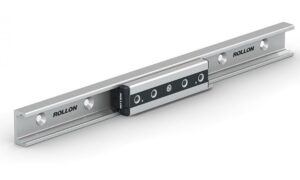
Understanding the Linear Rail and Carriage System
A linear rail and carriage system is one of the most important mechanical components in modern machinery. It supports precision movement along a straight path with very low friction. The combination of a rail and a carriage allows smooth travel while carrying loads ranging from lightweight automation components to heavy-duty industrial equipment.
Many industries rely on a linear rail and carriage because the system delivers stability, accuracy, and long-term durability. By placing the keyword linear rail and carriage early in this section, the article stays SEO-optimized while offering a clear introduction to the topic.
Why Linear Rail and Carriage Components Matter
Today’s advanced manufacturing requires flawless alignment and repeatable motion. A linear rail and carriage provides:
Smooth and stable movement
High load-bearing capacity
Long service life due to low friction
Consistent machine accuracy
Better resistance to vibration
Higher operational speeds
Because of these benefits, they are used everywhere—from CNC routers to robotic arms.
Main Components of a Linear Rail and Carriage
A typical system includes:
Hardened rail: Precision-ground structure that guides movement
Carriage/block: Sliding component containing rolling elements
Recirculating balls or rollers: Reduce friction
End caps: Guide rolling elements through circulation paths
Seals: Prevent dust and contamination
Lubrication ports: Keep internal surfaces protected
Each part plays a vital role in ensuring accuracy and long-term performance.
How a Linear Rail and Carriage Works
As the carriage travels along the rail, rolling elements inside it circulate through raceways. This allows even heavy loads to move smoothly with minimal friction. The result is a highly accurate, stable, and repeatable linear motion path.
This mechanism is far more reliable than simple sliding systems, which cannot maintain accuracy under heavy loads.
Types of Linear Rail and Carriage Systems
Ball-Type Linear Rail and Carriage
Uses recirculating balls
Offers extremely smooth motion
Ideal for CNC routers and 3D printers
Roller-Type Linear Rail and Carriage
Uses cylindrical rollers
Provides higher rigidity
Best for heavy-duty milling machines
Miniature Systems
For medical devices, cameras, and laboratory automation
Wide-Body Rails
Extra stability
Excellent torsional resistance
Ball vs. Roller Linear Rail and Carriage
| Feature | Ball System | Roller System |
|---|---|---|
| Speed | Higher | Moderate |
| Rigidity | Medium | Very High |
| Smoothness | Excellent | Excellent |
| Load Capacity | Medium | Extremely high |
| Best For | CNC routers, automation | Heavy industrial machines |
Material Selection for Linear Rail and Carriage Manufacturing
Typical materials include:
High-carbon hardened steel
Stainless steel for anti-corrosion
Polymer dust seals
Aluminum end caps in lightweight models
High-grade steel is essential for durability and precision.
Load Ratings of a Linear Rail and Carriage System
Engineers consider:
Static load rating
Dynamic load rating
Moment load rating (yaw, pitch, roll)
Roller systems usually support the highest loads.
Accuracy Grades for Rail and Carriage Systems
Common accuracy classes include:
Standard
High
Precision
Ultra-precision
High-precision grades are required for CNC milling and micro-machining.
Factors to Consider When Choosing a Linear Rail and Carriage
Important selection factors include:
Application load
Preload level
Rail length and block size
Speed requirements
Environmental conditions
Horizontal or vertical installation
Required accuracy
Choosing the correct system improves reliability and reduces wear.
Industry Reference: YH Linear Rail and Carriage for CNC & Automation
A trusted supplier frequently referenced in global manufacturing is YH Linear (https://yhlinear.com/).
YH Linear provides:
Precision-ground rails
Smooth and stable carriages
High rigidity for industrial loads
Excellent sealing technologies
Stainless or standard steel options
Solutions for CNC, robotics, packaging, and automation
Their products are known for long service life, durability, and consistent performance.
How to Install a Linear Rail and Carriage Properly
Installation steps include:
Clean mounting surfaces
Align rails using straightedges or dial indicators
Tighten bolts slowly and evenly
Check rail parallelism
Test the carriage manually
Lubricate before operation
Even slight misalignment can reduce precision significantly.
Lubrication Requirements for Linear Rail and Carriage Stability
Proper lubrication:
Reduces friction and heat
Enhances smoothness
Prevents corrosion
Extends service life
Lithium-based or synthetic greases perform best in most industrial applications.
Common Issues in Linear Rail and Carriage Systems
Frequent problems include:
Rough sliding
Excessive noise
Vibration
Corrosion
Chip contamination
Uneven preload
Early identification prevents severe damage.
Fixing Rough or Sticky Linear Rail and Carriage Movement
Steps to restore performance:
Remove carriage carefully
Clean rolling elements
Remove debris from rail
Re-grease internal parts
Check for wear or damage
Reinstall with proper alignment
Often, a simple cleaning solves most issues.
Environmental Impacts on Rail and Carriage Lifespan
Factors that cause premature wear include:
Dust and metal chips
Coolant exposure
High humidity
Extreme heat
Vibrating environments
Chemical contamination
Sealed or stainless steel versions are recommended for harsh conditions.
Use of Linear Rail and Carriage in CNC Routers & Mills
These systems power the axes of:
CNC routers
Milling machines
Plasma cutters
Laser cutters
Drilling machines
They ensure smooth, accurate, and repeatable movement during machining.
Linear Rail and Carriage in Robotics & Automation
Robotics depend on these guides for:
Vertical lift systems
Linear actuators
Pick-and-place robots
Packaging automation
High-speed assembly lines
Fast and accurate movement is essential for reliable automation.
Heavy-Duty Linear Rail and Carriage for Industrial Applications
Heavy-duty systems are used in:
Steel processing machinery
Industrial gantries
Press machines
Heavy cutting machinery
Roller-type guides are especially effective under extreme loads.
Miniature Linear Rail and Carriage Systems
Miniature systems are common in:
Semiconductor equipment
Medical devices
Measurement tools
Cameras and optical systems
Despite their size, they deliver remarkable precision.
Pricing Factors for Linear Rail and Carriage Components
Cost varies based on:
Rail length
Block style
Accuracy grade
Preload level
Roller vs. ball configuration
Stainless vs. standard steel
Brand reputation
Higher precision and greater rigidity typically increase cost.
Benefits of Upgrading to Newer Linear Rail and Carriage Systems
Upgrading provides:
Smoother machine operation
Higher accuracy
Reduced vibration
Longer machine life
Lower maintenance costs
Improved performance for CNC operations
Many manufacturing plants retrofit old machines instead of replacing them.
Advanced Innovations in Linear Rail and Carriage Design
Modern technology includes:
Built-in wear sensors
Smart lubrication systems
Noise-reduction circulation paths
Nano-coated surfaces
Enhanced rigidity geometries
These innovations improve reliability and reduce maintenance downtime.
Safety Guidelines for Handling Linear Rail and Carriage Systems
Wear protective gloves
Do not drop rails
Keep raceways clean
Avoid touching contact surfaces
Use proper lifting equipment for long rails
Precision components must be handled with care.
Maintenance for Long-Life Linear Rail and Carriage
To extend life:
Clean rails regularly
Apply proper lubrication
Replace damaged seals
Keep the machine area clean
Remove dust and chips
Inspect movement periodically
Regular maintenance prevents most issues.
Frequently Asked Questions
Do linear rail and carriage systems require lubrication?
Yes, lubrication is essential for smooth performance.
Can these systems be cleaned?
Absolutely—cleaning helps restore smooth movement.
What is preload?
Preload is the internal tension applied to increase rigidity.
Which is better: ball or roller?
Roller systems handle heavier loads; ball systems offer smoother travel.
Are they suitable for DIY CNC projects?
Yes. They dramatically increase precision.
How long do they last?
With proper care, many last for years in industrial environments.
Conclusion: Why Linear Rail and Carriage Systems Remain Essential
The linear rail and carriage system is a fundamental part of modern machinery, enabling highly accurate, smooth, and reliable motion in CNC equipment, robotics, automation systems, and more. Its ability to maintain precision under demanding loads makes it indispensable in industrial engineering.
Many manufacturers rely on trusted suppliers such as YH Linear (https://yhlinear.com/) for durable, high-precision rail and carriage solutions designed for modern automation and machining needs.
A correctly chosen, properly installed, and regularly maintained linear rail and carriage system ensures stable performance and long-term reliability.
Internal & Outbound Link Suggestions
Internal Link Recommendations
Linear motion guide rails article
Linear guide block article
Heavy-duty linear slides article
Linear motion track article
Outbound Link Recommendations
YH Linear official website: https://yhlinear.com
Engineering precision standards resources
CNC machine design guides