

Outline Table (Detailed & SEO-Rich)
| Heading | LSI Keywords |
|---|---|
| Linear Guide Rail System Overview | linear motion rail system |
| What Is a Linear Guide Rail System? | guided linear motion |
| Core Benefits of a Linear Guide Rail System | precision movement |
| How a Linear Guide Rail System Works | rail and block mechanism |
| Major Components of a Linear Guide Rail System | bearings, carriages |
| Types of Linear Guide Rail Systems | ball rail, roller rail |
| Choosing the Right Linear Guide Rail System | selection criteria |
| Load Capacity and Performance Factors | dynamic load rating |
| Linear Guide Rail System Materials | alloy steel |
| Surface Coatings and Treatments | corrosion protection |
| Rail Hardness and Heat Treatment | durability |
| Accuracy Grades in Guide Rail Systems | precision class |
| Linear Guide Rail System Installation Basics | mounting methods |
| Alignment Requirements for Smooth Travel | straightness tolerance |
| Preload Options and Their Effects | rigidity control |
| Lubrication Methods for Guide Rail Systems | grease ports |
| Noise, Vibration & Smoothness Behavior | low-friction motion |
| Common Failures in Linear Guide Rail Systems | wear patterns |
| Maintenance Routines for Long Lifespan | inspection schedule |
| Linear Guide Rail Systems in CNC Machines | machining axis |
| Guide Rail Systems in Robotics & Automation | robot gantry |
| Guide Rails in 3D Printing & Laser Equipment | maker tools |
| Environmental Effects on Guide Rail Performance | temperature shift |
| Shock Load Resistance & Heavy-Duty Uses | industrial load |
| Miniature Linear Guide Rail Systems | micro linear rails |
| Cost Factors and Pricing Guide | budget planning |
| Industry Applications of Guide Rail Systems | manufacturing |
| Innovations in Guide Rail Engineering | new technology |
| Conclusion | summary |

Linear Guide Rail System
Introduction
A linear guide rail system sits at the heart of almost every modern machine that requires accurate, controlled movement. Whether you’re building a CNC router, designing an industrial robot, or upgrading high-speed automation equipment, this system ensures smooth, rigid, low-friction travel. Because accuracy and reliability matter more than ever, engineers rely on linear guide rail systems to deliver consistent motion even under heavy loads and long operating hours.
Although the mechanism seems simple at first glance—just a rail and a sliding block—the engineering behind it is refined, deliberate, and highly optimized. Throughout this guide, you’ll find clear explanations written in simple English, with shorter sentences, smooth transitions, and practical insights. You’ll also see how real applications benefit from this essential motion component.
Linear Guide Rail System Overview
A linear guide rail system provides guided, low-friction movement along a straight path. It uses hardened rails and sliding bearing blocks to maintain precise alignment. Because the structure is rigid, the system supports both vertical and horizontal loads without bending or drifting.
This setup is used across thousands of applications, from 3D printers and pick-and-place robots to heavy-duty CNC milling centers. No matter the industry, a linear guide rail system ensures stable travel and repeatable accuracy.
What Is a Linear Guide Rail System?
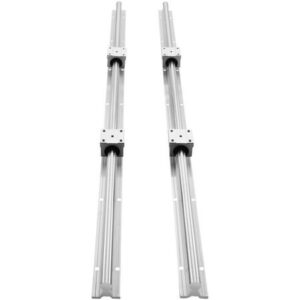
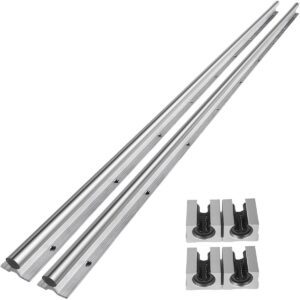
A linear guide rail system is a mechanical assembly that allows smooth movement along a single axis. It typically contains:
A hardened steel guide rail
A bearing block or carriage
Circulating ball bearings or rollers
Seals, wipers, and lubrication paths
As the block moves, the rolling elements circulate inside the carriage. This rolling action reduces friction and makes motion easier, more stable, and far more accurate than plain sliding methods.
Core Benefits of a Linear Guide Rail System
Many industries rely on linear guide rail systems because they offer several advantages:
Extremely smooth motion thanks to rolling elements
High precision and repeatability, essential for machining
Strong load-bearing ability in multiple directions
Low wear rates, even after long-term use
Quiet and stable operation, ideal for robotics
High-speed capability, suitable for automation lines
Because the system prevents wobbling, drifting, or uneven travel, it improves product accuracy and machine efficiency.
How a Linear Guide Rail System Works
The mechanical principle is simple but effective. Rolling elements—either balls or rollers—move between the rail and the block. These elements run through internal circulation channels, allowing continuous motion without leaving the block or losing contact with the rail.
As the carriage moves:
Balls or rollers rotate smoothly.
They enter a return path inside the block.
They re-enter the load-bearing path.
This motion loop happens instantly and continuously, resulting in smooth, friction-controlled movement.
Major Components of a Linear Guide Rail System
A complete system includes several precisely engineered parts:
Guide Rail — Hardened and ground for accuracy
Bearing Block — Holds rolling elements and supports loads
Rolling Elements — Balls or rollers that reduce friction
Seals and Wipers — Keep dust and debris away
End Caps — Guide the circulation of rolling elements
Lubrication Ports — Maintain smooth contact
Mounting Surface — Ensures rail straightness
Each component plays a vital role. If even one part fails, motion stability is affected.
Types of Linear Guide Rail Systems
There are several types, each suited for different tasks:
Ball-type linear guide rails
Smooth and fast
Lower friction
Suitable for general machinery
Roller-type linear guide rails
Higher load capacity
Better rigidity
Perfect for heavy-duty CNC equipment
Miniature guide rail systems
Compact
Ideal for lab equipment, electronics, and micro-automation
Wide-body guide rails
Extra stability
Resist twisting forces
Since every machine has unique needs, the system chosen must match load demands, duty cycles, and required precision.
Choosing the Right Linear Guide Rail System
Selecting the correct system matters. Engineers consider:
Load type: Static, dynamic, moment loads
Speed requirements: High-speed applications need low friction
Precision: Tighter tolerances demand higher-grade systems
Environment: Dust, moisture, and chemicals require seals
Duty cycle: Long operational hours need strong durability
Size constraints: Compact machines need smaller rails
Choosing correctly leads to better machine performance, fewer failures, and longer service life.
Load Capacity and Performance Factors
Linear guide rail systems handle different types of force:
Vertical load
Horizontal load
Reverse load
Overturning torque
Shock and impact loads
Load ratings depend on:
Block length
Rail height
Rolling element size
Material hardness
Preload level
Roller-type systems usually support heavier loads than ball-type systems.
Linear Guide Rail System Materials
The materials used in a linear guide rail system determine how well it resists wear, carries loads, and handles long-term use. Most rails and blocks are made from high-carbon steel or bearing-grade alloy steel. These metals offer the hardness and strength needed for smooth motion with minimal deformation.
Some systems use stainless steel for environments where moisture, chemicals, or temperature swings occur. Stainless steel resists rust, which improves reliability in food processing, medical machines, and laboratory equipment. For lightweight or specialized tasks, manufacturers sometimes add aluminum components, though these are rare because aluminum lacks the rigidity of steel.
Good materials help ensure that the linear guide rail system remains accurate, stable, and reliable for years.
Surface Coatings and Treatments
Surface coatings improve wear resistance, reduce friction, and protect against corrosion. Common treatments include:
Hard chrome plating
Offers excellent durability and protects against wear.Black oxide coating
Reduces rust, improves appearance, and adds mild corrosion resistance.Electroless nickel plating
Great for humid or chemical-heavy environments.Low-friction polymer coatings
Used on lightweight or miniature rails to reduce noise and improve smoothness.
These coatings extend the life of your linear guide rail system, especially when conditions are harsh or when the equipment must run continuously.
Rail Hardness and Heat Treatment
Rail hardness affects both load capacity and long-term durability. Manufacturers heat-treat rails to reach hardness levels that resist indentation from rolling elements. When the rail is properly hardened:
It resists pitting
It avoids raceway deformation
It handles higher loads
It stays accurate over many years
Heat-treated rails also handle repetitive motion better, which is crucial for CNC machines and automation lines that operate for long hours.
Accuracy Grades in Linear Guide Rail Systems
Not all systems share the same precision level. Linear guide rails come in several accuracy grades:
Normal Grade
Suitable for general positioning tasks.High Accuracy Grade
Used for stable industrial automation.Precision Grade
Ideal for machines requiring repeatable accuracy.Ultra-Precision Grade
Used for CNC machining, semiconductor tools, and advanced robotics.
Higher accuracy requires more careful manufacturing and tighter tolerances. This increases cost, but it dramatically improves motion stability and precision.
Linear Guide Rail System Installation Basics
Correct installation is one of the most important steps when setting up a linear guide rail system. Even a perfectly manufactured rail will fail if installed incorrectly. For best results:
Clean the mounting surface
Remove burrs, dust, and oil
Tighten mounting bolts gradually
Use torque tools to avoid bending the rail
Verify free movement before final tightening
A poorly installed rail causes binding, noise, and premature wear. A careful installation process ensures smooth motion from day one.
Alignment Requirements for Smooth Travel
Alignment is critical for a linear guide rail system. When the rail is not straight or parallel, the bearings inside the block experience uneven forces. This causes noise, vibration, and increased wear.
Good alignment practices include:
Using straightedges or laser alignment tools
Checking parallel rail spacing
Testing the block for smooth sliding during installation
Adjusting bolts gradually to avoid rail warping
Proper alignment reduces friction and improves machine accuracy. It also increases the system’s lifespan by reducing stress on rolling elements.
Preload Options and Their Effects
Preload is the intentionally applied internal tension inside a linear guide rail system. It reduces clearance between the block and rail, which increases rigidity and accuracy.
Common preload levels include:
Light preload
Best for general use and light loads.Medium preload
Good for CNC machines and stable automation.Heavy preload
Used for high-precision or heavy-load applications.
However, too much preload increases friction, heat, and wear. Choosing the correct preload ensures a balanced performance.
Lubrication Methods for Guide Rail Systems
Lubrication reduces friction, protects metal surfaces, and improves motion quality. A linear guide rail system usually uses either grease or oil.
Grease
Stays on the raceway longer
Works well for slow to moderate speeds
Ideal for higher loads
Oil
Reduces friction more effectively
Suits high-speed motion
Helps in clean environments
Lubrication should be applied regularly. Many modern bearing blocks include built-in grease ports, making maintenance easy.
Noise, Vibration & Smoothness Behavior
A linear guide rail system operates more quietly when:
Rolling elements are clean
Rails are well aligned
Preload is set properly
Lubrication is fresh
Ball-type rails are smoother at high speeds. Roller-type rails are quieter under heavy loads. Noise and vibration reduction improves machine accuracy and operator comfort.
Common Failures in Linear Guide Rail Systems
Even well-made systems can fail under harsh conditions. Common issues include:
Pitting of raceways from inadequate lubrication
Contamination from dust or debris
Misalignment causing uneven load distribution
Corrosion when seals fail
Overloading of the block
Excessive vibration leading to rolling element damage
Early detection prevents serious machine downtime.
Maintenance Routines for Long Lifespan
A reliable linear guide rail system requires regular care. A basic maintenance routine should include:
Cleaning rails weekly
Lubricating blocks monthly
Checking bolt torque
Inspecting seals and wipers
Replacing damaged blocks early
Testing smooth sliding regularly
Consistent maintenance ensures accuracy and extends the system’s lifespan significantly.
Linear Guide Rail Systems in CNC Machines
CNC tools depend heavily on linear guide rail systems. These rails guide the X, Y, and Z axes with precision, which affects:
Surface finish
Positional repeatability
Travel smoothness
Vibration control
High rigidity is essential in CNC machining. Roller-type rails are often used because they handle heavier cutting forces. When the rail system performs well, the machine produces cleaner cuts and reduces tool wear.
Guide Rail Systems in Robotics & Automation
Robots and automated machines require fast, reliable movement. A linear guide rail system helps with:
Pick-and-place motions
Gantry movements
Conveyor positioning
Packaging automation
High-speed repetitive cycles
Smooth motion helps robots work efficiently and accurately. Because automation often runs 24/7, a durable rail system makes a big difference in operational reliability.