

Introduction
In modern CNC machining, precision, rigidity, and repeatability are critical to achieving high-quality parts and efficient production. One of the most important components that directly influence machine accuracy is the CNC linear guide rail. These guide rails enable smooth, accurate, and stable linear motion for CNC machine axes, ensuring consistent cutting performance even under high loads and speeds.
CNC linear guide rails are widely used in CNC milling machines, lathes, machining centers, grinding machines, and gantry systems. Compared with traditional sliding ways, linear guide rails offer lower friction, higher positioning accuracy, faster feed rates, and reduced maintenance requirements.
This article provides a comprehensive overview of CNC linear guide rails, including their definition, structure, working principle, types, materials, advantages, applications, selection criteria, installation, and maintenance.
What Are CNC Linear Guide Rails?
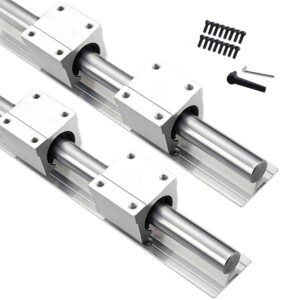
CNC linear guide rails are precision-engineered motion components designed to guide machine tool axes along a straight path with high accuracy and rigidity. They typically consist of a hardened steel rail and one or more linear guide blocks (carriages) that move along the rail using rolling elements.
The main functions of CNC linear guide rails include:
Providing precise and repeatable linear motion
Supporting cutting forces and machine loads
Maintaining axis alignment and rigidity
Reducing friction and wear
Because of their performance advantages, linear guide rails are now standard in most modern CNC machines.
Key Components of CNC Linear Guide Rail Systems
1. Linear Guide Rail
Precision-ground and hardened steel rail
Mounted on the CNC machine bed or column
Provides a straight and rigid reference path
2. Linear Guide Block (Carriage)
Moves along the rail
Carries the machine table, spindle, or tool holder
Contains rolling elements
3. Rolling Elements
Steel balls or cylindrical rollers
Circulate within the guide block
Reduce friction and evenly distribute loads
4. End Caps and Circulation System
Allow rolling elements to recirculate smoothly
Enable continuous and stable motion
5. Seals and Wipers
Protect against chips, coolant, and dust
Essential in CNC machining environments
6. Lubrication System
Grease nipples or oil channels
Ensure smooth motion and long service life
How CNC Linear Guide Rails Work
CNC linear guide rails operate based on rolling contact motion:
The guide rail is precisely aligned and mounted on the machine structure.
The guide block moves along the rail while supporting the applied loads.
Rolling elements circulate between the block and rail raceways.
Friction is minimized, enabling smooth and accurate motion.
High rigidity ensures stable cutting even under heavy machining forces.
This design supports high-speed feed rates and precise positioning required in CNC machining.
Types of CNC Linear Guide Rails
1. Ball-Type CNC Linear Guide Rails
Use recirculating steel balls
Low friction and smooth motion
Suitable for high-speed and general CNC applications
2. Roller-Type CNC Linear Guide Rails
Use cylindrical rollers instead of balls
Higher rigidity and load capacity
Ideal for heavy-duty CNC machining centers and gantry machines
3. Profile Linear Guide Rails
Rectangular rail design with integrated raceways
Support loads from multiple directions
Most commonly used type in CNC machines
4. Miniature CNC Linear Guide Rails
Compact size for small CNC machines
High precision in limited installation space
Used in desktop CNC and engraving machines
Materials and Surface Treatment
Hardened Bearing Steel – High strength and wear resistance
Stainless Steel – Corrosion resistance for wet or humid environments
Surface Treatments – Black oxide, chrome plating, anti-corrosion coatings
Material and surface treatment selection depends on machine environment and cutting conditions.
Advantages of CNC Linear Guide Rails
High Positioning Accuracy and Repeatability
Low Friction and Smooth Axis Movement
High Rigidity and Load Capacity
Higher Feed Rates and Faster Cycle Times
Reduced Wear and Maintenance Costs
Long Service Life
These advantages contribute directly to improved machining accuracy and productivity.
Applications of CNC Linear Guide Rails
CNC linear guide rails are used in:
CNC Milling Machines
CNC Lathes and Turning Centers
Vertical and Horizontal Machining Centers
CNC Grinding Machines
Gantry and Portal CNC Systems
Woodworking and Stone CNC Machines
How to Select the Right CNC Linear Guide Rail
When choosing CNC linear guide rails, consider:
Load Capacity – Cutting forces and machine mass
Rigidity Requirements – Resistance to deflection
Accuracy Grade – Positioning and repeatability needs
Speed and Acceleration – Axis motion requirements
Environmental Conditions – Chips, coolant, dust
Mounting Surface Quality – Flatness and stiffness
Maintenance and Lubrication Access
Proper selection ensures machine stability and long-term performance.
Installation Best Practices
Prepare clean, flat, and rigid mounting surfaces
Align rails accurately using precision tools
Follow recommended bolt tightening sequences and torque
Lubricate guide blocks before operation
Perform test runs to confirm smooth axis motion
Correct installation is essential to maintain accuracy and service life.
Maintenance and Care
Regular cleaning to remove chips and contaminants
Scheduled lubrication based on operating conditions
Inspection of seals, raceways, and rolling elements
Timely replacement of worn guide blocks
Proper maintenance helps prevent unexpected downtime and accuracy loss.
Linear Guide Rails vs. Box Ways in CNC Machines
| Feature | Linear Guide Rails | Box Ways |
|---|---|---|
| Friction | Very low | Higher |
| Speed | High | Moderate |
| Precision | High | Good |
| Load Capacity | High | Very high |
| Maintenance | Low | Higher |
Modern CNC machines increasingly use linear guide rails due to speed and precision advantages, while box ways are still used in very heavy cutting applications.

Future Trends in CNC Linear Guide Rail Technology
Roller-Type Guides for Higher Rigidity
Advanced Sealing for Chip and Coolant Protection
Smart Lubrication Systems
Integrated Condition Monitoring Sensors
Higher Precision and Load Capacity Designs
These trends support the evolution of high-speed, high-precision CNC machining.
Frequently Asked Questions (FAQs)
1. What are CNC linear guide rails used for?
They guide CNC machine axes with high precision and rigidity.
2. Are roller-type guides better than ball-type guides for CNC machines?
Roller-type guides offer higher rigidity and load capacity, while ball-type guides provide smoother motion and higher speeds.
3. Do CNC linear guide rails require lubrication?
Yes, regular lubrication is essential for long service life and accuracy.
4. Can CNC linear guide rails handle heavy cutting forces?
Yes, especially roller-type and heavy-duty profile guides.
5. How long do CNC linear guide rails last?
With proper installation and maintenance, they can last many years in industrial environments.
Conclusion
CNC linear guide rails are a critical component in modern CNC machine tools, directly influencing accuracy, speed, rigidity, and reliability. Their rolling-based design offers superior performance compared to traditional sliding ways, making them the preferred choice for most contemporary CNC systems.
By selecting the right guide rail type, ensuring precise installation, and performing regular maintenance, manufacturers can achieve high machining accuracy, increased productivity, and reduced downtime. As CNC technology continues to evolve, linear guide rails will remain at the core of precision machining solutions.