

Introduction
In industrial machinery and automation systems, controlled and efficient linear motion is critical for accuracy, safety, and productivity. Guide rails and rollers work together as a fundamental motion solution, enabling heavy loads to move smoothly along a defined path with minimal friction and wear.
This combination is widely used in material handling systems, conveyor lines, industrial automation equipment, CNC machinery, warehouse logistics, and large mechanical structures. Compared with sliding mechanisms, guide rails and rollers offer lower friction, higher load capacity, and improved durability, making them ideal for demanding industrial environments.
This article provides a comprehensive overview of guide rails and rollers, including their definition, working principles, types, materials, advantages, applications, selection guidelines, installation, and maintenance.
What Are Guide Rails and Rollers?
Guide rails are rigid linear tracks that define the motion path, while rollers are rolling elements that move along these rails to support and guide loads. Together, they form a rolling linear guidance system.
The main functions of guide rails and rollers are:
Guiding linear motion accurately
Supporting static and dynamic loads
Reducing friction and energy loss
Ensuring smooth, stable, and repeatable movement
This system is particularly suitable for long travel distances, heavy loads, and continuous operation.
Key Components of a Guide Rail and Roller System
1. Guide Rail
Precision-machined steel or aluminum profile
Provides a straight and rigid motion path
Mounted securely to the machine frame or structure
2. Rollers
Cylindrical, V-groove, or cam follower rollers
Roll along the rail surface
Transfer loads efficiently with low friction
3. Roller Carriage or Mounting Bracket
Holds rollers in the correct position
Ensures proper load distribution and alignment
4. Mounting Hardware
Bolts, brackets, and alignment features
Secure rails and rollers to the system
5. Seals and Covers (Optional)
Protect rails and rollers from dust, debris, and contaminants
Extend service life
How Guide Rails and Rollers Work
Guide rails and rollers operate based on rolling contact motion:
The guide rail is mounted on a rigid, straight surface.
Rollers are positioned to contact the rail profile.
As the load moves, rollers rotate instead of sliding.
Rolling friction is significantly lower than sliding friction.
Smooth, efficient, and controlled linear motion is achieved.
This design reduces wear and allows the system to handle heavy loads and long operating cycles.
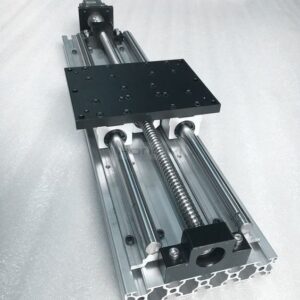
Types of Guide Rails
1. Flat Guide Rails
Flat running surface
Used with cylindrical rollers
Simple design and flexible installation
2. V-Guide Rails
V-shaped profile
Used with V-groove rollers
Self-centering and highly stable
3. U-Profile Guide Rails
U-shaped cross-section
Rollers run inside the rail
Provides protection from contaminants
4. Precision Guide Rails
Tight tolerances and hardened surfaces
Used in applications requiring accurate guidance
5. Heavy-Duty Guide Rails
Thick and robust profiles
Designed for high load capacity and shock resistance
Types of Rollers Used with Guide Rails
1. Cylindrical Rollers
Simple design
Suitable for flat guide rails
2. V-Groove Rollers
Match V-guide rails
Provide accurate alignment and self-centering
3. Cam Follower Rollers
Integrated bearing design
Handle high loads and shock
4. Flanged Rollers
Provide lateral guidance
Prevent derailment
5. Precision Rollers
High manufacturing accuracy
Used in precision motion systems
Materials Used in Guide Rails and Rollers
Hardened Carbon Steel – High load capacity and wear resistance
Stainless Steel – Corrosion resistance for harsh environments
Aluminum Alloy – Lightweight and corrosion-resistant
Engineering Plastics – Low noise and low maintenance
Surface Treatments – Induction hardening, chrome plating, anodizing
Material selection depends on load, environment, speed, and required service life.
Advantages of Guide Rails and Rollers
Low Friction and Smooth Motion
High Load Capacity
Long Service Life
Energy-Efficient Operation
Suitable for Long Travel Distances
Simple Structure and Easy Maintenance
Flexible System Design
These benefits make guide rails and rollers ideal for industrial and heavy-duty applications.
Applications of Guide Rails and Rollers
Guide rails and rollers are widely used in:
Material Handling Systems – Conveyors, transfer carts
Industrial Automation – Linear transport units
Warehouse and Logistics Equipment
CNC Machines and Machine Tool Accessories
Packaging and Assembly Lines
Industrial Doors, Gates, and Sliding Systems
Heavy Machinery and Fabrication Equipment
How to Choose the Right Guide Rails and Rollers
When selecting a guide rail and roller system, consider:
Load Capacity – Static and dynamic loads
Travel Length and Speed
Precision and Alignment Requirements
Operating Environment – Dust, moisture, chemicals
Installation Space and Mounting Conditions
Maintenance Requirements
Cost and Service Life Expectations
Proper selection ensures stable, reliable, and long-lasting performance.
Installation Best Practices
Ensure mounting surfaces are flat and rigid
Align rails accurately to avoid uneven roller wear
Use recommended fasteners and torque values
Adjust roller preload correctly
Perform test runs under load
Correct installation directly affects performance and durability.
Maintenance and Care
Regular inspection of rails and rollers
Cleaning to remove debris and contaminants
Lubrication of rollers if required
Replacement of worn components
Guide rail and roller systems typically require less maintenance than sliding systems.
Guide Rails and Rollers vs. Linear Guide Systems
| Feature | Guide Rails & Rollers | Linear Guide Rails |
|---|---|---|
| Load Capacity | Very high | High |
| Friction | Low | Very low |
| Precision | Medium to high | High to very high |
| Travel Length | Very long | Limited by rail length |
| Maintenance | Low | Moderate |
Guide rails and rollers are preferred for heavy loads and long travel, while linear guides excel in high-precision positioning.
Future Trends in Guide Rail and Roller Systems
Advanced Wear-Resistant Coatings
Low-Noise and Vibration-Damping Designs
Maintenance-Free Roller Bearings
Smart Monitoring for Industrial Automation
Lightweight High-Strength Materials
These innovations support more efficient and reliable industrial motion systems.
Frequently Asked Questions (FAQs)
1. What are guide rails and rollers used for?
They guide and support linear motion with low friction and high load capacity.
2. Are guide rails and rollers suitable for precision applications?
Yes, precision-grade systems can offer accurate guidance, though linear guides are better for ultra-high precision.
3. Do rollers require lubrication?
Some roller types do, depending on design and operating conditions.
4. Can guide rails and rollers handle heavy loads?
Yes, they are commonly used in heavy-duty and industrial applications.
5. What industries use guide rails and rollers most?
Material handling, automation, logistics, manufacturing, and heavy machinery.
Conclusion
Guide rails and rollers form a robust and efficient solution for smooth, low-friction, and load-bearing linear motion. Their durability, flexibility, and energy efficiency make them ideal for a wide range of industrial applications, especially where heavy loads and long travel distances are required.
By selecting the right components, installing them correctly, and performing regular inspections, manufacturers can achieve stable performance, reduced maintenance costs, and extended service life. As industrial automation continues to advance, guide rails and rollers will remain essential components in reliable and high-performance motion systems.