

Introduction
In modern industrial applications, linear motion is a cornerstone of efficiency, precision, and durability. From CNC machines and automated production lines to material handling systems and heavy machinery, the demand for components that can carry high loads, withstand harsh environments, and maintain smooth operation is critical. This is where heavy duty linear bearings come into play.
Unlike standard linear bearings, heavy duty linear bearings are designed with reinforced structures, larger rolling elements, and superior materials, enabling them to handle extreme loads, shock, and vibrations. They ensure smooth, low-friction linear motion even under challenging operating conditions, making them indispensable in industrial automation and mechanical engineering.
This article provides a comprehensive overview of heavy duty linear bearings, including their definition, structure, working principles, types, materials, advantages, applications, selection criteria, installation, and maintenance.
What Are Heavy Duty Linear Bearings?
Heavy duty linear bearings are mechanical components designed to provide smooth, accurate, and high-capacity linear motion in applications with significant loads or harsh operating conditions. They typically consist of a bearing housing or block and rolling elements—balls or cylindrical rollers—that move along hardened raceways.
Key functions include:
Supporting high static and dynamic loads
Enabling smooth linear motion under stress
Reducing friction and energy loss
Maintaining alignment and rigidity over long strokes
These bearings are engineered to enhance productivity, reliability, and longevity in demanding industrial systems.

Key Components of Heavy Duty Linear Bearings
1. Bearing Housing
Strong, rigid structure that supports internal components
Reinforced for higher load capacity
2. Rolling Elements
Large-diameter steel balls or cylindrical rollers
Minimize friction and distribute loads evenly
3. Raceways
Precision-machined surfaces that guide rolling elements
Hardened for durability and resistance to wear
4. Retainers / Cages
Keep rolling elements properly spaced
Ensure smooth circulation and reduce noise
5. Seals and Shields
Protect internal components from dust, debris, and fluids
Extend operational life
6. Lubrication System
Oil or grease channels for low-friction motion
Essential for maintaining performance and durability
How Heavy Duty Linear Bearings Work
Heavy duty linear bearings operate on rolling contact principles:
The bearing block is mounted on a linear shaft or guide rail.
Rolling elements circulate between the bearing and raceways.
The load is distributed evenly across multiple contact points.
Friction is minimized, allowing smooth linear motion.
The reinforced structure ensures high rigidity under heavy loads.
This system allows machinery to operate at high precision while carrying significant forces, even under dynamic or shock-loading conditions.
Types of Heavy Duty Linear Bearings
1. Ball-Type Heavy Duty Bearings
Use large recirculating steel balls
Provide low friction and smooth motion
Ideal for moderate to high-speed heavy-load applications
2. Roller-Type Heavy Duty Bearings
Use cylindrical rollers for increased contact area
Support higher loads than ball-type bearings
Suitable for industrial machines with extreme weight or shock
3. Profile Rail Heavy Duty Bearings
Rectangular guide rail with reinforced bearing blocks
High rigidity and multi-directional load support
Common in CNC machines, gantry systems, and heavy automation
4. Flanged or Mounted Heavy Duty Bearings
Simplified mounting with built-in flange or bracket
Ideal for heavy machinery where alignment support is critical
5. Miniature Heavy Duty Bearings
Compact design for smaller machines requiring high load capacity
Used in medical, laboratory, and precision industrial equipment
Materials Used in Heavy Duty Linear Bearings
Hardened Bearing Steel – High wear resistance, load-bearing capability
Stainless Steel – Corrosion-resistant for wet or harsh environments
Engineering Plastics / Composites – Low noise, chemical resistance, lightweight components
Surface Treatments – Chrome plating, black oxide, and anti-corrosion coatings
Material selection depends on load, environment, speed, and required service life.
Advantages of Heavy Duty Linear Bearings
High Load Capacity – Handle extreme static and dynamic forces
Smooth and Low-Friction Motion – Improves machine efficiency
High Rigidity and Alignment Stability – Maintains accuracy under load
Long Service Life – Minimal wear with proper maintenance
Versatility – Suitable for a wide range of industrial applications
Reduced Maintenance Needs – Optimized lubrication systems
These advantages make heavy duty linear bearings essential for industrial automation, CNC machining, and material handling systems.
Applications of Heavy Duty Linear Bearings
Heavy duty linear bearings are widely used in:
CNC Machines and Machine Tools – Large machining centers, gantries
Industrial Automation Systems – Conveyors, pick-and-place machines
Material Handling Equipment – Heavy-duty transfer systems, automated carts
Robotics – High-load linear axes and gantry robots
Packaging Machinery – High-speed, high-load operations
Steel, Automotive, and Aerospace Industries – Presses, milling, assembly lines
Construction and Heavy Equipment – Load-bearing motion systems
How to Choose the Right Heavy Duty Linear Bearing
When selecting heavy duty linear bearings, consider:
Load Capacity – Both static and dynamic
Rigidity and Deflection – Required stiffness for application
Stroke Length and Travel Requirements
Operating Speed and Acceleration
Environmental Conditions – Dust, chemicals, moisture, temperature
Maintenance Accessibility – Lubrication and inspection points
Space Constraints – Bearing size and mounting configuration
Correct selection ensures maximum performance, safety, and longevity.
Installation Best Practices
Mount shafts or rails on rigid, flat surfaces
Ensure accurate alignment to prevent uneven load distribution
Use proper fasteners and torque specifications
Pre-lubricate the bearing before operation
Perform test runs under expected load conditions
Proper installation maximizes bearing life, accuracy, and load capacity.
Maintenance and Care
Clean bearings regularly to remove dust and debris
Check seals and wipers for damage
Re-lubricate according to operating requirements
Inspect rolling elements and raceways for wear
Replace worn or damaged components promptly
Routine maintenance ensures reliable operation and reduces downtime.
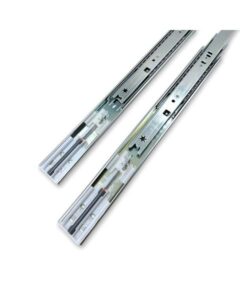
Heavy Duty Linear Bearings vs. Standard Linear Bearings
| Feature | Heavy Duty Linear Bearings | Standard Linear Bearings |
|---|---|---|
| Load Capacity | Very high | Medium |
| Friction | Low | Low |
| Rigidity | Very high | Moderate |
| Shock Resistance | High | Moderate |
| Lifespan | Long | Moderate |
| Applications | CNC, automation, material handling | Light machinery, low-load systems |
Heavy duty bearings excel in high-load, high-impact, or harsh industrial environments, while standard bearings are better suited for moderate loads and precision tasks.
Future Trends in Heavy Duty Linear Bearings
Enhanced Roller and Ball Materials for higher load capacity
Low-Friction, Maintenance-Free Designs
Advanced Lubrication Systems with sensors
Corrosion-Resistant and Lightweight Materials
Integration with IoT for Predictive Maintenance
These developments are shaping the future of industrial automation and high-load linear motion systems.
Frequently Asked Questions (FAQs)
1. What are heavy duty linear bearings used for?
They provide smooth, accurate, and load-bearing linear motion in industrial machinery, CNC machines, and material handling systems.
2. How are heavy duty bearings different from standard linear bearings?
They are designed to handle higher loads, resist shock, and maintain rigidity under extreme operating conditions.
3. Do heavy duty linear bearings require lubrication?
Yes, proper lubrication is essential to reduce friction and extend service life.
4. Can heavy duty linear bearings handle high-speed motion?
Yes, many designs support high-speed operation while maintaining stability.
5. What industries use heavy duty linear bearings most?
CNC machining, automation, aerospace, automotive, steel manufacturing, and heavy equipment industries.
Conclusion
Heavy duty linear bearings are essential for high-load, high-precision, and reliable linear motion in demanding industrial applications. Their reinforced design, large rolling elements, and superior materials allow them to carry extreme loads while maintaining smooth, low-friction movement.
By selecting the appropriate bearing type, ensuring proper installation, and performing regular maintenance, manufacturers can achieve long service life, stable operation, and reduced downtime. As industrial automation and heavy machinery continue to evolve, heavy duty linear bearings will remain critical components for high-performance motion systems.