

Rail Linear: The Complete Guide to Precision Motion Systems
The rail linear system is a core component in modern machines that require precise and smooth movement. From CNC machines and 3D printers to industrial robots and automation systems, rail linear guides help objects move accurately along a straight path.
If you’ve ever wondered how high-precision equipment moves smoothly without wobbling, the answer often lies in a rail linear mechanism.
In this comprehensive guide, we’ll explore what rail linear systems are, how they work, their types, benefits, applications, installation tips, maintenance practices, and much more.

Understanding Rail Linear Motion Systems
A rail linear system is a mechanical setup that allows controlled motion along a straight line using rails and bearings. These systems are widely used in automation, manufacturing, and robotics where precise movement is essential.
What is a Rail Linear Guide?
A rail linear guide consists of two main components:
| Component | Function |
|---|---|
| Linear Rail | Provides the path for movement |
| Linear Carriage (Block) | Slides along the rail while carrying the load |
The carriage moves smoothly along the rail using rolling elements such as balls or rollers, reducing friction and improving accuracy.
Key Characteristics of Rail Linear Systems
Rail linear systems are designed with precision and durability in mind. Some notable characteristics include:
High load-bearing capacity
Smooth and accurate motion
Reduced friction
Long service life
Easy integration into automated systems
These features make them essential in high-precision machinery.
How Rail Linear Systems Work
The working principle behind rail linear systems is fairly simple yet highly effective.
When the carriage moves along the rail, ball bearings or rollers circulate inside the carriage block. This rolling contact reduces friction and allows the carriage to glide smoothly.
Core Working Mechanism
The mechanism typically includes:
Guide Rail: Fixed to the machine frame.
Linear Block: Mounted on the moving part.
Rolling Elements: Balls or rollers that enable smooth motion.
Recirculation System: Allows continuous movement of bearings.
Because friction is minimized, rail linear systems deliver extremely precise positioning.
Advantages of Rolling Contact
Compared with sliding systems, rolling contact offers several benefits:
Less wear and tear
Higher efficiency
Lower energy consumption
Improved motion accuracy
This is why most modern automation equipment relies on rail linear technology.
Major Types of Rail Linear Systems
Not all rail linear systems are the same. Different designs exist to meet different industrial needs.
Ball Bearing Linear Rails
Ball bearing rails use small steel balls inside the carriage block.
Key benefits include:
High speed capability
Smooth movement
Good precision
Cost-effective design
These are commonly used in CNC routers and 3D printers.
Roller Linear Rails
Roller linear guides replace balls with cylindrical rollers.
Advantages:
Higher load capacity
Greater rigidity
Better performance under heavy loads
They are widely used in heavy industrial machines.
Miniature Linear Rails
Miniature rails are designed for compact equipment.
Common uses include:
Medical devices
Electronics manufacturing
Small robotics systems
They provide high precision in limited spaces.
Key Components of Rail Linear Systems
Understanding the components of a rail linear system helps when selecting or maintaining one.
Linear Guide Rail
The rail acts as the track that guides motion.
Features often include:
Hardened steel construction
Precision ground surfaces
Mounting holes for easy installation
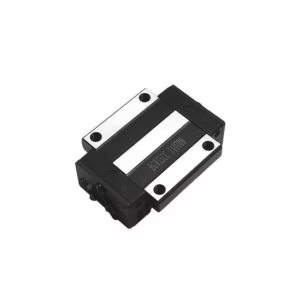
Linear Guide Block
The guide block houses the rolling elements and moves along the rail.
Important aspects include:
Load capacity
Size compatibility
Sealing system to prevent contamination
Rolling Elements
These may include:
Steel balls
Cylindrical rollers
Needle rollers
Their function is to reduce friction between the rail and carriage.
End Caps and Seals
End caps help guide the rolling elements during recirculation, while seals protect the internal components from dust and debris.
Benefits of Using Rail Linear Systems
Rail linear systems offer several advantages over traditional motion mechanisms.
High Precision
Precision is one of the biggest strengths of rail linear systems. They provide micron-level positioning accuracy.
Low Friction Movement
Rolling contact significantly reduces friction, enabling smooth motion even at high speeds.
High Load Capacity
Rail linear systems can handle heavy loads while maintaining stability.
Durability
Most rails are made from hardened steel, ensuring long service life even in demanding environments.
Energy Efficiency
Because friction is minimal, machines require less energy to operate.
Industrial Applications of Rail Linear Technology
Rail linear systems are used across many industries.
CNC Machines
Computer Numerical Control (CNC) machines rely heavily on rail linear guides for precise tool movement.
3D Printing
3D printers use linear rails to ensure accurate layer positioning.
Robotics and Automation
Robotic arms and automated systems use rail linear motion for smooth and controlled movement.
Medical Equipment
Precision devices such as imaging machines and laboratory equipment often include rail linear guides.
Packaging Machinery
Packaging lines depend on rail systems to move products efficiently and accurately.
Rail Linear vs Traditional Sliding Systems
Let’s compare rail linear systems with traditional sliding mechanisms.
| Feature | Rail Linear Systems | Sliding Systems |
|---|---|---|
| Friction | Low | High |
| Precision | Very high | Moderate |
| Wear | Low | Higher |
| Speed | High | Limited |
| Maintenance | Lower | Higher |
This comparison shows why rail linear technology dominates modern automation.
Choosing the Right Rail Linear System
Selecting the correct rail linear system depends on several factors.
Load Requirements
Determine the weight and forces the system must handle.
Precision Needs
High-precision machines require tighter tolerance rails.
Environmental Conditions
Consider exposure to dust, moisture, or chemicals.
Installation Space
Miniature rails may be necessary in compact equipment.
Budget
Costs vary based on size, materials, and performance specifications.
Installation Best Practices
Proper installation ensures optimal performance.
Surface Preparation
Mounting surfaces must be flat and clean.
Alignment
Rails should be aligned accurately to prevent binding or uneven wear.
Torque Specifications
Bolts must be tightened according to manufacturer recommendations.
Lubrication
Adequate lubrication ensures smooth operation and extends system life.
Maintenance Tips for Rail Linear Systems
Regular maintenance keeps systems running efficiently.
Lubrication Schedule
Apply lubricant at recommended intervals to reduce wear.
Cleaning
Remove dust and debris that could affect motion accuracy.
Inspection
Check rails and blocks periodically for signs of wear or damage.
Replacement of Components
Worn bearings or seals should be replaced promptly to avoid system failure.
Common Problems and Troubleshooting
Even reliable rail linear systems can face issues.
Noise During Operation
Possible causes include:
Lack of lubrication
Contamination inside the carriage
Misalignment
Reduced Motion Accuracy
This may occur due to:
Worn rails
Loose mounting bolts
Structural vibration
Premature Wear
Often caused by poor installation or harsh environmental conditions.
Future Trends in Rail Linear Technology
Rail linear technology continues to evolve.
Smart Linear Guides
Modern systems are integrating sensors to monitor wear and performance.
Advanced Materials
New coatings and materials improve durability and corrosion resistance.
Automation Integration
Rail linear systems are becoming smarter and easier to integrate with digital control systems.
For deeper technical information on motion systems, you can explore resources from the ASME – American Society of Mechanical Engineers.
Frequently Asked Questions (FAQs)
1. What is a rail linear system used for?
A rail linear system is used to enable smooth and precise movement along a straight path in machines such as CNC equipment, robots, and automation systems.
2. What materials are rail linear guides made from?
Most rail linear guides are made from hardened steel, though some specialized models use stainless steel or aluminum components.
3. How long do rail linear systems last?
With proper maintenance, rail linear systems can last many years, even in demanding industrial environments.
4. Are rail linear systems better than sliding guides?
Yes, rail linear systems generally provide lower friction, higher precision, and longer lifespan compared with sliding guides.
5. Do rail linear guides require lubrication?
Yes. Regular lubrication helps reduce friction and prevents premature wear.
6. Can rail linear systems handle heavy loads?
Yes. Certain roller-type rail linear systems are specifically designed to support very heavy loads while maintaining precision.
Conclusion
Rail linear systems play a crucial role in modern engineering and automation. Their ability to provide smooth, precise, and reliable motion makes them indispensable in industries ranging from manufacturing to healthcare.
Whether you’re designing a CNC machine, building a robot, or improving automation equipment, understanding how rail linear technology works can help you make better engineering decisions.
As technology advances, rail linear systems will continue to evolve, delivering even greater precision, durability, and efficiency in the machines that power our world.