

Article Outline
| Heading Level | Topic |
|---|---|
| H1 | Linear Slide Rail |
| H2 | Introduction to Linear Slide Rail Systems |
| H3 | What Is a Linear Slide Rail |
| H3 | Importance in Modern Machinery |
| H2 | Working Principle of Linear Slide Rail |
| H3 | Sliding and Rolling Motion Concept |
| H3 | Friction Reduction Mechanism |
| H2 | Key Components of Linear Slide Rail |
| H3 | Rail Body |
| H3 | Slider Block (Carriage) |
| H3 | Ball or Roller System |
| H2 | Types of Linear Slide Rails |
| H3 | Ball Type Linear Slide Rails |
| H3 | Roller Type Linear Slide Rails |
| H3 | Heavy-Duty Linear Slide Rails |
| H3 | Miniature Linear Slide Rails |
| H2 | Materials Used in Linear Slide Rails |
| H3 | Hardened Steel |
| H3 | Stainless Steel |
| H3 | Aluminum-Based Rails |
| H2 | Advantages of Linear Slide Rail |
| H3 | High Precision Movement |
| H3 | Smooth Operation |
| H3 | High Load Capacity |
| H2 | Applications of Linear Slide Rails |
| H3 | CNC Machines |
| H3 | Automation Systems |
| H3 | Robotics |
| H3 | Medical Equipment |
| H2 | How to Select the Right Linear Slide Rail |
| H3 | Load Capacity |
| H3 | Accuracy Requirements |
| H3 | Environmental Conditions |
| H2 | Maintenance and Lubrication |
| H2 | Common Problems and Solutions |
| H2 | Future Trends in Linear Slide Rail Technology |
| H2 | Frequently Asked Questions |
| H2 | Conclusion |
Linear Slide Rail: Complete Guide to Precision Motion and Industrial Efficiency
A linear slide rail is a mechanical component used to guide and support smooth, precise, and controlled linear motion in industrial machines. It is widely used in automation, CNC machinery, robotics, and manufacturing systems where accuracy and stability are essential.
At the core of this technology are the Linear Slide Rail and the Linear Guide Block, which work together to enable smooth movement with minimal friction and high positional accuracy.
Introduction to Linear Slide Rail Systems
Linear slide rail systems are essential for modern precision engineering.
What Is a Linear Slide Rail
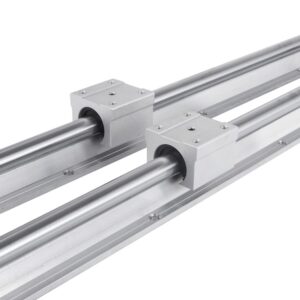
A linear slide rail is a guiding system that allows a moving block (carriage) to travel along a fixed rail in a straight line with minimal friction and high accuracy.
Key features include:
- Smooth linear motion
- High load-bearing capacity
- Excellent positioning accuracy
- Long service life
Importance in Modern Machinery
Linear slide rails are critical in:
- Automated production lines
- CNC machining centers
- Robotics systems
- Semiconductor manufacturing
They ensure machines operate efficiently and precisely.
Working Principle of Linear Slide Rail ⚙️
Linear slide rails operate using rolling or sliding contact mechanisms.
Sliding and Rolling Motion Concept
Most modern systems use rolling elements like steel balls or rollers inside the carriage to reduce friction between the rail and moving block.
Friction Reduction Mechanism
By replacing direct sliding contact with rolling motion, linear slide rails:
- Reduce wear and tear
- Improve energy efficiency
- Increase movement smoothness
Key Components of Linear Slide Rail
Rail Body
A hardened steel track that provides a precise guiding path.
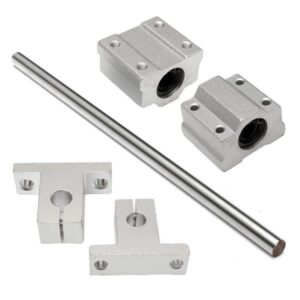
Slider Block (Carriage)
The moving component that carries the load and travels along the rail.
Ball or Roller System
Internal rolling elements that ensure smooth and low-friction motion.
Types of Linear Slide Rails
Ball Type Linear Slide Rails
Use ball bearings for smooth and fast motion.
Roller Type Linear Slide Rails
Use cylindrical rollers for higher load capacity and rigidity.
Heavy-Duty Linear Slide Rails
Designed for large industrial loads and harsh environments.
Miniature Linear Slide Rails
Used in compact systems requiring high precision.
Materials Used in Linear Slide Rails 🏗️
Hardened Steel
Most common due to its strength and wear resistance.
Stainless Steel
Used in corrosive or clean environments such as medical and food industries.
Aluminum-Based Rails
Lightweight option for low-load applications.
Advantages of Linear Slide Rail 🌟
High Precision Movement
Ensures accurate positioning in automated systems.
Smooth Operation
Reduces vibration and improves machine performance.
High Load Capacity
Supports heavy industrial equipment without deformation.
Applications of Linear Slide Rails 🏭
CNC Machines
Used for precise cutting and machining operations.
Automation Systems
Essential in robotic arms and production lines.
Robotics
Enables controlled and repeatable movement.
Medical Equipment
Used in imaging systems and diagnostic machines.
How to Select the Right Linear Slide Rail 🔍
Load Capacity
Choose based on static and dynamic loads.
Accuracy Requirements
High-precision applications require tighter tolerances.
Environmental Conditions
Consider corrosion resistance and sealing for harsh environments.
Maintenance and Lubrication 🛠️
Proper maintenance ensures long-lasting performance:
- Regular lubrication
- Cleaning of dust and debris
- Checking alignment and wear
Common Problems and Solutions ⚠️
- Noise: Lack of lubrication
- Vibration: Misalignment
- Wear: Overloading or contamination
Future Trends in Linear Slide Rail Technology 🚀
Smart Monitoring Systems
Sensors detect wear and performance issues in real time.
Self-Lubricating Designs
Reduce maintenance requirements.
AI-Based Motion Control
Improves precision and efficiency.
Lightweight High-Strength Materials
Enhance speed and energy efficiency.
Frequently Asked Questions
What is a linear slide rail used for?
It is used to guide precise linear motion in machines and automation systems.
What industries use linear slide rails?
CNC machining, robotics, automation, and medical industries.
What is the difference between ball and roller types?
Ball types are faster, while roller types support heavier loads.
Do linear slide rails need lubrication?
Yes, regular lubrication is essential for smooth operation.
How long do linear slide rails last?
With proper maintenance, they can last many years in industrial use.
Are linear slide rails interchangeable?
Not always—compatibility depends on size, load, and design standards.
Conclusion
A linear slide rail is a vital component in modern precision machinery, enabling smooth, accurate, and efficient motion control. Built around advanced Linear Slide Rail and Linear Guide Block technology, it plays a key role in automation, robotics, and industrial manufacturing.
As industries move toward smarter and more automated systems, linear slide rail technology will continue to evolve with improved durability, intelligence, and precision—making it an essential backbone of modern engineering. ⚙️