

When designing machinery that requires precise and reliable movement, selecting the correct linear rail types is one of the most important engineering decisions. Linear rails provide guided motion, support loads, reduce friction, and improve positioning accuracy in applications ranging from CNC machining centers to industrial robots and automated production lines.
With numerous rail designs available, understanding the strengths and limitations of each type helps ensure optimal machine performance, longer service life, and reduced maintenance costs.
In this guide, we’ll explore the most common linear rail types, their features, applications, and how to choose the best solution for your project.
What Are Linear Rails?
Linear rails are motion control components that guide movement along a straight path while supporting loads and maintaining alignment.
A standard linear rail system consists of:
- Guide rail
- Carriage block
- Rolling elements (balls or rollers)
- Lubrication system
- Protective seals
Linear rails are commonly found in:
- CNC machinery
- Industrial automation
- Robotics
- Semiconductor equipment
- Medical devices
- Packaging machinery
Why Understanding Linear Rail Types Matters
Different applications place different demands on a motion system.
Factors that influence rail selection include:
- Load capacity
- Precision requirements
- Travel speed
- Available space
- Environmental conditions
- Budget
Choosing the wrong rail type can lead to premature wear, reduced accuracy, and increased maintenance expenses.
10 Common Linear Rail Types
1. Ball Bearing Linear Rails
Ball bearing rails are among the most widely used linear rail types.
Features
- Recirculating steel balls
- Low friction
- High-speed capability
- Excellent precision
Applications
- CNC routers
- Laser cutting machines
- Pick-and-place systems
- Packaging equipment
Advantages
- Smooth operation
- Cost-effective
- High accuracy
2. Roller Linear Rails
Roller rails use cylindrical rollers instead of steel balls.
Features
- Larger contact surface
- Increased rigidity
- Higher load capacity
Applications
- Heavy-duty CNC machines
- Industrial robots
- Large manufacturing equipment
Advantages
- Excellent stiffness
- Superior shock resistance
- Longer lifespan under heavy loads
3. Miniature Linear Rails
Miniature rails are compact systems designed for small-scale equipment.
Applications
- Medical devices
- Electronics assembly
- Laboratory instruments
Advantages
- Space-saving design
- Lightweight construction
- High precision
4. Heavy Duty Linear Rails
Heavy-duty systems are engineered for demanding industrial environments.
Features
- Reinforced rail profiles
- Larger bearing circuits
- Higher load ratings
Applications
- Material handling systems
- Automation equipment
- Industrial machinery
Explore industrial-grade rail solutions:
👉 https://yhlinear.com/product
5. Wide Rail Systems
Wide rails offer greater stability and support.
Advantages
- Improved resistance to overturning moments
- Better load distribution
- Enhanced rigidity
Applications
- Gantry systems
- Inspection equipment
- Large automation platforms
6. Square Linear Rails
Square profile rails are one of the most common industrial designs.
Features
- Equal load capacity in multiple directions
- High rigidity
- Precision-ground surfaces
Applications
- CNC machining centers
- Industrial automation
- Robotics
7. Round Shaft Linear Rails
Round rail systems utilize cylindrical shafts and linear bearings.
Advantages
- Lower cost
- Simple installation
- Flexible mounting options
Applications
- Light-duty automation
- DIY CNC machines
- Educational projects
8. Profiled Linear Rails
Profiled rails feature specially designed raceways for enhanced performance.
Benefits
- Improved precision
- Higher rigidity
- Increased load capacity
Applications
- Semiconductor manufacturing
- High-speed automation
- Precision assembly equipment
9. Stainless Steel Linear Rails
Designed for harsh or corrosive environments.
Features
- Corrosion resistance
- Easy cleaning
- Long-term durability
Applications
- Food processing
- Medical equipment
- Pharmaceutical production
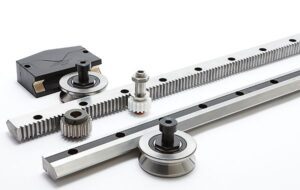
10. Low-Noise Linear Rails
These rails incorporate specialized designs to reduce vibration and noise.
Applications
Benefits
- Quieter operation
- Smoother movement
- Reduced vibration
Comparison of Linear Rail Types
| Linear Rail Type | Precision | Load Capacity | Speed | Common Applications |
|---|---|---|---|---|
| Ball Bearing Rails | Excellent | High | High | CNC, Automation |
| Roller Rails | Excellent | Very High | High | Heavy Machinery |
| Miniature Rails | High | Moderate | High | Electronics |
| Heavy Duty Rails | High | Very High | Medium | Manufacturing |
| Round Rails | Moderate | Moderate | Medium | Light Automation |
| Stainless Rails | High | High | High | Medical, Food Processing |
How to Choose the Best Linear Rail Type
Evaluate Load Requirements
Determine:
- Static loads
- Dynamic loads
- Shock loads
Heavy-duty applications often benefit from roller rails.
Consider Precision Requirements
High-accuracy applications such as CNC machining require precision-grade rails.
Assess Travel Speed
For high-speed systems, ball bearing rails are often the preferred choice.
Analyze Environmental Conditions
Consider exposure to:
- Dust
- Moisture
- Chemicals
- Temperature fluctuations
Corrosion-resistant rails may be necessary.
Review Installation Space
Compact applications may require miniature rail systems.
Applications of Linear Rail Types Across Industries
CNC Machinery
Linear rails support:
- Milling machines
- Lathes
- Routers
- Grinding systems
Industrial Automation
Applications include:
- Conveyor systems
- Packaging equipment
- Assembly lines
Robotics
Robots rely on linear rails for:
- Positioning accuracy
- Smooth movement
- Repeatability
Semiconductor Manufacturing
Precision rail systems support:
- Wafer handling
- Inspection equipment
- Assembly systems
Medical Technology
Linear rails are commonly used in:
- Imaging devices
- Diagnostic systems
- Laboratory automation
Internal Links
Learn more about industrial linear motion products:
Linear Guide Products
👉 https://yhlinear.com/product
Linear Guide Category
👉 https://yhlinear.com/product-category/linear-guide
YH Linear Homepage
These pages help engineers identify suitable guide rail and bearing solutions for various applications.
External Resources
For additional technical guidance on linear rail technology:
Both manufacturers provide valuable engineering references and application resources.
FAQs About Linear Rail Types
What are the main linear rail types?
The most common types include ball bearing rails, roller rails, miniature rails, heavy-duty rails, square rails, round rails, and stainless steel rails.
Which linear rail type offers the highest load capacity?
Roller linear rails generally provide the highest load capacity and rigidity.
Are ball bearing rails suitable for CNC machines?
Yes. Ball bearing rails are widely used in CNC machinery because of their precision and low friction.
What is the difference between square rails and round rails?
Square rails offer higher rigidity and load capacity, while round rails are typically more economical and easier to install.
Which linear rail type is best for corrosive environments?
Stainless steel linear rails are ideal for applications exposed to moisture, chemicals, or frequent cleaning.
Where can I buy industrial linear rail systems?
Browse professional-grade solutions here:
👉 https://yhlinear.com/product
Conclusion
Understanding the various linear rail types is essential when designing efficient and reliable motion systems. Each type offers unique advantages in terms of precision, load capacity, speed, durability, and environmental resistance.
Whether you’re building a CNC machine, robotic system, semiconductor production line, or automated manufacturing platform, selecting the correct linear rail type can significantly improve performance and reduce maintenance costs.
For high-quality linear motion solutions and expert support, visit:
👉 https://yhlinear.com/product
And explore additional guide rail options at:
👉 https://yhlinear.com/product-category/linear-guide
By choosing the right linear rail type, manufacturers can achieve greater accuracy, improved productivity, and long-term operational success.
