

Introduction
In modern CNC (Computer Numerical Control) machines, precision and smooth linear motion are crucial for achieving accurate machining, cutting, and assembly. One of the most important components that enable this motion is the CNC linear slide.
A CNC linear slide is a linear motion guide system that allows tool heads, workpieces, or machine components to move along a precise straight path with minimal friction. These slides are widely used in CNC routers, milling machines, laser cutters, 3D printers, and industrial automation systems.
This article provides a detailed overview of CNC linear slides, including their definition, structure, working principle, types, advantages, applications, selection criteria, and maintenance practices.
What Is a CNC Linear Slide?
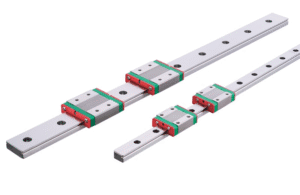
A CNC linear slide is a mechanical device designed to facilitate linear motion in CNC machines. It typically consists of:
A rail or track that provides a straight path.
A carriage or slider that moves along the rail.
Rolling elements, such as balls or rollers, that minimize friction.
The primary purpose of a CNC linear slide is to ensure precise, smooth, and repeatable motion, enabling machines to achieve high accuracy in machining, cutting, and shaping operations.
Unlike plain slides or linear bushings, CNC linear slides use recirculating rolling elements, which allow for higher speeds, greater load capacity, and longer service life.
Structure of a CNC Linear Slide
A standard CNC linear slide system consists of three main components:
Rail (Linear Guide Track)
Precision-machined rail made from hardened steel, stainless steel, or aluminum alloy.
Provides a rigid, straight path for the carriage.
Designed to support radial, axial, and moment loads.
Carriage/Slider (Linear Block)
Moves along the rail while carrying the load.
Contains recirculating balls or rollers to reduce friction.
Ensures stability, rigidity, and precision during motion.
Rolling Elements (Balls or Rollers)
Reduce sliding friction by rolling between the rail and carriage.
Ensure smooth, accurate, and low-resistance motion.
Distribute loads evenly across the system.
Additional components may include seals, end caps, lubrication ports, or wipers to protect the system from dust, debris, or contamination.
Working Principle of CNC Linear Slides
CNC linear slides operate on the principle of rolling friction:
The carriage moves along the rail, guided by recirculating rolling elements.
Balls or rollers inside the carriage circulate continuously, converting sliding friction into rolling friction.
The system maintains precise linear motion, high rigidity, and smooth operation under varying loads.
CNC linear slides handle dynamic and static loads, including radial, axial, and moment forces.
This design allows CNC machines to perform high-speed, high-precision, and repeatable machining operations with minimal vibration and wear.
Types of CNC Linear Slides
CNC linear slides come in various designs to suit different applications:
1. Ball-Type CNC Linear Slides
Uses recirculating ball bearings for smooth motion.
Provides high precision and low friction.
Common in CNC milling machines, routers, and 3D printers.
2. Roller-Type CNC Linear Slides
Uses cylindrical or needle rollers.
Can support higher loads and greater rigidity.
Ideal for heavy-duty CNC machines and industrial automation.
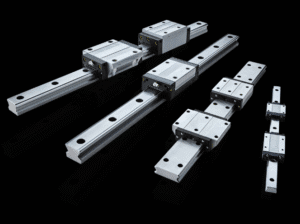
3. Profile Rail CNC Slides
Features a compact carriage with recirculating rolling elements.
Provides multi-directional load support and high stability.
Widely used in high-precision CNC machining and automation.
4. Miniature CNC Linear Slides
Designed for compact machines and light loads.
Suitable for precision electronics, medical devices, and lab automation.
5. Aluminum CNC Linear Slides
Lightweight, corrosion-resistant, and often anodized for durability.
Ideal for robots, 3D printers, and lightweight CNC applications.
Advantages of CNC Linear Slides
CNC linear slides provide multiple benefits over traditional sliding or bushing systems:
High Precision – Maintains accurate and repeatable motion.
Low Friction – Rolling elements reduce energy loss and wear.
High Load Capacity – Supports radial, axial, and moment loads.
Smooth Operation – Quiet and vibration-free motion.
Durability – Resistant to wear and deformation under continuous use.
Versatility – Suitable for a wide range of CNC machines and automation systems.
Easy Installation & Maintenance – Modular designs and lubrication ports simplify setup.
Applications of CNC Linear Slides
CNC linear slides are used wherever precision, stability, and smooth linear motion are required:
CNC Milling Machines – Accurate cutting and shaping of metals, plastics, and wood.
CNC Routers – Smooth motion for engraving, carving, and machining large sheets.
3D Printers – Precision movement of print heads and platforms.
Laser Cutters & Engravers – Stable motion for precise cutting patterns.
Industrial Robots – Linear actuators and positioning stages.
Packaging Machinery – Smooth motion for filling, labeling, and assembly.
Medical Equipment – Lab automation, imaging devices, and diagnostic machinery.
Materials Used in CNC Linear Slides
The material of a CNC linear slide affects load capacity, precision, and durability:
Hardened Steel – High strength and rigidity, ideal for heavy-duty CNC machines.
Stainless Steel – Corrosion-resistant, suitable for medical, food, and chemical CNC applications.
Aluminum Alloy – Lightweight and corrosion-resistant, used in light CNC machines and robotics.
Composite or Coated Materials – Reduce friction and wear in specialized applications.
How to Choose the Right CNC Linear Slide
Selecting the right CNC linear slide requires careful consideration of several factors:
Load Capacity – Ensure the slide can handle static, dynamic, and moment loads.
Precision Requirements – High-accuracy applications require tighter tolerances.
Travel Distance – Rail length must meet the required motion range.
Environment – Use sealed or stainless-steel slides in dusty, wet, or corrosive environments.
Speed & Acceleration – Verify the system can handle operational speeds without vibration.
Maintenance Needs – Consider self-lubricating or easy-to-lubricate designs.
Space Constraints – Miniature or compact slides may be necessary for tight installations.
Installation and Maintenance Guidelines
Proper installation and maintenance are critical for performance and longevity:
Alignment – Rails must be mounted on flat, rigid surfaces with precise alignment.
Lubrication – Rolling elements require periodic lubrication to reduce wear.
Cleaning – Remove dust, debris, and contaminants from rails and carriages.
Inspection – Regularly check for wear, looseness, or damage.
Replacement – Replace worn or damaged slides promptly to maintain precision.
Following these practices ensures smooth motion, high precision, and long service life.
Future Trends in CNC Linear Slides
CNC linear slide technology continues to advance with innovations in materials, design, and smart features:
Smart CNC Linear Slides – Integrated sensors for position, load, and temperature monitoring.
Low-Friction Coatings – Advanced coatings reduce wear and improve efficiency.
Compact and Lightweight Designs – Aluminum and composite slides reduce machine weight.
IoT-Integrated Systems – Real-time monitoring for predictive maintenance in smart factories.
Hybrid Materials – Combining aluminum and steel for lightweight yet strong slides.
These innovations enhance precision, durability, and automation efficiency in CNC machining.
Frequently Asked Questions (FAQs)
1. What is a CNC linear slide?
A CNC linear slide is a linear motion system consisting of a rail and a carriage that allows smooth, precise, and repeatable movement in CNC machines.
2. How does a CNC linear slide differ from a linear bushing?
CNC linear slides use recirculating rolling elements for low friction and high precision, while linear bushings rely on sliding motion, which is less accurate and wears faster.
3. What types of CNC linear slides are available?
Types include ball-type, roller-type, profile rail, miniature, and aluminum CNC linear slides.
4. Where are CNC linear slides used?
They are used in CNC milling machines, routers, 3D printers, laser cutters, industrial robots, and packaging machinery.
5. Can CNC linear slides support heavy loads?
Yes, particularly roller-type and steel profile slides, which are designed for high radial, axial, and moment loads.
6. Do CNC linear slides require maintenance?
Yes. Regular lubrication, cleaning, and inspection are essential for smooth motion and long lifespan.
7. What materials are used for CNC linear slides?
Hardened steel, stainless steel, aluminum alloy, and composites are common, depending on load, precision, and environment.
Conclusion
A CNC linear slide is a vital component in CNC machines, providing accurate, smooth, and low-friction linear motion.
By enabling precise movement, supporting loads, and reducing wear, CNC linear slides enhance efficiency, durability, and accuracy across industries such as metalworking, woodworking, 3D printing, laser cutting, robotics, and packaging automation.
Proper selection, installation, and maintenance are essential for optimal performance. With continuous advancements in materials and smart technologies, CNC linear slides will remain essential for precision machining and industrial automation.