

Outline for “Slide Rail Linear”
| Section | Subtopics |
|---|---|
| Introduction to Slide Rail Linear Systems | What They Are, Importance in Mechanical Design |
| Understanding How a Slide Rail Linear System Works | Basic Mechanism, Motion Control, Load Distribution |
| Components of a Slide Rail Linear System | Rails, Carriages, Bearings, End Caps |
| Types of Slide Rail Linear Systems | Ball Bearing Slides, Roller Slides, Plain Bearing Slides |
| Materials Used in Slide Rail Linear Systems | Stainless Steel, Aluminum, Polymer Composites |
| Advantages of Slide Rail Linear Systems | Smooth Motion, Precision, Low Noise |
| Applications of Slide Rail Linear Systems | Robotics, CNC Machines, Medical Devices, Furniture |
| Installation Techniques for Slide Rail Linear Systems | Alignment, Mounting, Load Testing |
| Lubrication and Maintenance for Slide Rail Linear Systems | Grease, Oil, Self-Lubricating Options |
| Common Problems in Slide Rail Linear Systems and Solutions | Friction, Misalignment, Wear, Contamination |
| How to Choose the Right Slide Rail Linear System | Load, Speed, Environment, Travel Distance |
| Slide Rail Linear in Industrial Automation | Robotics, Conveyor Systems, Pick-and-Place Machines |
| Slide Rail Linear in Everyday Life | Drawers, Sliding Doors, Printers, Cabinets |
| Innovations in Slide Rail Linear Technology | Smart Sensors, Magnetic Slides, Compact Designs |
| Precision and Tolerance in Slide Rail Linear Systems | Accuracy, Repeatability, Vibration Resistance |
| Environmental Impact and Sustainability of Slide Rail Linear Systems | Eco-Friendly Materials, Energy Efficiency |
| Comparison: Slide Rail Linear vs Linear Guideways | Performance, Cost, Maintenance |
| Testing and Quality Assurance for Slide Rail Linear Systems | ISO Standards, Durability Testing, Load Testing |
| Future of Slide Rail Linear Systems | AI Monitoring, Self-Healing Surfaces, Advanced Alloys |
| Troubleshooting Slide Rail Linear Performance Issues | Noise, Play, Rough Motion |
| Cost Analysis and Return on Investment | Initial Costs, Lifespan, Maintenance Savings |
| Safety Considerations for Slide Rail Linear Systems | Handling, Installation, Load Limits |
| Tips to Extend the Life of Slide Rail Linear Systems | Cleaning, Lubrication, Load Management |
| Frequently Asked Questions about Slide Rail Linear | Common Queries |
| Conclusion: Why Slide Rail Linear Systems Matter | Efficiency, Reliability, Future Potential |
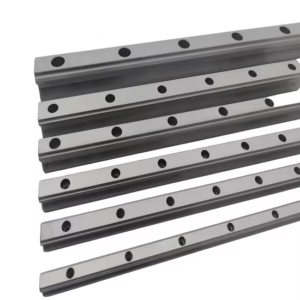
Introduction to Slide Rail Linear Systems
In the world of motion control, precision, and smooth operation, slide rail linear systems stand out as the cornerstone of mechanical engineering. They provide guided motion in a straight line, enabling machines to move objects smoothly and with remarkable accuracy. Whether you are designing an automated production line or a simple sliding mechanism for drawers, slide rail linear systems are vital for ensuring consistent and controlled motion.
These systems play a critical role in industries ranging from robotics to furniture design. Their blend of compactness, low noise, and effortless operation makes them indispensable in modern technology. Let’s explore how these systems work and why they have become an engineering marvel.
Understanding How a Slide Rail Linear System Works
A slide rail linear system is designed to guide a load along a straight path while minimizing friction. The system typically consists of a stationary rail and a moving carriage or slider that glides along it. Bearings—either ball, roller, or plain—are integrated to ensure that the motion remains smooth and friction-free.
The concept might sound simple, but the precision involved is astounding. Every component must work in harmony to ensure that motion is consistent, even under varying loads and speeds. The smoother the slide, the more accurate the overall machine performance.
Components of a Slide Rail Linear System
Every slide rail linear system is made up of a few core components, including:
Rail: The fixed track that guides movement.
Carriage or Slider: The moving part that holds the load.
Bearings: The friction-reducing elements that allow motion.
End Caps and Seals: Keep out dust, dirt, and debris.
These components are precisely engineered to ensure durability and accuracy even under extreme conditions.
Types of Slide Rail Linear Systems
There are several types of slide rail linear systems available, each suited to specific applications:
Ball Bearing Slides – Use steel balls to provide low-friction motion. Common in industrial automation and robotics.
Roller Slides – Utilize rollers for higher load capacity and smoother movement.
Plain Bearing Slides – Work without rolling elements, ideal for dusty or dirty environments.
Each type has its advantages based on load capacity, speed, and working environment.
Materials Used in Slide Rail Linear Systems
The choice of material greatly affects the system’s performance:
Stainless Steel – Excellent corrosion resistance and strength.
Aluminum – Lightweight and suitable for low-load applications.
Polymer Composites – Provide self-lubrication and silent operation.
Selecting the right material ensures reliability, especially in environments exposed to moisture, heat, or chemicals.
Advantages of Slide Rail Linear Systems
Slide rail linear systems offer multiple advantages:
Precision – Enables controlled and repeatable motion.
Durability – Long operational life with minimal maintenance.
Compact Design – Fits into tight spaces easily.
Low Noise and Friction – Ensures quiet and efficient performance.
Their combination of strength and smoothness makes them perfect for modern automation and design.
Applications of Slide Rail Linear Systems
You can find slide rail linear systems in a wide variety of applications:
Industrial Robots – For precise motion control.
CNC Machines – For accurate positioning of cutting tools.
Medical Equipment – Smooth motion for precision devices.
Furniture Design – In drawers, cabinets, and storage systems.
From factories to living rooms, these systems define mechanical convenience.
Installation Techniques for Slide Rail Linear Systems
Correct installation is crucial to ensure optimal performance:
Ensure proper alignment of rails.
Tighten fasteners evenly to prevent distortion.
Avoid overloading or uneven weight distribution.
Test the slide movement before operation.
A well-installed system reduces wear, vibration, and misalignment issues.

Lubrication and Maintenance for Slide Rail Linear Systems
Lubrication is essential to prevent metal-to-metal contact. Grease or oil-based lubricants are commonly used. In some advanced systems, self-lubricating bearings eliminate the need for frequent maintenance. Always clean the rails regularly to remove dust or debris that could interfere with smooth motion.
Common Problems in Slide Rail Linear Systems and Solutions
Some frequent issues include:
Friction Increase – Due to lack of lubrication or dirt buildup.
Misalignment – Results in uneven wear or jamming.
Bearing Damage – Caused by overloading or contamination.
Routine inspections and preventive maintenance help avoid costly failures.
How to Choose the Right Slide Rail Linear System
Key considerations include:
Load weight
Desired speed
Travel length
Operating environment
Required precision
Choosing the right configuration ensures efficiency, longevity, and minimal downtime.
Slide Rail Linear in Industrial Automation
In automation, slide rail linear systems are indispensable. They help robotic arms, conveyors, and pick-and-place machines operate with high precision and repeatability. The result? Increased productivity and reduced maintenance costs.
Slide Rail Linear in Everyday Life
Beyond industrial use, slide rail linear systems are found in daily life—drawers that glide effortlessly, sliding doors that move quietly, or the internal mechanisms of office chairs and printers. These systems combine function with convenience.
Innovations in Slide Rail Linear Technology
Modern innovations have transformed traditional slide rails into intelligent systems. Features like integrated sensors, magnetic levitation, and self-healing coatings have enhanced performance and reduced maintenance needs. Compact, high-load designs have opened new possibilities in robotics and aerospace.
Precision and Tolerance in Slide Rail Linear Systems
Precision defines quality. Slide rail linear systems are manufactured to tight tolerances, ensuring consistent accuracy even under varying conditions. Vibration resistance and repeatability make them ideal for high-speed, high-precision applications.
Environmental Impact and Sustainability of Slide Rail Linear Systems
Manufacturers are now prioritizing eco-friendly materials and energy-efficient production processes. Recyclable metals, low-friction coatings, and minimal lubricant waste contribute to sustainable engineering.
Comparison: Slide Rail Linear vs Linear Guideways
| Feature | Slide Rail Linear | Linear Guideway |
|---|---|---|
| Motion Type | Sliding | Rolling |
| Friction | Slightly higher | Very low |
| Load Capacity | Moderate | High |
| Cost | Lower | Higher |
| Maintenance | Easy | Requires more care |
Each system excels in specific conditions; the choice depends on the intended use.
Testing and Quality Assurance for Slide Rail Linear Systems
Quality assurance involves load testing, endurance trials, and ISO-certified inspections. These ensure each rail can withstand stress without deformation or performance loss.
Future of Slide Rail Linear Systems
The future is bright with AI-driven monitoring, smart lubrication systems, and nano-engineered surfaces. These technologies will enable predictive maintenance and extend operational life.
Troubleshooting Slide Rail Linear Performance Issues
If your system experiences rough motion or noise:
Recheck alignment
Inspect for debris
Apply lubricant
Replace worn bearings
Prompt troubleshooting avoids expensive repairs.

Cost Analysis and Return on Investment
While initial costs vary by material and type, long-term savings come from lower energy usage, less downtime, and minimal maintenance.
Safety Considerations for Slide Rail Linear Systems
Handle with care during installation. Always adhere to load limits and ensure that protective covers are in place to prevent accidents.
Tips to Extend the Life of Slide Rail Linear Systems
Keep rails clean and lubricated.
Avoid shock loads.
Store components in dry environments.
Regularly inspect for corrosion or wear.
With proper care, these systems can last for decades.
Frequently Asked Questions about Slide Rail Linear
What is a slide rail linear system used for?
It’s used to enable smooth, straight-line motion in machines or furniture.
Do slide rails require lubrication?
Yes, unless they’re made from self-lubricating materials.
Can slide rail linear systems handle heavy loads?
Certain models, especially roller slides, can handle significant weight.
How long do slide rail linear systems last?
Typically, several years depending on usage and maintenance.
Are slide rail linear systems noisy?
No, they’re designed for silent operation, especially with polymer or ball-bearing models.
What materials are best for slide rail linear systems?
Stainless steel and aluminum are most common due to their durability and corrosion resistance.
Conclusion: Why Slide Rail Linear Systems Matter
In today’s world of automation and precision, slide rail linear systems are indispensable. They provide the foundation for smooth motion, accuracy, and reliability in machinery and everyday products. As technology advances, these systems will continue to evolve—becoming smarter, more efficient, and even more sustainable. Whether in robotics or your kitchen drawer, they quietly power the seamless motion that keeps modern life running smoothly.