

Linear bearing rails are an essential component in modern mechanical systems, enabling precise and smooth linear motion in various industrial, manufacturing, and automation applications. From CNC machines to 3D printers, linear bearing rails provide high accuracy, load-bearing capacity, and durability. Understanding the types, construction, applications, and maintenance of linear bearing rails is crucial for engineers, designers, and technicians.
In this comprehensive guide, we will explore everything you need to know about linear bearing rails. The article covers their design, materials, types, advantages, applications, installation methods, and maintenance tips, providing a thorough resource for professionals and enthusiasts alike.
Table of Contents
What Are Linear Bearing Rails?
Components of Linear Bearing Rails
Types of Linear Bearing Rails
Materials Used in Linear Bearing Rails
Advantages of Linear Bearing Rails
Applications of Linear Bearing Rails
Factors to Consider When Selecting Linear Bearing Rails
Installation and Alignment of Linear Bearing Rails
Maintenance and Lubrication
Troubleshooting Common Issues
Innovations in Linear Bearing Technology
FAQs About Linear Bearing Rails
Conclusion
1. What Are Linear Bearing Rails?
A linear bearing rail is a mechanical component designed to guide motion in a straight line. It consists of a rail or track along which a bearing or carriage moves, reducing friction and providing stability. Unlike rotary bearings, which allow rotational motion, linear bearings are optimized for linear or translational movement.
Linear bearing rails are widely used in machinery where high precision, smooth operation, and repeatable positioning are required. They can support heavy loads while minimizing friction, making them suitable for demanding industrial applications.
2. Components of Linear Bearing Rails
A typical linear bearing rail system consists of two main components:
2.1. Rail
Description: A rigid, straight track that serves as a guide for the bearing carriage.
Features: Rails are often hardened or treated to resist wear, corrosion, and deformation. They may have grooves or raceways to accommodate the ball or roller bearings.
2.2. Bearing Carriage (or Block)
Description: The movable component that slides along the rail.
Features: Contains rolling elements such as balls or rollers, housed in a cage to ensure smooth motion. The carriage may include mounting surfaces for attaching machinery components.
Optional components may include end caps, seals, and lubrication ports to enhance durability and performance.
3. Types of Linear Bearing Rails
Linear bearing rails come in different types, each suited to specific applications:
3.1. Ball Bearing Rails
Use recirculating balls to reduce friction.
Offer high precision and smooth movement.
Suitable for CNC machines, 3D printers, and automation equipment.
3.2. Roller Bearing Rails
Utilize cylindrical or needle rollers instead of balls.
Can support higher loads than ball-bearing types.
Commonly used in heavy-duty machinery and industrial applications.
3.3. Plain Bearing Rails
Rely on sliding motion with low-friction materials such as PTFE.
Lower cost and maintenance but less precision than rolling elements.
Ideal for applications where load and speed are moderate.
3.4. Profiled Rails vs. Round Rails
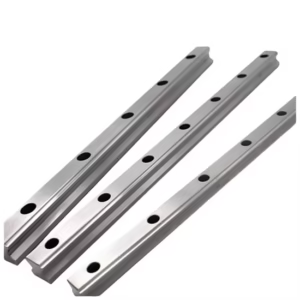
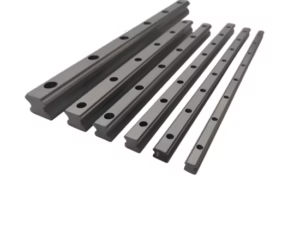
Profiled Rails: Rectangular or square cross-section with grooves for precise ball or roller guidance.
Round Rails: Cylindrical in shape, simpler, often used with linear bushings for lighter loads.
4. Materials Used in Linear Bearing Rails
Material selection is critical for durability, load-bearing capacity, and corrosion resistance.
4.1. Steel
Most common material.
Hardened and ground for high precision.
Suitable for high-load and industrial environments.
4.2. Stainless Steel
Resistant to corrosion and rust.
Ideal for food processing, medical equipment, or outdoor applications.
4.3. Aluminum
Lightweight and corrosion-resistant.
Used where weight reduction is essential but loads are moderate.
4.4. Plastic or Composite Rails
Low-friction, lightweight, and resistant to chemicals.
Suitable for low-load applications or environments where contamination must be avoided.
5. Advantages of Linear Bearing Rails
Linear bearing rails provide multiple benefits, making them a preferred choice in modern machinery:
Precision: Accurate and repeatable motion.
Load Capacity: Can handle high loads with proper selection.
Smooth Operation: Low friction ensures minimal vibration and noise.
Durability: Hardened rails and bearings provide long service life.
Flexibility: Compatible with various machinery sizes and configurations.
Easy Integration: Standardized sizes allow easy replacement and integration.
6. Applications of Linear Bearing Rails
Linear bearing rails are used in multiple industries, including:
6.1. CNC Machining
Used for guiding cutting heads, tool carriages, and tables.
High precision ensures accurate machining of metal, plastic, and wood.
6.2. 3D Printing
Provides stable linear motion for the printer’s axes.
Ensures layer-to-layer alignment and quality printing.
6.3. Robotics and Automation
Guides robotic arms and automated production lines.
Supports repetitive motion with minimal wear.
6.4. Medical Equipment
Ensures precise positioning in imaging devices, laboratory equipment, and surgical machinery.
6.5. Industrial Machinery
Used in packaging machines, material handling systems, and assembly lines.
6.6. Aerospace and Defense
Provides high-precision movement for instruments and control systems.

7. Factors to Consider When Selecting Linear Bearing Rails
Selecting the right linear bearing rail requires evaluating:
Load Requirements: Both static and dynamic load capacities.
Precision Needs: Tolerance and repeatability for the application.
Speed of Movement: Determines whether ball or roller bearings are optimal.
Environmental Conditions: Temperature, moisture, and chemical exposure.
Mounting and Space Constraints: Rail length, mounting surface, and alignment.
8. Installation and Alignment of Linear Bearing Rails
Proper installation is essential for optimal performance:
8.1. Mounting Surface Preparation
Ensure flatness and rigidity.
Remove dust, debris, and oil.
8.2. Alignment
Use precision measuring tools to align rails parallel.
Misalignment can cause uneven wear and reduce service life.
8.3. Fastening
Use proper torque on screws and mounting hardware.
Avoid over-tightening which can distort the rail.
8.4. Testing
Slide the carriage along the rail to check for smooth motion and proper alignment.
9. Maintenance and Lubrication
Linear bearing rails require regular maintenance to ensure longevity:
Cleaning: Remove dust, debris, and contaminants.
Lubrication: Use appropriate grease or oil based on bearing type and manufacturer recommendations.
Inspection: Check for wear, corrosion, and damage periodically.
Replacement: Replace worn-out bearings or damaged rails promptly.
10. Troubleshooting Common Issues
Common problems with linear bearing rails include:
Noise or Vibration: May indicate misalignment or insufficient lubrication.
Excessive Wear: Often caused by contamination or overload.
Sticking or Jamming: Could result from debris or damaged bearings.
Corrosion: Occurs if protective coatings are compromised or unsuitable material is used.
11. Innovations in Linear Bearing Technology
Recent advancements include:
High-Speed Rails: Designed for ultra-fast automation applications.
Compact and Lightweight Designs: Reduce weight without sacrificing load capacity.
Integrated Sensors: Provide feedback for motion control and predictive maintenance.
Corrosion-Resistant Coatings: Enhance longevity in harsh environments.
12. FAQs About Linear Bearing Rails
Q1: Can linear bearing rails support heavy loads?
Yes, depending on the type and size, linear rails can handle thousands of kilograms of load.
Q2: How often should I lubricate linear rails?
It depends on usage and environment; heavy-duty applications may require weekly lubrication.
Q3: What is the difference between round and profiled rails?
Profiled rails offer higher precision and rigidity; round rails are simpler and suitable for lighter loads.
Q4: Can I use linear rails outdoors?
Yes, but choose corrosion-resistant materials such as stainless steel or specially coated rails.
13. Conclusion
Linear bearing rails are a cornerstone of modern precision machinery, offering high accuracy, smooth motion, and durability. Choosing the right type, material, and size, coupled with proper installation and maintenance, ensures reliable performance and long service life. Whether in CNC machines, 3D printers, robotics, or industrial automation, understanding linear bearing rails allows engineers and designers to optimize machinery for maximum efficiency and precision.
With the continuous development of materials and technology, linear bearing rails will continue to play a vital role in advancing industrial automation and mechanical engineering.