

Introduction
In modern industrial machinery and automation systems, precision linear motion is essential for efficiency, accuracy, and reliability. A core component enabling this motion is the linear carriage, also known as a linear block or linear bearing block.
A linear carriage moves along a linear rail or shaft, supported by rolling elements such as balls or cylindrical rollers, ensuring smooth and low-friction motion. Linear carriages are critical in CNC machines, 3D printers, automated assembly lines, robotics, and material handling equipment.
Compared with traditional sliding systems, linear carriages provide higher precision, lower friction, and better load distribution, making them ideal for heavy-duty and high-speed applications.
This article provides a detailed overview of linear carriages, including their definition, structure, working principles, types, materials, advantages, applications, selection guidelines, installation, and maintenance.
What Is a Linear Carriage?
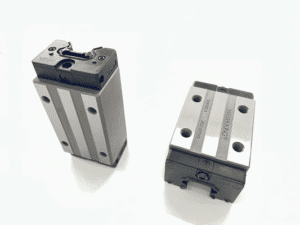
A linear carriage is a mechanical component designed to move linearly along a guide rail or shaft, supporting the moving part of a machine while maintaining alignment and stability. It typically contains rolling elements, such as balls or rollers, which circulate within the carriage to reduce friction and wear.
The main functions of a linear carriage include:
Guiding linear motion with precision
Supporting static and dynamic loads
Minimizing friction for smoother operation
Maintaining rigidity and alignment during movement
Linear carriages are often paired with linear rails or shafts, forming a complete linear motion system capable of high-speed, high-precision operation.
Key Components of a Linear Carriage
1. Carriage Body
The main housing of the linear carriage
Provides rigidity and support for rolling elements
Typically made of hardened steel or aluminum
2. Rolling Elements
Steel balls or cylindrical rollers that circulate inside the carriage
Reduce friction and distribute load evenly
3. Raceways
Precision-machined surfaces inside the carriage
Guide the rolling elements along the rail
4. End Caps and Retainers
Maintain rolling element position
Allow smooth circulation
5. Seals and Wipers
Protect internal components from dust, debris, and coolant
Essential in industrial environments
6. Lubrication Channels
Facilitate the application of grease or oil
Ensure smooth operation and long service life
How a Linear Carriage Works
Linear carriages operate based on rolling motion mechanics:
The carriage is mounted on a linear rail or shaft.
Rolling elements circulate within the carriage as it moves along the rail.
Loads are transferred evenly across multiple contact points.
Friction is minimized compared with sliding systems.
Smooth, accurate, and controlled linear motion is achieved.
This system allows machinery to operate with high precision, rigidity, and durability, even under heavy loads or high-speed conditions.
Types of Linear Carriages
1. Ball-Type Linear Carriages
Use recirculating steel balls
Provide smooth motion and high-speed performance
Suitable for CNC machines, 3D printers, and light automation
2. Roller-Type Linear Carriages
Use cylindrical rollers instead of balls
Offer higher rigidity and load capacity
Ideal for heavy machinery and gantry systems
3. Profile Rail Linear Carriages
Rectangular block design with integrated raceways
Multi-directional load support
Most common in CNC machining centers and industrial automation
4. Miniature Linear Carriages
Compact design for small-scale machines
High precision in limited installation space
Used in medical equipment, lab automation, and desktop CNC machines
5. Heavy-Duty Linear Carriages
Reinforced carriage blocks and larger rollers
Designed for extreme loads, shocks, or harsh industrial environments
Materials Used in Linear Carriages
Hardened Bearing Steel – High load capacity and wear resistance
Stainless Steel – Corrosion-resistant for wet or humid conditions
Aluminum Alloy – Lightweight, moderate load applications
Engineering Plastics / Composites – Low noise, chemical-resistant components
Surface Treatments – Chrome plating, black oxide, and induction hardening
Material selection depends on load, speed, environment, and required service life.
Advantages of Linear Carriages
High Precision and Repeatability – Maintains consistent motion
Low Friction and Smooth Operation – Reduces energy loss
High Load Capacity – Supports heavy static and dynamic loads
Rigidity and Stability – Maintains alignment during motion
Long Service Life – Durable with proper maintenance
Versatile Applications – Compatible with horizontal, vertical, and inclined movement
These advantages make linear carriages essential in industrial automation, CNC machining, robotics, and heavy machinery.
Applications of Linear Carriages
Linear carriages are widely used in:
CNC Machines – Lathes, milling centers, gantry systems
Robotics – Linear axes for positioning and movement
3D Printers and Laser Engravers – Precision motion along X, Y, or Z axes
Industrial Automation – Conveyor systems, pick-and-place machines
Material Handling – Heavy-load transfer carts
Packaging Machinery – High-speed, high-precision applications
Medical and Laboratory Equipment – Automated test or dispensing systems
How to Choose the Right Linear Carriage
When selecting a linear carriage, consider:
Load Capacity – Static and dynamic requirements
Precision and Repeatability – Accuracy for the application
Travel Distance and Stroke Length
Speed and Acceleration – Axis motion requirements
Environmental Conditions – Dust, moisture, chemicals, temperature
Maintenance Accessibility – Lubrication and inspection points
Space and Mounting Constraints
Choosing the right carriage ensures stable operation, longer service life, and precise motion.
Installation Best Practices
Mount rails on flat and rigid surfaces
Align carriages carefully to prevent uneven load distribution
Use correct fasteners and torque specifications
Apply lubrication before initial operation
Test under operational loads to verify smooth motion
Proper installation directly impacts accuracy, load distribution, and service life.
Maintenance and Care
Clean rails and carriages regularly to remove dust and debris
Inspect seals, wipers, and rolling elements
Re-lubricate as per manufacturer recommendations
Replace worn or damaged components promptly
Routine maintenance ensures smooth operation, high accuracy, and long service life.
Linear Carriage vs. Linear Bearing
| Feature | Linear Carriage | Standard Linear Bearing |
|---|---|---|
| Load Capacity | High | Moderate |
| Friction | Low | Very low |
| Precision | High | High to very high |
| Rigidity | High | Moderate |
| Maintenance | Low | Moderate |
Linear carriages excel in heavy-duty or high-load applications, while standard linear bearings are used in light-load, precision-sensitive scenarios.
Future Trends in Linear Carriage Technology
Heavy-duty and roller-type carriages for higher load capacity
Maintenance-free or low-maintenance designs
Corrosion-resistant coatings and materials
Integrated sensors for condition monitoring
Smart lubrication systems and IoT-enabled linear axes
These trends support the development of high-performance industrial automation and CNC systems.
Frequently Asked Questions (FAQs)
1. What is a linear carriage used for?
It provides smooth, precise, and load-bearing linear motion in machinery and automation systems.
2. How is a linear carriage different from a linear bearing?
A linear carriage includes the bearing block and rolling elements mounted on a rail, while a standard linear bearing may only be a rolling element guide without a block.
3. Do linear carriages need lubrication?
Yes, lubrication is essential for reducing friction and extending service life.
4. Can linear carriages handle heavy loads?
Yes, heavy-duty and roller-type linear carriages are designed for extreme loads.
5. Which industries use linear carriages most?
CNC machining, robotics, automation, material handling, packaging, and laboratory equipment.
Conclusion
A linear carriage is a key component for precision, smooth, and high-load linear motion. Its rolling-element design provides low friction, high accuracy, and long service life, making it indispensable in CNC machines, robotics, automation systems, and material handling applications.
Proper selection, installation, and maintenance of linear carriages ensure stable operation, increased productivity, and minimal downtime, making them a foundational element of modern industrial machinery.