

Introduction
In modern machinery, robotics, CNC machines, and industrial automation, linear motion is essential. Components often need to move along a straight path repeatedly, accurately, and with minimal friction. Achieving this requires specialized mechanical components—linear motion bearings.
Linear motion bearings, also called linear bearings, are designed to provide smooth, precise linear movement while supporting loads. Unlike rotary bearings, which enable rotational motion, linear bearings allow translational motion, ensuring accuracy, stability, and efficiency in machines. They are widely used in CNC systems, robotics, packaging equipment, and industrial automation.
This article offers a detailed exploration of linear motion bearings, including their working principles, types, materials, advantages, applications, and selection guidelines.
What Are Linear Motion Bearings?
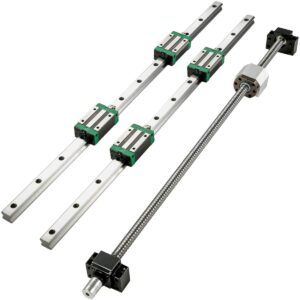
Linear motion bearings are mechanical devices that facilitate straight-line movement while minimizing friction. They are typically used with linear rails, guide shafts, or linear slides to enable precise motion in a variety of mechanical systems.
The main purposes of linear motion bearings include:
Reducing friction along a linear path
Supporting loads in multiple directions
Maintaining alignment for precise motion
Ensuring repeatable positioning
Linear bearings are essential for applications that require high precision, speed, and durability.
How Linear Motion Bearings Work
Linear motion bearings operate by either rolling or sliding mechanisms:
1. Rolling Linear Bearings
Contain balls or cylindrical rollers inside a bearing block
Rolling elements circulate along internal raceways
Convert sliding friction into rolling friction, reducing resistance
Provide smooth, precise, and fast motion
2. Sliding/Plain Linear Bearings
Use smooth metal, plastic, or composite surfaces
Friction is minimized through low-friction materials or lubrication
Simpler design, ideal for harsh environments with dust or debris
The choice between rolling and sliding bearings depends on the application’s precision, speed, and environmental requirements.
Main Types of Linear Motion Bearings
1. Ball Linear Bearings
Use recirculating steel balls to reduce friction
High-speed, smooth motion
High positional accuracy
Applications: CNC machines, 3D printers, robotics
2. Roller Linear Bearings
Use cylindrical or needle rollers
Line contact distributes load over a larger surface area
Handles higher loads and shock
Applications: Heavy machinery, gantry systems, industrial automation
3. Plain/Sliding Linear Bearings
Sliding contact with low-friction materials
Resistant to dirt and contamination
Maintenance-free options available
Applications: Machine tools in dusty environments, packaging machinery
4. Miniature Linear Bearings
Compact, lightweight, and high-precision
Suitable for small loads
Applications: Medical devices, lab instruments, electronics assembly
5. Heavy-Duty Linear Bearings
Reinforced for high load capacity and long travel
High rigidity and durability
Applications: Large CNC machines, industrial automation lines, material handling
Materials Used in Linear Motion Bearings
Material choice affects durability, performance, and friction:
Hardened Steel: High strength and wear resistance
Stainless Steel: Corrosion-resistant for humid or clean environments
Engineering Plastics (PTFE, PEEK): Lightweight, self-lubricating
Bronze or Aluminum: Lightweight housings or sliding surfaces
High-quality materials combined with precise manufacturing ensure reliability and accuracy.
Advantages of Linear Motion Bearings
Smooth and low-friction motion
High load capacity in multiple directions
Precision and repeatability
High-speed operation with minimal wear
Reduced maintenance
Versatility across industries
These advantages make linear bearings superior to simple sliding guides or uncontrolled motion systems.
Applications of Linear Motion Bearings
Linear motion bearings are used across a broad range of industries:
CNC Machines: Guiding axes and tool heads
Industrial Automation: Assembly lines, pick-and-place systems
Robotics: Linear actuators and precise positioning modules
Packaging Equipment: High-speed repetitive motion
Material Handling: Gantries, conveyors, lift systems
Medical and Laboratory Devices: Imaging, diagnostics, and automation
Electronics Manufacturing: Micro-assembly, PCB positioning
Linear Bearings vs Traditional Slide Ways
| Feature | Linear Bearings | Traditional Slide Ways |
|---|---|---|
| Friction | Low | High |
| Accuracy | High | Medium |
| Load Distribution | Even | Limited |
| Speed | High | Moderate |
| Maintenance | Low | High |
| Service Life | Long | Short |
Linear bearings provide better performance, longer service life, and higher precision.
How to Choose Linear Motion Bearings
Consider these factors when selecting bearings:
Load Requirements: Static, dynamic, and moment loads
Speed and Acceleration: High-speed systems require rolling bearings
Accuracy and Repeatability
Environmental Conditions: Dust, moisture, temperature
Travel Distance and Rail Compatibility
Maintenance Requirements: Lubricated or self-lubricating designs
Correct selection ensures optimal machine performance and longevity.
Installation and Maintenance Tips
Mount rails or guide shafts on flat, rigid surfaces
Ensure precise alignment and parallelism
Tighten mounting bolts to manufacturer specifications
Lubricate rolling bearings as recommended
Keep sliding bearings clean and free of debris
Proper installation and maintenance maximize performance and service life.
Frequently Asked Questions (FAQs)
1. What is a linear motion bearing used for?
It provides smooth, precise linear motion in mechanical and automation systems.
2. Can linear bearings handle heavy loads?
Yes, especially roller-type and heavy-duty bearings.
3. Do linear motion bearings require lubrication?
Most rolling bearings do; some plain bearings are self-lubricating.
4. Can linear bearings operate vertically?
Yes, with proper mounting and load design.
5. How long do linear motion bearings last?
With proper installation and maintenance, they can last many years.
Conclusion
Linear motion bearings are vital for smooth, precise, and efficient linear movement in modern machinery. By reducing friction, supporting loads, and maintaining alignment, they enhance accuracy, reliability, and lifespan across applications from CNC machines and robotics to automation and laboratory equipment.
Understanding the different types, materials, and selection criteria enables engineers to design high-performance linear motion systems that meet industrial and automation demands.