

Outline for Long-Form Article on “Linear Rail Systems”
| Heading | Sub-Headings |
|---|---|
| Introduction to Linear Rail Systems | Importance of smooth motion in engineering |
| What Are Linear Rail Systems | Core components and basic function |
| History of Linear Rail Systems | Early designs to modern innovations |
| How Linear Rail Systems Work | The science of guided motion |
| Types of Linear Rail Systems | Profiled rails, round rails, miniature rails |
| Linear Guide Rails vs. Linear Shafts | Key differences explained |
| Advantages of Linear Rail Systems | Precision, load capacity, efficiency |
| Limitations of Linear Rail Systems | Cost, maintenance, design constraints |
| Applications in Industrial Machinery | CNC machines, packaging equipment |
| Applications in Robotics | Automation, assembly lines |
| Linear Rail Systems in 3D Printing | Accuracy in additive manufacturing |
| Uses in Medical Equipment | Imaging machines, surgical tools |
| Applications in Aerospace | Satellite assembly, aircraft production |
| Linear Rail Systems in Automotive Manufacturing | Assembly lines, testing equipment |
| Key Materials Used in Linear Rail Systems | Stainless steel, aluminum, composites |
| Design Considerations | Load, speed, precision requirements |
| Installation of Linear Rail Systems | Step-by-step process |
| Lubrication and Maintenance | Extending lifespan and performance |
| Troubleshooting Common Issues | Misalignment, wear, vibration |
| Future Trends in Linear Rail Systems | Smart rails, IoT integration |
| Comparing Linear Rail Systems and Ball Screws | Which one suits your project? |
| Custom Linear Rail Systems | Tailoring to specific industries |
| Cost Factors and Budgeting | What drives the price? |
| Choosing the Right Linear Rail System | Factors to consider |
| Linear Rail Systems | In-depth focus section |
| FAQs | Practical questions answered |
| Conclusion | Wrapping up insights |
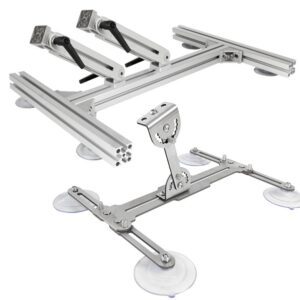
Introduction to Linear Rail Systems
Motion lies at the heart of modern engineering, and linear rail systems stand as one of the most vital innovations for ensuring smooth, precise, and reliable movement. From the automated lines in car factories to the delicate mechanisms inside medical imaging equipment, these rails quietly power industries by reducing friction and improving efficiency. Without them, much of today’s advanced technology would simply grind to a halt.
What Are Linear Rail Systems
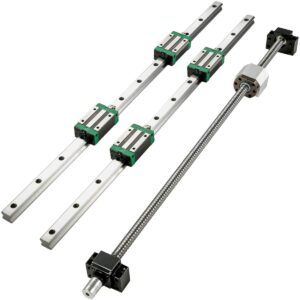
A linear rail system is a mechanical arrangement designed to guide and support motion in a straight line. At its core, it consists of a rail and a bearing block that slides smoothly along it. This setup ensures controlled motion, minimal friction, and high precision. Think of it as the silent backbone of machines where accuracy is non-negotiable—whether it’s cutting, printing, or positioning.
History of Linear Rail Systems
The evolution of linear rail systems began with simple sliding mechanisms in the early days of mechanical engineering. Wooden rails, bronze bearings, and crude lubricants gave way to hardened steel and ball-bearing technology. By the late 20th century, precision-ground rails and sealed bearings had revolutionized how industries approached motion control. Today, smart sensors and IoT integration are pushing them into a new digital era.
How Linear Rail Systems Work
At the heart of these systems lies the principle of reducing friction. Linear rails employ rolling elements, such as recirculating ball bearings or rollers, that move within a block housing along the rail track. This arrangement distributes loads evenly while enabling smooth travel. The result? A precise and reliable linear motion that can carry massive loads with minimal effort.
Types of Linear Rail Systems
Not all linear rails are the same. Industries use different systems depending on their needs:
Profiled Rails – Known for rigidity and high load-bearing capacity.
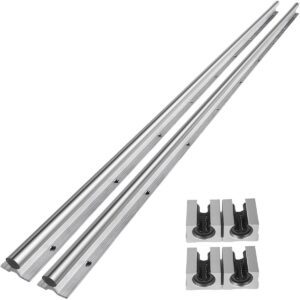
Round Rails – Easier to install, but less rigid than profiled rails.
Miniature Rails – Ideal for compact applications like medical devices.
Heavy-Duty Rails – Built for industrial-scale machinery.
Each type has its strengths, and choosing the right one depends on balancing cost, precision, and durability.
Linear Guide Rails vs. Linear Shafts
Though often confused, these two are not identical. Linear guide rails consist of a flat rail with a sliding block that houses rolling elements, ensuring high rigidity. Linear shafts, on the other hand, are cylindrical rods that support linear bushings. While shafts are simpler and cost-effective, guide rails outperform them in demanding, high-precision environments.
Advantages of Linear Rail Systems
Why do industries prefer linear rail systems?
High Precision – Perfect for CNC machines and 3D printers.
Load Capacity – Can handle both radial and axial loads.
Efficiency – Reduced friction means lower power consumption.
Durability – Long operational lifespan with proper maintenance.
In short, they provide reliability where failure isn’t an option.
Limitations of Linear Rail Systems
Despite their benefits, these systems aren’t flawless. They can be costly, both in initial investment and maintenance. Installation requires alignment expertise, and improper lubrication can shorten their lifespan drastically. Additionally, in environments with heavy contamination, such as dust or debris, their performance can suffer.
Applications in Industrial Machinery
Industrial machinery thrives on precision, speed, and repeatability. Linear rail systems enable automated production lines to move with pinpoint accuracy. In CNC machining, rails ensure that cutting heads maintain tight tolerances, while in packaging machinery, they allow smooth transitions for conveyors, labeling devices, and filling machines. The consistency they provide translates directly into higher productivity and reduced downtime. Without rails, machine vibration, wear, and misalignment would compromise quality.
Applications in Robotics
Robots depend on precise, controlled movements. Linear rails form the backbone of robotic arms, pick-and-place systems, and automated guided vehicles. In high-speed assembly lines, rails enable robots to position parts within fractions of a millimeter. Their rigidity prevents wobbling and ensures repeatable accuracy. For cobots—collaborative robots working alongside humans—linear rails make operations safer, smoother, and more efficient.
Linear Rail Systems in 3D Printing
Accuracy is everything in 3D printing. Linear rail systems allow printer heads to glide smoothly across the X, Y, and Z axes, producing cleaner, more accurate prints. Compared to belt-driven systems, rails minimize backlash and improve dimensional stability. This is particularly critical for industrial-grade printers where even minor errors can ruin hours of production. As 3D printing scales for aerospace and medical industries, linear rails remain essential to its growth.
Uses in Medical Equipment
In hospitals and laboratories, precision can save lives. Medical imaging machines, such as MRI and CT scanners, use linear rail systems to move equipment with stability and minimal vibration. Surgical robots rely on them for micro-movements that aid in delicate operations. Even laboratory automation systems—like pipetting robots—depend on rails for repeatable, precise actions. Their clean, corrosion-resistant designs meet stringent medical standards while maintaining reliability.
Applications in Aerospace
The aerospace industry cannot tolerate errors. During satellite assembly, aircraft component manufacturing, or spacecraft testing, rails ensure precise alignment and controlled movements. Linear rails withstand extreme loads while offering accuracy for inspection systems and material handling. Their high load-bearing capacity makes them indispensable in both ground-based operations and satellite integration facilities.
Linear Rail Systems in Automotive Manufacturing
Automotive assembly lines represent one of the largest consumers of linear rail systems. From welding robots to part conveyors, every stage of car production requires accuracy. Testing rigs also use linear rails to simulate stresses and evaluate durability. This widespread use contributes directly to faster production cycles, fewer errors, and improved safety standards.
Key Materials Used in Linear Rail Systems
The performance of a linear rail depends on its materials:
Stainless Steel – Resistant to corrosion, ideal for medical and food industries.
Hardened Steel – Strong and durable, commonly used in heavy-duty applications.
Aluminum – Lightweight, often used in compact or mobile systems.
Composite Materials – Emerging in applications requiring reduced weight and noise.
Material choice impacts not just durability, but also cost, speed, and operating environment suitability.
Design Considerations
Before selecting a linear rail system, engineers must consider:
Load Requirements – Both static and dynamic loads matter.
Speed and Acceleration – Faster applications demand rails with minimal friction.
Precision – Industries like aerospace require micrometer-level accuracy.
Environment – Dust, moisture, or chemical exposure impacts design.
Maintenance Needs – Accessibility for lubrication or part replacement.
Ignoring these factors can lead to premature failures and costly redesigns.
Installation of Linear Rail Systems
Proper installation determines long-term performance. The process typically involves:
Preparing a clean, flat mounting surface.
Aligning the rail to prevent mis-tracking.
Securing rails with recommended torque.
Installing carriage blocks without forcing them.
Applying lubricant before operation.
A misaligned installation increases friction, accelerates wear, and compromises precision. Thus, trained technicians and specialized tools are often required.
Lubrication and Maintenance
Lubrication is the lifeline of linear rail systems. Oils, greases, or specialized lubricants reduce wear and prevent corrosion. Manufacturers often recommend specific lubricants depending on application conditions. Regular inspection for dirt, debris, or uneven wear ensures longevity. Advanced systems now feature automatic lubrication units that minimize downtime while maintaining consistent performance.
Troubleshooting Common Issues
Even well-designed systems face problems:
Misalignment – Causes uneven wear and excessive noise.
Excessive Vibration – Often linked to poor installation or inadequate lubrication.
Contamination – Dust or debris clogging rolling elements.
Wear and Tear – Carriage block or rail surface damage from overloading.
Routine checks help detect these early, reducing costly repairs.
Future Trends in Linear Rail Systems
The future looks promising. Trends include:
Smart Rails – Equipped with sensors for predictive maintenance.
IoT Integration – Real-time monitoring of load, speed, and wear.
Lightweight Composites – Reducing energy consumption.
Self-Lubricating Systems – Minimizing maintenance requirements.
As industries embrace Industry 4.0, linear rail systems will evolve into intelligent motion solutions.
Comparing Linear Rail Systems and Ball Screws
While both enable linear motion, their applications differ.
Linear Rail Systems – Provide smooth, guided motion suitable for sliding and positioning.
Ball Screws – Convert rotary motion into linear motion, ideal for driving heavy loads.
Often, machines use both in combination for maximum performance.
Custom Linear Rail Systems
Not all applications fit standard designs. Custom rails are designed for unique conditions—such as extreme environments, miniature devices, or specialized robotics. Customization may involve coatings, sizes, or unique bearing arrangements. Though more expensive, they ensure peak performance in demanding industries.
Cost Factors and Budgeting
Several factors influence costs:
Material selection
Precision grade
Load rating
Size and length
Brand reputation
While upfront costs may seem high, long-term savings in durability and reliability often justify the investment.
Choosing the Right Linear Rail System
Selecting the best system involves balancing:
Budget constraints
Performance needs
Environmental conditions
Maintenance capacity
Consulting with manufacturers and analyzing load requirements prevents costly mistakes.
Linear Rail Systems
At its core, linear rail systems represent more than just metal and bearings—they embody the engineering principle of guided motion. From small 3D printers to massive aerospace machinery, they quietly ensure reliability, precision, and efficiency. Their role in modern industries makes them indispensable, and their continued evolution promises even greater capabilities in the years to come.
FAQs
What are linear rail systems used for?
They guide and support motion in a straight line, commonly used in CNC machines, robotics, and medical equipment.
Do linear rails need lubrication?
Yes, lubrication reduces friction, prevents wear, and extends lifespan.
What is the difference between linear rails and ball screws?
Linear rails guide motion, while ball screws convert rotary motion into linear movement.
Can linear rails work without maintenance?
No. Even with self-lubricating systems, periodic inspections are essential.
Are linear rail systems expensive?
They vary in cost, but high-quality rails may be costly due to materials, precision, and load capacity.
Which industries rely most on linear rail systems?
Key industries include manufacturing, robotics, aerospace, medical, and automotive.
Conclusion
Linear rail systems have redefined how industries approach precision motion. Their ability to provide accuracy, load capacity, and efficiency makes them indispensable across multiple fields. Though they require careful design, installation, and maintenance, their long-term benefits far outweigh challenges. As technology advances, we can expect even smarter, more efficient rail systems driving innovation across industries.
Inbound Link Suggestions
Link to a post on CNC machines
Link to a guide on 3D printing technology
Link to an article on robotics in manufacturing