

Comprehensive Outline
| Main Topics | Detailed Coverage |
|---|---|
| Linear Roller Bearing Overview | Definition and industrial importance |
| Evolution of Linear Roller Bearing Technology | From ball bearings to rollers |
| Working Principles of Linear Roller Bearings | Line contact and load distribution |
| Core Components | Rail, bearing block, rollers |
| Materials and Heat Treatment | Strength and wear resistance |
| Load Capacity and Rigidity | Static, dynamic, and moment loads |
| Precision and Positioning Accuracy | Repeatability and stiffness |
| Linear Roller Bearing vs Ball Bearing | Performance comparison |
| Types of Linear Roller Bearings | Full-roller, crossed-roller |
| Installation Requirements | Mounting and base preparation |
| Alignment and Preload Control | Performance optimization |
| Lubrication Systems | Oil and grease solutions |
| Maintenance and Service Life | Reliability management |
| Vibration and Noise Control | Stability under heavy loads |
| Automation Applications | Gantry and material handling |
| CNC Machine Tool Applications | Milling and machining centers |
| Heavy Industry Applications | Presses and tooling |
| Semiconductor and Precision Equipment | Clean and stable motion |
| Selecting the Right Linear Roller Bearing | Technical considerations |
| Common Selection Mistakes | Oversizing and misalignment |
| Cost Efficiency and ROI | Long-term value |
| YH Linear Linear Roller Bearings | Brand strengths |
| Future Trends | Smart and compact roller bearings |
Introduction
In demanding industrial environments, motion systems must deliver more than just smooth travel. They must offer rigidity, stability, and long-term reliability. The linear roller bearing is designed precisely for these challenges. By using cylindrical rollers instead of balls, this bearing type provides superior load capacity and stiffness, making it ideal for heavy-duty and high-precision applications.
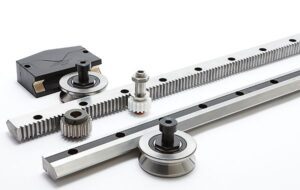
At YH Linear, extensive experience in linear motion solutions has shown that linear roller bearings often become the backbone of machines operating under high loads and continuous cycles. This article explores how linear roller bearings work, their advantages, applications, and why YH Linear is a trusted partner in precision motion technology.
Linear Roller Bearing
A linear roller bearing is a linear motion guidance system that uses cylindrical rollers as rolling elements between a rail and a bearing block. Unlike ball bearings, which create point contact, rollers create line contact with the raceway.
This line contact dramatically increases load capacity and rigidity. As a result, linear roller bearings can support heavy loads and strong moment forces while maintaining precise motion. They are especially valuable in applications where deflection must be minimized.
For systems that demand strength without sacrificing accuracy, linear roller bearings provide a robust and reliable solution.
Evolution of Linear Roller Bearing Technology
Traditional linear motion systems relied on sliding guides or ball-type bearings. While effective for lighter applications, these designs struggled with high loads and vibration.
Linear roller bearing technology emerged to address these limitations. By replacing balls with rollers, engineers achieved greater stiffness and improved load distribution. Over time, advances in materials and precision manufacturing further enhanced performance.
Today, linear roller bearings represent a mature and highly optimized solution for heavy-duty precision motion.
Engineering Principles Behind Linear Roller Bearings
The defining principle of a linear roller bearing is rolling contact with line contact geometry. Rollers distribute loads across a larger surface area, reducing stress concentration.
Preload is applied to eliminate internal clearance. This increases rigidity and improves positioning accuracy. Although preload slightly increases friction, the resulting stability is essential for precision machining.
Balanced load distribution allows linear roller bearings to handle forces from multiple directions, ensuring smooth motion even under dynamic loads.
Core Components of a Linear Roller Bearing System
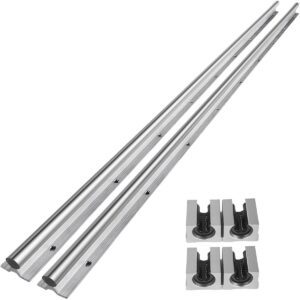
A linear roller bearing system consists of a hardened steel rail, a bearing block, cylindrical rollers, seals, and lubrication channels.
The rail provides precision-ground raceways that guide the rollers. The bearing block houses the rollers and ensures even load distribution. Rollers circulate smoothly within the system, maintaining constant contact with the rail.
Seals protect against contamination, while lubrication ports ensure consistent operation. YH Linear designs each component with strict quality control to ensure durability and performance.
Materials and Heat Treatment
High-strength alloy steels are commonly used in linear roller bearings due to their durability and toughness. Surface hardness is achieved through advanced heat treatment processes.
Induction hardening and precision grinding create raceways that resist wear while maintaining smooth motion. This balance ensures long service life even under heavy loads.
YH Linear applies rigorous material selection and heat treatment standards to deliver consistent product quality.
Load Capacity and Rigidity Advantages
One of the most significant advantages of a linear roller bearing is its exceptional load capacity. Line contact allows these bearings to support higher static and dynamic loads than ball-bearing systems of similar size.
Rigidity is equally important. High stiffness minimizes deflection, which directly improves machining accuracy and surface finish. This makes linear roller bearings ideal for CNC machines and heavy automation.
For applications where stability defines performance, linear roller bearings offer unmatched benefits.
Precision and Repeatability
Despite their focus on strength, linear roller bearings also deliver excellent precision. Tight manufacturing tolerances and controlled preload ensure consistent positioning.
Repeatability remains stable over long operating cycles, even under continuous load. This reliability is critical in industries where dimensional accuracy is non-negotiable.
With proper installation and maintenance, linear roller bearings maintain precision for years.
Linear Roller Bearing vs Ball Bearing
Linear roller bearings and ball bearings serve different purposes. Linear roller bearings prioritize rigidity and load capacity.
Ball bearings offer lower friction and higher speed but lower stiffness. The choice depends on application demands.
For heavy cutting, large gantry systems, or vibration-sensitive machinery, linear roller bearings are often the superior choice.
Types of Linear Roller Bearings
Linear roller bearings are available in full-roller designs and crossed-roller configurations. Full-roller designs maximize load capacity and rigidity.
Crossed-roller bearings provide compact design and high precision, often used in precision positioning stages.
YH Linear offers a wide range of linear roller bearing configurations to suit diverse industrial needs.
Installation and Alignment Best Practices
Proper installation is essential for optimal performance. Mounting surfaces must be flat, rigid, and accurately machined.
Precise alignment ensures even load distribution and reduces wear. Misalignment can compromise accuracy and service life.
Following recommended installation guidelines ensures that linear roller bearings perform as intended.
Lubrication and Maintenance
Linear roller bearings require consistent lubrication to reduce wear and prevent corrosion. Grease or oil lubrication is commonly used.
Automatic lubrication systems are recommended for continuous operation. Regular inspection helps detect early signs of wear.
With proper maintenance, linear roller bearings operate reliably for extended periods.
Applications of Linear Roller Bearings
Linear roller bearings are widely used in CNC machining centers, particularly in milling and boring machines. They support high cutting forces with minimal deflection.
In automation, they enable stable motion in gantry systems and heavy material handling equipment. Presses, tooling machines, and industrial equipment also rely on their rigidity.
Even in semiconductor and precision manufacturing, linear roller bearings provide the stability needed for accurate positioning.
YH Linear Linear Roller Bearings
YH Linear specializes in high-performance linear roller bearing solutions designed for heavy-load and high-precision applications. Each product reflects strict quality standards and real-world engineering experience.
By combining advanced manufacturing with responsive technical support, YH Linear delivers motion solutions that perform reliably in demanding environments.
Choosing YH Linear means choosing strength, accuracy, and long-term value.
Future Trends in Linear Roller Bearing Technology
Future linear roller bearing designs will focus on higher rigidity in more compact forms. Advanced coatings will further improve wear resistance.
Sensor integration may enable condition monitoring and predictive maintenance. As industrial demands increase, linear roller bearings will continue to evolve.
YH Linear remains committed to innovation and continuous improvement.
FAQs
What is a linear roller bearing used for?
It guides linear motion in applications requiring high load capacity and rigidity.
How does a linear roller bearing differ from a ball bearing?
It uses line contact instead of point contact, offering higher stiffness and load capacity.
Are linear roller bearings suitable for CNC machines?
Yes, they are ideal for heavy-duty CNC machining.
Do linear roller bearings need lubrication?
Yes, regular lubrication ensures smooth motion and long service life.
Can linear roller bearings handle vibration?
Yes, their high rigidity helps reduce vibration under load.
Why choose YH Linear linear roller bearings?
YH Linear offers quality manufacturing, technical expertise, and reliable performance.
Conclusion
The linear roller bearing is a cornerstone of heavy-duty precision motion systems. Its ability to deliver high rigidity, load capacity, and accuracy makes it indispensable in modern industrial machinery.
With proven expertise and a commitment to quality, YH Linear continues to support industries worldwide with dependable linear roller bearing solutions. Selecting the right bearing today ensures stable and precise motion for years to come.
Suggested Internal Links
YH Linear CNC and automation motion solutions
Suggested Outbound Links
Industrial linear motion standards organizations
CNC and automation engineering resources