

Introduction
In industrial machinery and automation systems where high load capacity, rigidity, and precision are required, linear roller bearings play a critical role. Compared with traditional ball-type linear bearings, roller bearings provide greater contact area, higher stiffness, and improved load distribution, making them ideal for heavy-duty and high-precision applications.
Linear roller bearings are widely used in CNC machine tools, gantry systems, robotics, automation lines, and heavy material handling equipment. Their ability to maintain accuracy under high loads and shock conditions makes them a preferred choice in demanding environments.
This article offers a comprehensive overview of linear roller bearings, including their working principles, construction, types, advantages, applications, selection criteria, installation, and maintenance.
What Are Linear Roller Bearings?
Linear roller bearings are linear motion components that use cylindrical rollers instead of balls to guide motion along a linear rail or shaft. The rollers provide line contact rather than point contact, which significantly increases load capacity and rigidity.
Key functions of linear roller bearings include:
Guiding precise linear motion
Supporting heavy static and dynamic loads
Reducing deformation under load
Ensuring smooth, controlled movement
When paired with precision rails or guideways, linear roller bearings form a high-performance linear motion system suitable for demanding industrial applications.
How Linear Roller Bearings Work
Linear roller bearings operate based on rolling contact:
Cylindrical rollers are arranged inside a bearing block or carriage.
The rollers move along hardened raceways on the rail or shaft.
Load is distributed across the length of each roller.
Reduced contact stress improves rigidity and lifespan.
The bearing moves smoothly and accurately along the guide path.
This design minimizes elastic deformation and maintains precision even under heavy loads or high acceleration.
Key Components of Linear Roller Bearings
1. Roller Elements
Cylindrical rollers made from hardened steel
Provide line contact for higher load capacity
Offer excellent rigidity and vibration resistance
2. Bearing Block / Carriage
Houses the rollers and maintains alignment
Designed to support multi-directional loads
Typically made from hardened steel or alloy steel
3. Raceway / Rail
Precision-ground and hardened surface
Ensures smooth roller motion and accuracy
Provides structural rigidity to the system
4. Retainers and Cages
Keep rollers evenly spaced
Prevent friction between rollers
5. Seals and Wipers
Protect internal components from contaminants
Extend bearing life in harsh environments
6. Lubrication System
Grease or oil channels reduce friction and wear
Essential for long-term performance
Types of Linear Roller Bearings
1. Roller-Type Linear Guide Bearings
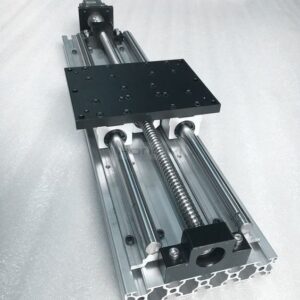
Integrated with profile rails
Support loads in all directions
Common in CNC machining centers and gantry systems
2. Cross Roller Bearings
Rollers arranged at 90-degree angles
High rigidity and positioning accuracy
Used in precision stages and robotics
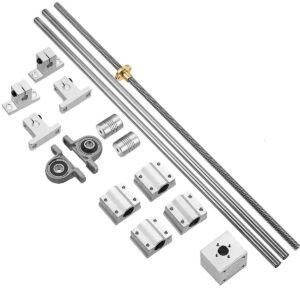
3. Roller Linear Bushings
Cylindrical bearings for shaft-based systems
Suitable for heavy radial loads
Used in automation equipment and presses
4. Heavy-Duty Linear Roller Bearings
Reinforced structure and oversized rollers
Designed for extreme loads and shock conditions
Common in steel, automotive, and heavy machinery industries
Materials and Surface Treatments
Hardened Alloy Steel – High strength and wear resistance
Stainless Steel – Corrosion resistance for humid or clean environments
Chrome-Plated Surfaces – Reduced friction and corrosion protection
Black Oxide or Phosphate Coatings – Improved wear resistance
Precision-Ground Raceways – Ensures smooth and accurate motion
Material choice depends on load, environment, speed, and required service life.
Advantages of Linear Roller Bearings
Extremely High Load Capacity – Handles heavy static and dynamic loads
High Rigidity – Minimal deformation under load
Excellent Precision – Maintains accuracy under stress
Long Service Life – Reduced contact stress extends lifespan
Shock and Vibration Resistance – Ideal for heavy machinery
Stable Performance – Suitable for continuous industrial operation
These advantages make linear roller bearings superior in heavy-duty and precision-critical applications.
Applications of Linear Roller Bearings
CNC Machine Tools – Milling machines, machining centers, lathes
Gantry Systems – Large-format machining and handling systems
Robotics – High-load linear axes and industrial robots
Material Handling Equipment – Transfer carts, lifts, and conveyors
Automation Lines – Heavy assembly and processing equipment
Presses and Forming Machines – High load and shock conditions
Semiconductor and Precision Equipment – Ultra-rigid positioning systems
Linear Roller Bearings vs. Linear Ball Bearings
| Feature | Linear Roller Bearings | Linear Ball Bearings |
|---|---|---|
| Contact Type | Line contact | Point contact |
| Load Capacity | Very high | Moderate |
| Rigidity | Very high | Medium |
| Precision | Excellent | Excellent |
| Shock Resistance | High | Moderate |
| Cost | Higher | Lower |
Roller bearings are preferred for high-load, high-rigidity applications, while ball bearings are better suited for high-speed and light-to-medium loads.
How to Choose the Right Linear Roller Bearing
Load Requirements – Static, dynamic, and moment loads
Precision Level – Required accuracy and repeatability
Travel Length – Stroke and rail length
Speed and Acceleration – Roller bearings favor rigidity over speed
Environmental Conditions – Dust, moisture, temperature
Mounting Space – Size and configuration constraints
Maintenance Strategy – Lubrication access and intervals
Proper selection ensures maximum performance and durability.
Installation Best Practices
Mount rails on flat, rigid, and stress-free surfaces
Ensure precise alignment between rails and bearing blocks
Apply correct tightening torque to mounting bolts
Lubricate bearings before initial operation
Conduct trial runs under light load before full operation
Correct installation is essential for achieving designed accuracy and load capacity.
Maintenance and Lubrication
Clean rails and bearing blocks regularly
Inspect seals and wipers for wear
Re-lubricate at recommended intervals
Monitor noise, vibration, and temperature
Replace worn components promptly
Consistent maintenance ensures long service life and stable performance.
Future Trends in Linear Roller Bearings
Higher-capacity compact designs
Low-maintenance and sealed systems
Advanced coatings for extreme environments
Integrated condition-monitoring sensors
Increased use in smart manufacturing systems
These developments support the growing demand for high-precision and heavy-load linear motion systems.
Frequently Asked Questions (FAQs)
1. What are linear roller bearings used for?
They are used for high-load, high-rigidity linear motion in CNC machines, robotics, and heavy industrial equipment.
2. Why choose roller bearings over ball bearings?
Roller bearings provide higher load capacity and rigidity due to line contact.
3. Do linear roller bearings require lubrication?
Yes, proper lubrication is essential for reducing wear and extending service life.
4. Are linear roller bearings suitable for high speed?
They support moderate to high speeds but are optimized for rigidity and load rather than extreme speed.
5. Can they handle shock loads?
Yes, linear roller bearings perform well under shock and vibration conditions.
Conclusion
Linear roller bearings are essential components for high-rigidity, high-load, and precision linear motion systems. Their cylindrical roller design offers superior load capacity, stability, and durability, making them ideal for CNC machine tools, heavy automation, robotics, and industrial machinery.
By selecting the right bearing type, ensuring proper installation, and maintaining regular lubrication, manufacturers can achieve exceptional performance, accuracy, and long service life.