

Introduction
In modern manufacturing, robotics, CNC machining, and automation, linear slides and guides are essential components for achieving precise, smooth, and repeatable linear motion. These components, when combined with carriages or sliders, form linear motion systems that enable accurate movement, reduced friction, and reliable load support.
Linear slides and guides are used in CNC machines, 3D printers, industrial robots, packaging machinery, medical devices, and automated assembly lines. Their precision, rigidity, and low maintenance requirements make them indispensable in high-performance industrial applications.
This article provides a complete guide to linear slides and guides, including their types, components, working principles, advantages, applications, selection criteria, and maintenance practices.

What Are Linear Slides and Guides?
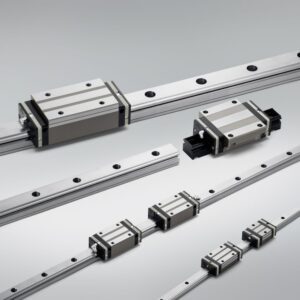
Linear slides are mechanical components that allow smooth, guided movement along a straight path. Linear guides, also called linear guideways, provide a precise track for the slide or carriage to move along. Together, they form a linear motion system that delivers:
Low-friction motion
High load-bearing capacity
Precision and repeatability
Smooth, controlled movement
These systems are critical wherever accuracy, rigidity, and reliability are required in industrial automation.
Core Components of Linear Slides and Guides
Rails / Guideways
Precision-machined tracks that provide a rigid path
Materials: hardened steel, stainless steel, aluminum alloys
Ensure alignment and stability for the moving carriage
Sliders / Carriages
Move along the rail, carrying the load
Contain rolling elements such as balls or rollers
Maintain smooth, precise motion
Rolling Elements
Steel balls or cylindrical rollers
Reduce friction and distribute loads evenly
Recirculate continuously inside the carriage
Seals, Wipers, and Lubrication Ports
Prevent contamination by dust, debris, or fluids
Ensure proper lubrication for long-term performance
Mounting Holes and Interfaces
Facilitate attachment to machinery or payload
Ensure even load distribution along the rail
Working Principle of Linear Slides and Guides
Linear slides and guides operate based on rolling or sliding principles:
The carriage moves along the fixed guideway under load.
Rolling elements inside the carriage reduce friction and wear.
The system supports radial, axial, and moment loads simultaneously.
Motion remains smooth, precise, and repeatable under heavy loads or high-speed operation.
Lubrication and protective seals enhance durability and longevity.
This design ensures energy-efficient, high-precision linear motion in industrial systems.
Types of Linear Slides and Guides
1. Ball-Type Linear Slides and Guides
Utilize recirculating steel balls inside the carriage
Provide high precision and smooth motion
Ideal for CNC machines, 3D printers, and medium-load applications
2. Roller-Type Linear Slides and Guides
Use cylindrical or needle rollers instead of balls
Higher rigidity and load capacity
Suitable for heavy machinery, industrial robots, and large automation systems
3. Profile Rail Linear Slides and Guides
Integrated rail and carriage with rectangular cross-section
High stiffness and multi-directional load support
Common in robotics, CNC machining, and automated assembly
4. Miniature Linear Slides and Guides
Compact design for space-constrained applications
Used in medical devices, electronics assembly, and laboratory automation
5. Aluminum Linear Slides and Guides
Lightweight and corrosion-resistant
Ideal for portable machines, robots, and 3D printers
6. Round Shaft Linear Slides and Guides
Cylindrical shafts with linear bushings
Cost-effective solution for light loads and non-critical precision applications
Advantages of Linear Slides and Guides
High Precision – Maintains tight tolerances and repeatability
Low Friction – Reduces wear and energy consumption
High Load Capacity – Supports radial, axial, and moment loads efficiently
Durable and Long-Lasting – Reinforced construction for extended service life
Rigidity and Stability – Minimizes deflection and vibration
Smooth and Quiet Operation – Reduces noise in precision machinery
Versatility – CNC machines, robotics, 3D printing, packaging, and industrial automation
Ease of Installation & Maintenance – Pre-drilled rails and lubrication ports simplify setup
Applications of Linear Slides and Guides
Linear slides and guides are widely used wherever precision, smooth motion, and load support are essential:
CNC Machines – Milling, cutting, drilling, and engraving
3D Printers – Accurate movement of print heads and platforms
Industrial Robots – Linear actuators for pick-and-place, welding, and assembly
Packaging Machinery – Filling, labeling, sorting, and material handling
Medical and Laboratory Automation – Imaging, diagnostics, and automated testing
Semiconductor Manufacturing – High-precision wafer handling stages
Heavy Machinery – Presses, conveyors, and automated material handling systems
Materials Used in Linear Slides and Guides
Hardened Steel – High strength and wear resistance, ideal for industrial applications
Stainless Steel – Corrosion-resistant for harsh environments or cleanrooms
Aluminum Alloy – Lightweight and portable for robotics and 3D printing
Coated Surfaces – Low-friction, anti-wear, or corrosion-resistant coatings for durability
How to Choose the Right Linear Slides and Guides
Load Capacity – Static, dynamic, and moment loads
Precision and Repeatability – Required alignment and tolerance
Travel Distance – Total stroke length for your application
Environmental Conditions – Dust, moisture, temperature, chemical exposure
Speed & Acceleration – Must match operational requirements
Maintenance Requirements – Self-lubricating or easily lubricated systems
Space Constraints – Miniature or compact designs for tight installations
Installation Best Practices
Mount rails and sliders on flat, rigid surfaces
Align components carefully to prevent binding or uneven wear
Fasten rails using correct torque specifications
Apply recommended lubrication before initial operation
Avoid overloading or misalignment
Proper installation ensures optimal performance, precision, and longevity.
Maintenance Guidelines
Clean rails and sliders regularly to remove dust and debris
Re-lubricate rolling elements as recommended
Inspect for wear, corrosion, or misalignment
Replace worn or damaged components promptly
Routine maintenance ensures smooth operation, high precision, and long service life.
Future Trends in Linear Slides and Guides
Smart Linear Systems – Embedded sensors for load, position, and temperature monitoring
IoT-Connected Automation – Predictive maintenance and real-time monitoring
Low-Friction and Wear-Resistant Coatings – Enhance durability and efficiency
Lightweight Hybrid Materials – Steel-aluminum combinations for reduced weight
Maintenance-Free Designs – Self-lubricating, sealed systems for minimal downtime
These innovations improve precision, reliability, and efficiency in modern automation systems.
Frequently Asked Questions (FAQs)
1. What are linear slides and guides used for?
They provide smooth, precise, and low-friction linear motion in CNC machines, industrial robots, and automated systems.
2. What types of linear slides and guides exist?
Ball-type, roller-type, profile rail, miniature, aluminum, and round shaft systems.
3. Can linear slides and guides handle heavy loads?
Yes, roller-type and reinforced profile rails are designed for high-load applications.
4. Do linear slides and guides require lubrication?
Yes, proper lubrication reduces wear and maintains smooth motion.
5. What materials are used in linear slides and guides?
Hardened steel, stainless steel, aluminum alloys, and coated surfaces.
6. How do linear slides and guides differ from linear shafts?
Slides and guides offer higher rigidity, multi-directional load support, and superior precision compared to round shafts with bushings.
Conclusion
Linear slides and guides are fundamental components in precision machinery, CNC systems, robotics, and industrial automation, providing smooth, accurate, and stable linear motion. Their combination of low friction, high load capacity, rigidity, and precision makes them ideal for applications ranging from CNC machines and 3D printers to industrial robots and packaging systems.
Selecting the right type, material, and configuration, along with proper installation and maintenance, ensures reliable, long-lasting, and precise linear motion. Innovations in smart sensors, hybrid materials, and maintenance-free designs continue to enhance the capabilities of linear slides and guides in modern industrial automation.