

Modern engineering thrives on movement, accuracy, and durability—and roller rails play a pivotal role in delivering all three. Whether in robotics, CNC machinery, or automated production lines, roller rails ensure seamless, frictionless, and reliable linear motion. They have become the unsung heroes of modern industry, offering the backbone for high-precision movement systems used across sectors.
Introduction to Roller Rails
Roller rails are mechanical linear motion components that allow smooth, precise, and low-friction movement along a defined path. They consist of a rail and a carriage embedded with rollers that distribute load evenly, ensuring steady motion even under heavy pressure. Originally developed for industrial applications, roller rails have now evolved into highly specialized components in robotics, aerospace, and medical equipment.
The concept of guided linear movement dates back centuries, but the rise of roller-based systems brought about a revolution in precision mechanics. By replacing sliding friction with rolling contact, roller rails minimize wear and tear and increase operational longevity.
Importance of Roller Rails in Modern Engineering
In today’s fast-paced industrial world, precision is not just an advantage—it’s a necessity. Roller rails ensure high accuracy with minimal deflection, allowing machinery to operate smoothly and efficiently. They support automation, reduce energy consumption, and boost the overall reliability of equipment.
Roller rails are fundamental in applications like 3D printers, milling machines, and robotic arms. Their ability to carry heavy loads with minimal friction makes them indispensable for automation systems and Industry 4.0 environments.
Understanding Roller Rails
A roller rail consists of two main components:
The rail, which serves as the track for motion.
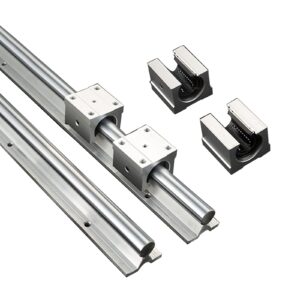
The carriage or block, containing precision-ground rollers that run along the rail.
These components work together to convert rotary motion into linear movement, reducing friction and allowing for smoother travel. The materials used—typically high-carbon steel or stainless steel—ensure long-term durability and resistance to corrosion.

Working Principle of Roller Rails
The working principle behind roller rails is simple yet ingenious. The rollers act as tiny wheels between the carriage and the rail. As the carriage moves, the rollers rotate, creating a rolling motion rather than a sliding one. This drastically reduces friction and enables high-speed movement with consistent accuracy.
In advanced designs, rollers are aligned at 45° angles to distribute loads equally across all directions—vertical, horizontal, and lateral—enhancing stability and performance.
Key Features of Roller Rails
Roller rails stand out because of their:
High Load Capacity: Capable of supporting both static and dynamic loads.
Smooth Operation: Rolling motion minimizes vibration.
High Precision: Ensures consistent alignment and repeatability.
Long Life Span: Designed for millions of motion cycles with minimal maintenance.
Compact Design: Suitable for tight spaces and lightweight applications.
Types of Roller Rails
Roller rails come in various forms, tailored for specific tasks and industries. The major categories include:
Linear Roller Rails – Ideal for continuous, smooth motion.
Cross Roller Guides – Used in precision applications.
Heavy-Duty Roller Rails – Designed for demanding environments.
Linear Roller Rails
Linear roller rails are commonly found in automated machines and robotics. They feature cylindrical or needle rollers that move along hardened steel tracks, providing steady linear motion with excellent rigidity. These rails are best for applications where load distribution and accuracy are critical, such as CNC machining and laser cutting.
Cross Roller Rails
Cross roller rails incorporate rollers placed at right angles to each other, forming an “X” pattern. This design minimizes friction while offering ultra-high precision in compact systems. Cross roller rails are widely used in semiconductor manufacturing, medical imaging, and laboratory instruments where microscopic accuracy is required.
Heavy-Duty Roller Rails
When it comes to construction machinery or industrial presses, heavy-duty roller rails take the spotlight. Built to handle immense loads and harsh environments, these rails are constructed from reinforced steel with protective coatings to resist wear, dirt, and corrosion. Their robust design ensures long-term reliability even under extreme stress.

Materials Used in Roller Rails
The performance of roller rails heavily depends on the materials used. Common choices include:
High-Carbon Steel: Offers strength and load-bearing capacity.
Stainless Steel: Provides corrosion resistance in humid environments.
Aluminum Alloys: Lightweight and ideal for portable machinery.
Composite Materials: Emerging option for reducing weight without compromising strength.
Roller Rails vs Ball Bearing Rails
While both serve similar purposes, they differ significantly in structure and performance:
| Feature | Roller Rails | Ball Bearing Rails |
|---|---|---|
| Contact Type | Line contact | Point contact |
| Load Capacity | High | Moderate |
| Precision | Very High | Medium |
| Friction | Very Low | Low |
| Durability | Longer life | Shorter under heavy load |
Roller rails outperform ball-bearing systems in environments that demand precision and strength.
Benefits of Using Roller Rails
Superior Load Distribution
Reduced Wear and Maintenance
Quieter Operation
Improved Machine Efficiency
Enhanced Stability and Alignment
These benefits make roller rails a cost-effective and long-term solution for industries prioritizing reliability and precision.
Common Applications of Roller Rails
Roller rails have versatile applications:
CNC machines and lathes
Industrial robots
Packaging systems
3D printing and additive manufacturing
Medical and laboratory devices
Aerospace and automotive equipment
Roller Rails in Automation Systems
Automation relies on speed and precision. Roller rails provide both. By integrating roller rails into conveyors, pick-and-place systems, and robotic arms, industries can achieve seamless, vibration-free movement and extended machine life.
Maintenance of Roller Rails
Routine care is key to longevity:
Lubricate regularly to prevent friction buildup.
Clean surfaces to remove dust and debris.
Inspect for misalignment or worn rollers.
A well-maintained rail system can last decades with minimal performance loss.
Installation Guide for Roller Rails
Proper installation ensures performance and accuracy:
Align rails using precision measuring tools.
Use clean, flat surfaces for mounting.
Apply uniform torque when fastening bolts.
Avoid over-tightening, which may deform the rail.
Design Considerations for Roller Rails
When designing a motion system:
Evaluate load direction and weight.
Consider operating speed and temperature.
Choose materials based on environment.
Balance cost with performance needs.
Performance Optimization of Roller Rails
Enhance rail performance by:
Using vibration dampeners.
Selecting precision-graded rollers.
Ensuring consistent lubrication flow.
Employing smart sensors for predictive maintenance.
Troubleshooting Roller Rail Issues
Common problems include:
Noise or Vibration: Often caused by debris.
Uneven Motion: Misalignment or worn rollers.
Corrosion: Due to improper storage or cleaning.
Regular checks can prevent costly downtime.
Latest Innovations in Roller Rails
Modern innovations include:
IoT-enabled smart rails that monitor health and load in real-time.
Self-lubricating materials for maintenance-free operation.
Lightweight carbon composite rails for portable machinery.
Sustainability and Roller Rails
Eco-friendly roller rails are being developed using recycled metals and energy-efficient manufacturing. Many brands now focus on green lubrication systems and longer-lasting coatings, reducing environmental impact and waste.
Selecting the Right Roller Rail
When choosing roller rails:
Match rail capacity to load requirements.
Ensure environmental compatibility.
Check manufacturer specifications and tolerance levels.
Opt for reputable brands with proven reliability.
Roller Rails in Robotics
Robotic systems depend on precise linear motion, and roller rails provide the ideal solution. They ensure smooth, accurate positioning, reducing jerky movements and increasing repeatability—critical for robotic welding, assembly, and handling.
Cost Analysis of Roller Rails
While roller rails might cost more initially than ball-bearing systems, their extended lifespan, low maintenance, and high efficiency make them a cost-effective long-term investment. Their ROI becomes evident through reduced downtime and enhanced productivity.
Future of Roller Rails
The future points toward smart roller rails integrated with AI, sensors, and digital monitoring. These innovations will redefine predictive maintenance, energy efficiency, and autonomous control in industrial applications.
FAQs about Roller Rails
What are roller rails used for?
Roller rails are used in machines that require precise linear movement, such as CNC systems, robots, and automation lines.
How do roller rails differ from ball-bearing rails?
Roller rails use rollers for line contact, offering higher load capacity and smoother motion compared to point-contact ball bearings.
Can roller rails be used in outdoor environments?
Yes, but stainless steel or coated rails are recommended for moisture resistance and durability.
How often should roller rails be lubricated?
Lubrication frequency depends on load and environment, but typically every few hundred operating hours.
Are roller rails suitable for high-speed operations?
Absolutely. They maintain precision even at high speeds due to low friction and vibration.
What is the average lifespan of roller rails?
With proper maintenance, roller rails can last millions of cycles, often exceeding ten years of continuous use.
Conclusion
Roller rails symbolize the intersection of precision engineering and industrial reliability. Their contribution to automation, robotics, and motion control systems cannot be overstated. Durable, efficient, and innovative, roller rails continue to push boundaries in manufacturing and mechanical design.
Whether in small lab instruments or massive industrial robots, roller rails ensure one thing remains constant—motion with perfection.
Suggested Inbound Links:
Guide to Linear Bearings
How to Maintain CNC Machines
Understanding Industrial Automation