

Comprehensive Outline
| Main Topics | Detailed Coverage |
|---|---|
| Rollers and Rails Overview | Definition and industrial significance |
| Historical Development | From sliding guides to rolling systems |
| Operating Principles | How rollers and rails enable motion |
| Core Components | Rails, rollers, carriages |
| Materials and Manufacturing | Strength and durability |
| Heat Treatment and Surface Finish | Wear resistance and lifespan |
| Load Capacity and Force Handling | Static, dynamic, and moment loads |
| Rigidity and Structural Stability | Deflection control |
| Motion Accuracy and Repeatability | Precision benefits |
| Types of Rails | Ball rails, roller rails, guide rails |
| Types of Rollers | Cylindrical, cam, crossed rollers |
| Rollers and Rails vs Slideways | Performance comparison |
| Installation and Alignment | Best practices |
| Lubrication Systems | Oil and grease options |
| Maintenance and Service Life | Reliability management |
| Noise and Vibration Reduction | Smooth operation |
| CNC Machine Applications | Machining and cutting accuracy |
| Automation and Robotics | Gantry and linear modules |
| Material Handling Systems | Conveyors and transfer units |
| Heavy Industrial Machinery | High-load environments |
| Choosing the Right Rollers and Rails | Selection guidelines |
| Common Design Mistakes | Alignment and load errors |
| Cost Efficiency and ROI | Long-term value |
| YH Linear Rollers and Rails | Brand expertise |
| Future Trends | Smart and high-rigidity systems |
Introduction
Precision motion is no longer a luxury in modern manufacturing. It is a necessity. At the core of this motion are rollers and rails, two components that work in harmony to guide loads smoothly and accurately along a defined path. From CNC machining centers to automated production lines, rollers and rails play a decisive role in machine performance.
At YH Linear, years of experience in linear motion technology have shown that well-designed rollers and rails significantly improve accuracy, stability, and service life. Poorly selected systems, on the other hand, lead to vibration, wear, and unexpected downtime. This article offers a complete and practical overview of rollers and rails, their working principles, applications, and long-term value.
Rollers and Rails
Rollers and rails form a linear guidance system where rails provide the precision path and rollers carry and move the load along that path. Instead of sliding surfaces against each other, rolling elements reduce friction and distribute forces evenly.
Rails are usually hardened and precision-ground to maintain straightness. Rollers rotate along these rails, supporting loads while enabling smooth movement. This combination allows machines to achieve both strength and accuracy.
In real-world industrial use, rollers and rails are the foundation of stable and repeatable linear motion.
Historical Development of Rollers and Rails
Early mechanical systems relied on plain guideways. These systems were strong but inefficient, generating high friction and requiring frequent maintenance.
The introduction of rollers and rails marked a turning point. Rolling contact replaced sliding contact, improving efficiency and reducing wear. Over time, improvements in metallurgy, machining accuracy, and heat treatment refined these systems further.
Today, rollers and rails represent a proven and highly optimized solution for modern machinery.
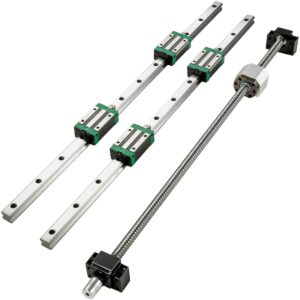
Operating Principles of Rollers and Rails
The key principle behind rollers and rails is rolling motion. Rollers rotate along hardened raceways, minimizing resistance and energy loss.
Load distribution is carefully engineered. Vertical loads, side forces, and moment loads are absorbed simultaneously. This balanced design ensures stable motion even under dynamic conditions.
Preload is often applied to remove internal clearance. This increases rigidity and improves positioning accuracy, which is essential in precision equipment.
Core Components of a Rollers and Rails System
A complete rollers and rails system includes the rail, rollers, a carriage or block, seals, and lubrication paths.
The rail defines the motion path. Rollers support the load and reduce friction. The carriage keeps rollers evenly spaced and aligned.
Seals protect against dust and debris, while lubrication systems ensure long-term smooth operation. YH Linear designs each component to meet strict industrial standards.
Materials and Manufacturing Quality
High-quality materials are essential for reliable rollers and rails. Alloy steels are commonly used due to their strength and fatigue resistance.
Precision machining ensures tight tolerances and smooth raceways. Advanced manufacturing techniques allow consistent performance across long rail lengths.
YH Linear applies rigorous quality control at every production stage to ensure reliability.
Heat Treatment and Surface Finish
Heat treatment increases surface hardness while preserving internal toughness. This combination improves wear resistance and load capacity.
Surface finishing processes reduce friction and enhance corrosion resistance. In harsh environments, coatings provide additional protection.
These treatments extend service life and maintain accuracy over time.
Load Capacity and Force Handling
Rollers and rails are designed to handle heavy static and dynamic loads. Roller-based systems provide line contact, allowing higher load capacity than ball-based designs.
High rigidity minimizes deflection under load. This stability directly improves machining accuracy and repeatability.
Correct load calculation is critical. YH Linear supports customers with technical guidance to ensure proper system selection.
Rigidity and Structural Stability
Rigidity is a defining advantage of rollers and rails. Stiff systems resist deformation, even under strong cutting or acceleration forces.
Reduced deflection improves surface finish and dimensional accuracy. For heavy-duty applications, rigidity determines machine performance.
Roller rails are especially suited for applications requiring maximum stiffness.
Motion Accuracy and Repeatability
Precision manufacturing and preload control allow rollers and rails to deliver excellent positioning accuracy.
Repeatability remains stable over long operating cycles. This consistency is vital for CNC machines and automated systems.
By reducing vibration and backlash, rollers and rails enhance overall motion quality.
Types of Rails Used with Rollers
Rails are available in ball rail and roller rail designs. Ball rails offer low friction and high speed.
Roller rails provide higher rigidity and load capacity. Guide rails serve simpler applications with moderate precision requirements.
YH Linear offers a wide range of rail options for diverse industries.
Types of Rollers Used in Industry
Cylindrical rollers are widely used for heavy loads. Cam rollers support guided motion along tracks.
Crossed rollers provide compact design with high precision. Each roller type addresses specific performance needs.
Selecting the right roller ensures optimal system performance.
Rollers and Rails vs Traditional Slideways
Compared to slideways, rollers and rails offer lower friction, higher efficiency, and reduced maintenance.
Slideways are robust but require frequent lubrication and adjustment. Rollers and rails provide longer service life and smoother motion.
For modern machinery, rollers and rails offer a clear advantage.
Installation and Alignment Best Practices
Proper installation ensures performance and longevity. Mounting surfaces must be flat, rigid, and clean.
Accurate alignment prevents uneven load distribution and premature wear. Following recommended procedures is essential.
Professional installation maximizes system reliability.

Lubrication and Maintenance
Lubrication reduces wear and protects against corrosion. Grease and oil systems are commonly used.
Automatic lubrication systems are ideal for continuous operation. Regular inspection further extends service life.
With proper care, rollers and rails operate reliably for many years.
Applications of Rollers and Rails
Rollers and rails are widely used in CNC machines, enabling precise axis movement. Automation systems rely on them for gantry and transfer units.
Material handling systems benefit from their smooth continuous motion. Heavy industrial machinery depends on their load-bearing strength.
Medical and precision equipment also rely on their quiet and accurate performance.
YH Linear Rollers and Rails
YH Linear specializes in high-performance rollers and rails engineered for precision, durability, and reliability. Each solution reflects real-world industrial experience.
Through advanced manufacturing and responsive technical support, YH Linear delivers motion systems that perform consistently under demanding conditions.
Choosing YH Linear means investing in stability and long-term value.
Future Trends in Rollers and Rails
Future developments include integrated sensors for condition monitoring and predictive maintenance.
Advanced materials and coatings will further enhance durability. Compact, high-rigidity designs will meet increasing automation demands.
YH Linear continues to innovate to support next-generation motion systems.
FAQs
What are rollers and rails used for?
They guide linear motion with precision and stability.
How do rollers and rails improve efficiency?
They reduce friction by using rolling contact.
Are rollers and rails suitable for heavy loads?
Yes, especially roller-based systems.
Do rollers and rails require lubrication?
Yes, proper lubrication ensures long service life.
Can rollers and rails reduce vibration?
Yes, high rigidity improves stability.
Why choose YH Linear rollers and rails?
YH Linear offers proven quality, expertise, and reliable performance.
Conclusion
Rollers and rails are fundamental components of modern industrial motion systems. Their ability to deliver smooth, accurate, and stable movement makes them indispensable across industries.
With proven engineering expertise and a strong commitment to quality, YH Linear continues to support manufacturers worldwide with dependable rollers and rails solutions. Selecting the right system today ensures productivity, precision, and long-term success.
Suggested Internal Links
YH Linear rollers and rails product pages
YH Linear linear motion system solutions
Suggested Outbound Links
Industrial linear motion standards organizations
Machinery design and automation resources