

Outline for “Linear Motion”
| Main Heading | Sub-Headings |
|---|---|
| Introduction to Linear Motion | Historical perspective, Importance in modern engineering |
| Linear Motion | Definition, Core principles |
| Types of Linear Motion | Translational motion, Oscillatory motion, Uniform vs non-uniform |
| Linear Motion in Physics | Newton’s laws, Kinematics, Equations of motion |
| Key Components of Linear Motion Systems | Guide rails, Bearings, Actuators, Drive mechanisms |
| Linear Motion Mechanisms | Screw drives, Belt drives, Rack and pinion, Magnetic linear drives |
| Linear Motion Bearings | Ball bearings, Roller bearings, Plain bearings |
| Linear Motion Actuators | Electric actuators, Hydraulic actuators, Pneumatic actuators |
| Linear Motion Control Systems | Sensors, Controllers, Feedback mechanisms |
| Advantages of Linear Motion | Accuracy, Speed, Energy efficiency |
| Disadvantages of Linear Motion Systems | Cost, Maintenance, Space requirements |
| Linear Motion vs Rotary Motion | Differences, Applications, Efficiency |
| Applications of Linear Motion | CNC machines, Robotics, 3D printing, Medical devices |
| Linear Motion in CNC Machines | Precision cutting, Tool positioning |
| Linear Motion in Robotics | Automated arms, Pick-and-place systems |
| Linear Motion in Transportation | Maglev trains, Elevators, Conveyors |
| Linear Motion in Everyday Life | Sliding doors, Drawers, Household appliances |
| Design Considerations for Linear Motion Systems | Load capacity, Accuracy, Environment |
| Common Issues in Linear Motion Systems | Misalignment, Friction, Wear and tear |
| Troubleshooting Linear Motion Problems | Noise, Heat, Accuracy issues |
| Top Manufacturers of Linear Motion Systems | THK, Hiwin, NSK, Bosch Rexroth |
| Market Trends for Linear Motion 2025 | Automation growth, Smart manufacturing |
| Future of Linear Motion | IoT integration, AI-driven precision, Green technology |
| Environmental Impact of Linear Motion Systems | Energy usage, Sustainable materials |
| Linear Motion FAQs | Difference between linear and rotary?, Best actuator type?, How to reduce friction?, Can it handle heavy loads?, Average lifespan?, Where to buy? |
| Conclusion on Linear Motion | Importance, Final advice for industries and users |
Introduction to Linear Motion
Throughout history, movement has been at the heart of human progress. From the sliding blocks of ancient tools to the ultra-precise systems of today’s smart factories, linear motion has played an irreplaceable role. It’s not just about objects moving from one place to another—it’s about controlled, repeatable, and efficient motion that drives modern industries.
Linear Motion
Linear motion is defined as the movement of an object along a straight path, either in one direction or back and forth. Unlike rotary motion, which revolves around a central axis, linear motion is direct and predictable. This makes it essential for engineering, physics, robotics, and manufacturing.
Types of Linear Motion
Translational Motion: Straight-line motion in one direction.
Oscillatory Motion: Repeated back-and-forth linear movement.
Uniform Linear Motion: Constant velocity, no acceleration.
Non-uniform Linear Motion: Velocity changes due to acceleration or deceleration.
Linear Motion in Physics
In physics, linear motion is one of the most fundamental concepts. Governed by Newton’s laws, it explains how forces act on bodies moving in straight paths. Key equations like s = ut + ½at² and v = u + at help predict displacement and velocity.
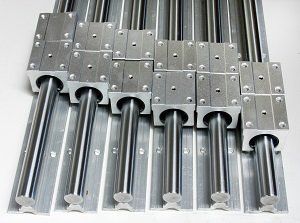
Key Components of Linear Motion Systems
Guide Rails: Ensure precise directional control.
Bearings: Reduce friction and allow smooth motion.
Actuators: Provide force to move the load.
Drive Mechanisms: Transfer power from motors to movement.
Linear Motion Mechanisms
Screw Drives (Ball/Lead Screws): High accuracy, often used in CNC machines.
Belt Drives: Fast, less precise, common in printers.
Rack and Pinion: Strong and durable, good for heavy-duty applications.
Magnetic Linear Drives: Contactless motion, reducing wear.
Linear Motion Bearings
Bearings are vital in reducing friction:
Ball Bearings: For smooth, high-speed applications.
Roller Bearings: Handle heavier loads.
Plain Bearings: Simple, cost-effective, but less precise.
Linear Motion Actuators
Electric Actuators: Precise, energy-efficient, widely used.
Hydraulic Actuators: Powerful, suited for heavy loads.
Pneumatic Actuators: Fast and simple, ideal for repetitive tasks.
Linear Motion Control Systems
Control systems regulate accuracy and efficiency using:
Sensors to track position.
Controllers to process commands.
Feedback mechanisms to correct errors in real time.
Advantages of Linear Motion
High precision
Fast response time
Low friction losses
Wide range of industrial uses
Disadvantages of Linear Motion Systems
High installation costs
Requires regular maintenance
Sensitive to environmental conditions like dust and moisture
Linear Motion vs Rotary Motion
Linear Motion: Moves in a straight line, suited for CNC, robotics, conveyors.
Rotary Motion: Circular movement, found in motors, fans, wheels.
Efficiency depends on the application—linear motion excels in precision, rotary in continuous motion.
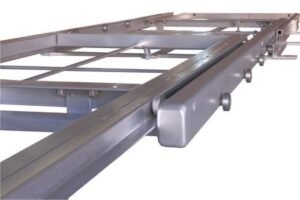
Applications of Linear Motion
Robotics for automation and pick-and-place tasks
3D printers for accurate layer placement
Medical devices like MRI and CT scanners
Linear Motion in CNC Machines
Linear guide rails and ball screws enable CNC tools to move precisely along multiple axes. This ensures accuracy and repeatability in industries like aerospace and automotive manufacturing.
Linear Motion in Robotics
Robots rely on linear actuators and rails to move arms, grippers, and payloads smoothly. High-speed pick-and-place robots depend heavily on linear motion systems.
Linear Motion in Transportation
From maglev trains that float using magnetic linear drives to everyday elevators and escalators, linear motion technology powers modern mobility.
Linear Motion in Everyday Life
Sliding doors, drawers, printers, and even the mechanism in a washing machine drum all rely on simple linear motion principles.
Design Considerations for Linear Motion Systems
Required load capacity
Desired accuracy and speed
Environmental conditions (dust, temperature, humidity)
Maintenance accessibility
Common Issues in Linear Motion Systems
Misalignment causing uneven wear
Excessive friction leading to heat
Contamination from dust and particles
Insufficient lubrication
Troubleshooting Linear Motion Problems
Noise: Check for lubrication or bearing wear.
Heat: Inspect for friction or misalignment.
Accuracy Issues: Ensure calibration and alignment.
Top Manufacturers of Linear Motion Systems
THK – Leader in precision linear guides.
Hiwin – Known for affordability and versatility.
NSK – Japanese engineering excellence.
Bosch Rexroth – Industrial-grade reliability.
Market Trends for Linear Motion 2025
Automation, robotics, and electric vehicles are driving demand for high-precision linear motion systems. Smart sensors and IoT integration are enabling predictive maintenance.
Future of Linear Motion
Expect AI-driven predictive systems, self-lubricating bearings, and eco-friendly materials to shape the next generation of linear motion solutions.
Environmental Impact of Linear Motion Systems
Linear motion systems consume less energy compared to older friction-heavy designs. Manufacturers are now moving toward recyclable materials and biodegradable lubricants.
Linear Motion FAQs
What is the difference between linear and rotary motion?
Linear motion moves in a straight path, while rotary revolves around an axis.
Which type of actuator is best for linear motion?
Electric actuators are best for precision, while hydraulics suit heavy loads.
How can friction be reduced in linear motion?
Using bearings, proper lubrication, and alignment helps minimize friction.
Can linear motion handle heavy loads?
Yes, roller-bearing and hydraulic systems can support extremely heavy loads.
What is the average lifespan of a linear motion system?
With proper maintenance, they can last over 10 years.
Where can I buy linear motion components?
Reputable suppliers include Hiwin, THK, NSK, and Bosch Rexroth distributors.

Conclusion on Linear Motion
Linear motion is more than just a concept—it’s the backbone of modern industry. Whether in CNC machining, robotics, transportation, or daily appliances, it ensures precision, efficiency, and progress. With future innovations leaning towards smart and sustainable solutions, linear motion will remain a driving force in engineering.