

Linear slide bearings, also known as linear motion bearings, are fundamental components in mechanical systems that require smooth and precise movement along a straight path. They are used extensively in industries such as manufacturing, automation, robotics, CNC machining, 3D printing, and medical equipment. These bearings reduce friction between moving parts, support varying loads, and ensure consistent accuracy and reliability in linear motion systems.
This article serves as a complete guide to linear slide bearings, exploring their design, types, materials, applications, advantages, installation, maintenance, and troubleshooting. Whether you are an engineer, technician, or enthusiast, understanding the nuances of linear slide bearings will help you optimize machinery performance and extend component lifespan.
Table of Contents
What Are Linear Slide Bearings?
Components of Linear Slide Bearings
Types of Linear Slide Bearings
Materials Used in Linear Slide Bearings
Advantages of Linear Slide Bearings
Applications of Linear Slide Bearings
Factors to Consider When Selecting Linear Slide Bearings
Installation and Alignment
Maintenance and Lubrication
Common Issues and Troubleshooting
Innovations and Future Trends
FAQs About Linear Slide Bearings
Conclusion
1. What Are Linear Slide Bearings?
Linear slide bearings are mechanical devices designed to facilitate smooth, controlled movement along a straight line. Unlike rotary bearings, which support rotation, linear slide bearings are intended for translational motion. By minimizing friction and wear between moving components, these bearings enhance the efficiency, precision, and lifespan of machines and automation systems.
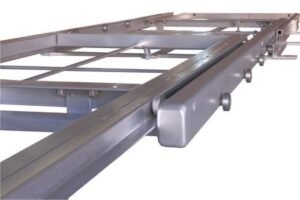
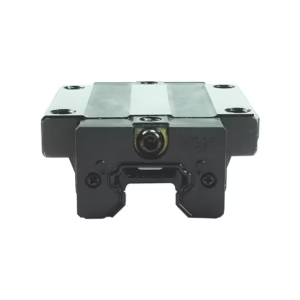
Linear slide bearings often consist of a bearing block or carriage that travels along a guide rail. They can support different types of loads—radial, axial, or combined—and are engineered to operate under high speeds, heavy loads, or high-precision environments.
2. Components of Linear Slide Bearings
A standard linear slide bearing system includes the following key components:
2.1. Bearing Block (Carriage)
Description: The moving part that glides along the rail.
Features: Contains rolling elements such as balls or rollers, housed within a cage for smooth motion. May include mounting surfaces for machine attachments.
2.2. Guide Rail
Description: The fixed track or rail that guides the bearing block.
Features: Precision-machined, hardened surfaces for minimal wear and high repeatability. Grooves or raceways accommodate the rolling elements.
Optional components may include:
End caps to prevent rolling elements from falling out.
Lubrication ports to facilitate maintenance.
Seals to protect against dust and contaminants.
3. Types of Linear Slide Bearings
Linear slide bearings can be classified based on the type of rolling element, bearing design, and intended application:
3.1. Ball Linear Bearings
Mechanism: Recirculating balls reduce friction between the bearing block and the rail.
Advantages: High precision, smooth motion, suitable for light to medium loads.
Applications: CNC machines, 3D printers, robotic arms.
3.2. Roller Linear Bearings
Mechanism: Cylindrical or needle rollers instead of balls provide linear motion.
Advantages: Higher load capacity than ball bearings, longer lifespan under heavy loads.
Applications: Industrial automation, heavy machinery.
3.3. Plain Slide Bearings
Mechanism: Sliding motion between low-friction surfaces, often coated with PTFE or polymer.
Advantages: Simpler design, low cost, maintenance-free in some cases.
Limitations: Lower precision and speed than rolling-element bearings.
Applications: Moderate load systems, low-speed automation, and equipment with noise or contamination concerns.
3.4. Profiled vs. Round Rails
Profiled Rails: Rectangular or square cross-section with grooves for precise guidance.
Round Rails: Cylindrical design, often paired with linear bushings for lighter applications.
4. Materials Used in Linear Slide Bearings
Material selection is critical for durability, performance, and environmental compatibility:
4.1. Steel
High strength and durability.
Hardened and ground for precision.
Ideal for industrial machinery, heavy-load applications.
4.2. Stainless Steel
Corrosion-resistant.
Suitable for food processing, medical devices, and outdoor use.
4.3. Aluminum
Lightweight, resistant to corrosion.
Used in applications where reduced mass is critical.
4.4. Polymers and Composites
Low friction, chemical-resistant.
Ideal for cleanroom, medical, or low-load applications.
5. Advantages of Linear Slide Bearings
Linear slide bearings provide numerous benefits:
Precision: High accuracy and repeatable motion.
Low Friction: Reduces wear, heat generation, and energy consumption.
Load Capacity: Capable of supporting heavy loads depending on design.
Durability: Long service life with proper maintenance.
Flexibility: Compatible with a wide range of industrial and automation systems.
Smooth Motion: Minimal vibration and noise during operation.
6. Applications of Linear Slide Bearings
Linear slide bearings are used across multiple industries:
6.1. CNC Machinery
Guides cutting tools and worktables with high precision.
6.2. 3D Printing
Ensures accurate movement of print heads and build platforms.
6.3. Robotics
Provides smooth linear motion for robotic arms and automated assembly lines.
6.4. Industrial Automation
Applied in packaging machines, conveyor systems, and assembly equipment.
6.5. Medical Devices
Used in imaging systems, laboratory automation, and surgical equipment.
6.6. Aerospace and Defense
Supports precise motion in instruments, satellite mechanisms, and control systems.
7. Factors to Consider When Selecting Linear Slide Bearings
Choosing the correct linear slide bearing requires evaluating:
Load Requirements: Both static and dynamic loads.
Precision Needs: Tolerance, repeatability, and positioning accuracy.
Speed of Operation: Determines appropriate bearing type.
Environmental Conditions: Temperature, moisture, dust, and chemical exposure.
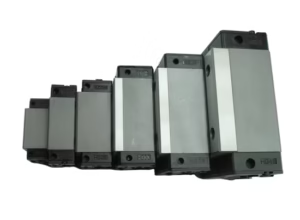
Space and Mounting Constraints: Length, width, and mounting method compatibility.
8. Installation and Alignment
Proper installation is essential for optimal performance:
8.1. Surface Preparation
Ensure the mounting surface is flat, rigid, and clean.
8.2. Alignment
Use precision tools to align rails parallelly.
Misalignment causes uneven wear, increased friction, and reduced lifespan.
8.3. Fastening
Use appropriate torque for mounting screws.
Avoid over-tightening which can warp the rail or block.
8.4. Testing
Check smooth motion and proper load distribution before final assembly.
9. Maintenance and Lubrication
Regular maintenance ensures longevity:
Cleaning: Remove dust, dirt, and debris.
Lubrication: Apply grease or oil based on manufacturer recommendations.
Inspection: Check for corrosion, wear, or damaged bearings.
Replacement: Replace worn-out components promptly.
10. Common Issues and Troubleshooting
Linear slide bearings can experience:
Noise or Vibration: Usually due to misalignment or insufficient lubrication.
Sticking or Jamming: Caused by dirt, debris, or damaged rolling elements.
Excessive Wear: From contamination or overload.
Corrosion: Occurs if bearings are exposed to moisture without protective material.
11. Innovations and Future Trends
Recent advancements in linear slide bearings include:
High-Speed Designs: For ultra-fast industrial automation.
Compact and Lightweight Bearings: Reduce weight while maintaining load capacity.
Integrated Sensors: Allow monitoring of movement, load, and predictive maintenance.
Advanced Materials: Coatings and composites for corrosion resistance and low friction.
12. FAQs About Linear Slide Bearings
Q1: Can linear slide bearings handle heavy loads?
A1: Yes, roller types can support thousands of kilograms depending on size and design.
Q2: How often should bearings be lubricated?
A2: Lubrication frequency depends on load, speed, and environment; heavy-duty applications may require weekly maintenance.
Q3: What is the difference between ball and roller slide bearings?
A3: Ball bearings provide high precision and smooth motion for lighter loads; roller bearings support heavier loads with slightly less precision.
Q4: Are linear slide bearings suitable for outdoor use?
A4: Yes, stainless steel or specially coated bearings prevent corrosion in outdoor applications.
13. Conclusion
Linear slide bearings are indispensable in modern machinery, providing smooth, precise, and reliable linear motion. Selecting the right type, material, and design, along with proper installation and maintenance, ensures optimal performance and long service life. With applications ranging from CNC machinery and 3D printing to robotics and aerospace, linear slide bearings remain a critical component in industrial automation and mechanical engineering.
Advancements in materials, coatings, and sensor integration are continuously improving linear slide bearings, making them more durable, precise, and suitable for advanced automation systems.