

Introduction
Linear sliders, also known as linear motion sliders, are essential components in modern machinery, robotics, automation, and precision engineering. They enable smooth, controlled, and repeatable linear motion, which is critical for high-precision manufacturing, assembly lines, laboratory equipment, and robotics applications. By reducing friction and maintaining accurate alignment, linear sliders enhance efficiency, reliability, and performance across a broad spectrum of industries.
This comprehensive guide covers all aspects of linear sliders, including their components, types, design principles, materials, industrial applications, installation, maintenance, troubleshooting, and emerging trends. It is designed for engineers, designers, and industry professionals seeking a deep understanding of linear slider technology.
Table of Contents
What Are Linear Sliders?
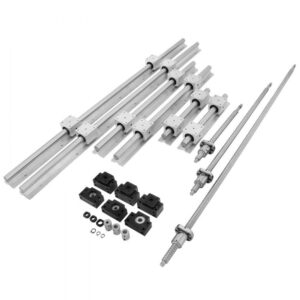
Components of a Linear Slider System
Types of Linear Sliders
Mechanics and Design Principles
Materials Used in Linear Sliders
Advantages of Linear Sliders
Industrial Applications
Selecting the Right Linear Slider
Installation and Alignment Techniques
Maintenance and Lubrication
Common Problems and Troubleshooting
Emerging Innovations and Trends
Frequently Asked Questions (FAQs)
Conclusion
1. What Are Linear Sliders?
Linear sliders are mechanical systems that enable components to move smoothly along a straight path. They consist of a moving carriage or block that travels along a guide, rail, or track, allowing precise and repeatable linear motion. Unlike simple sliding mechanisms, linear sliders often incorporate rolling elements such as balls or rollers, or advanced low-friction surfaces, to reduce friction, enhance accuracy, and support heavy loads.
Linear sliders are critical in applications requiring precise positioning, controlled movement, or automation, including CNC machinery, robotic arms, inspection equipment, laboratory instruments, and semiconductor production systems.
2. Components of a Linear Slider System
A typical linear slider system comprises several key components:
2.1 Rail or Guide
The rail provides a precise path for the slider to move along. Rails are usually hardened and ground to ensure minimal deflection, high rigidity, and accurate linear motion.
2.2 Slider or Carriage
The slider, also called a block, moves along the rail and carries the load. It houses rolling elements or sliding surfaces and may include integrated lubrication channels and protective end caps.
2.3 Rolling Elements
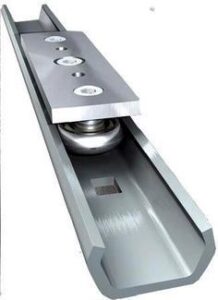
Rolling elements, such as balls or cylindrical rollers, reduce friction and allow smooth motion. Recirculating designs enable continuous operation over long travel distances.
2.4 End Caps and Covers
These protect the slider system from contaminants, dust, and debris while preventing rolling elements from escaping.
2.5 Lubrication Features
Channels, reservoirs, or wicks provide continuous lubrication, reducing wear and maintaining smooth operation.
3. Types of Linear Sliders
Linear sliders are available in various types to suit different load capacities, precision requirements, and environmental conditions:
3.1 Ball-Type Linear Sliders
Design: Utilizes recirculating balls to minimize friction.
Applications: CNC machines, 3D printers, automation systems.
Advantages: Smooth motion, moderate load capacity, high precision.
3.2 Roller-Type Linear Sliders
Design: Uses cylindrical or needle rollers to distribute load over a larger contact area.
Applications: Heavy industrial machinery, presses, assembly lines.
Advantages: High load capacity, long service life, stable motion.
3.3 Cross-Roller Linear Sliders
Design: Rollers arranged in a cross pattern handle multi-directional loads.
Applications: Precision robotics, medical devices, inspection systems.
Advantages: Supports radial, axial, and moment loads simultaneously.
3.4 Miniature Linear Sliders
Design: Compact sliders for small-scale applications.
Applications: Laboratory instruments, compact automation devices.
Advantages: High precision in limited spaces, lightweight design.
3.5 Plain Linear Sliders
Design: Low-friction sliding surfaces without rolling elements.
Applications: Light machinery, low-speed operations.
Advantages: Simple, cost-effective, minimal maintenance.
4. Mechanics and Design Principles
4.1 Load Distribution
Linear sliders are engineered to evenly distribute loads across rolling elements or sliding surfaces, minimizing localized wear and extending service life.
4.2 Friction Reduction
Rolling elements or low-friction coatings reduce energy loss and heat generation, enabling smooth and efficient linear motion.
4.3 Rigidity and Accuracy
High-quality sliders maintain structural rigidity under heavy loads, ensuring precise positioning and minimal deflection.
4.4 Recirculation Mechanism
In ball-type and roller-type sliders, recirculating elements allow continuous motion, preventing jamming and enabling extended travel distances.
4.5 Preload
Preloading removes clearance between the slider and rail, improving stiffness, reducing vibration, and enhancing positional accuracy.
5. Materials Used in Linear Sliders
5.1 Hardened Steel
Provides excellent strength, wear resistance, and load-bearing capacity, ideal for heavy-duty industrial applications.
5.2 Stainless Steel
Offers corrosion resistance and strength, suitable for humid, wet, or chemically aggressive environments.
5.3 Aluminum
Lightweight and corrosion-resistant, used in portable machinery and aerospace applications.
5.4 Polymers and Composites
Used in slider cages, seals, and coatings to reduce noise, friction, and maintenance needs.
6. Advantages of Linear Sliders
High Precision: Enables accurate positioning for CNC, robotics, and automation systems.
Smooth Motion: Minimal friction and vibration improve operational stability.
High Load Capacity: Can handle axial, radial, and moment loads effectively.
Durability: Long service life with proper maintenance.
Versatility: Suitable for industrial, medical, and robotic applications.
Noise Reduction: Quiet operation due to rolling elements or low-friction surfaces.
7. Industrial Applications
7.1 CNC Machines
Linear sliders provide smooth and precise movement for cutting heads, milling tables, and engraving systems.
7.2 Robotics
Enable accurate motion of robotic arms, pick-and-place devices, and automated assembly equipment.
7.3 Industrial Automation
Used in conveyors, assembly lines, and inspection machinery for repeatable linear motion.
7.4 Medical Equipment
Support linear motion in imaging systems, surgical robots, and laboratory automation instruments.
7.5 Semiconductor Manufacturing
Critical for precise wafer handling, assembly, and inspection.
7.6 Aerospace and Defense
Provide accurate positioning in simulators, satellite mechanisms, and precision instruments.
8. Selecting the Right Linear Slider
Factors to consider:
Load Requirements: Ensure compatibility with both static and dynamic loads.
Precision: Determine required positional accuracy and repeatability.
Speed: Choose a slider capable of operating at the required speeds.
Environment: Account for temperature, humidity, dust, and chemical exposure.
Space Constraints: Match slider size and rail length to the system.
Maintenance Needs: Evaluate lubrication and accessibility requirements.
9. Installation and Alignment Techniques
9.1 Surface Preparation
Mounting surfaces must be flat, rigid, and free from debris to prevent misalignment.
9.2 Rail Alignment
Rails must be parallel and straight; misalignment increases friction and reduces accuracy.
9.3 Mounting
Use proper fasteners and torque specifications to avoid deformation of the rail.
9.4 Testing
Perform load and motion tests to verify smooth travel, accuracy, and repeatability.
10. Maintenance and Lubrication
Cleaning: Remove dust, debris, and contaminants regularly.
Lubrication: Apply grease or oil according to manufacturer recommendations.
Inspection: Check for wear, corrosion, and damage.
Replacement: Replace worn or damaged components promptly to maintain performance.
11. Common Problems and Troubleshooting
Noise or Vibration: Often caused by misalignment, debris, or insufficient lubrication.
Sticking or Jamming: Check for bent rails, damaged rolling elements, or foreign particles.
Excessive Wear: Results from overloading, poor lubrication, or contamination.
Corrosion: Use stainless steel or coated sliders in humid or chemically aggressive environments.
12. Emerging Innovations and Trends
High-Speed Linear Sliders: Optimized for fast production and automation.
Miniaturized Sliders: Compact guides for precision devices and small automation systems.
Integrated Sensors: Real-time monitoring of position, load, and temperature.
Advanced Materials: Use of ceramics, coatings, and polymers to reduce friction and extend service life.
Predictive Maintenance: IoT-enabled sliders enable early detection of wear or operational issues.
13. Frequently Asked Questions (FAQs)
Q1: How do linear sliders differ from conventional bearings?
A1: Linear sliders provide precise linear motion with rolling or low-friction surfaces, whereas conventional bearings are typically designed for rotational motion.
Q2: Can linear sliders be used outdoors?
A2: Yes, stainless steel or corrosion-resistant coatings allow operation in humid or outdoor environments.