

Outline for “Roll Rail”
| Main Headings | Sub-Headings |
|---|---|
| Introduction to Roll Rail | Defining Roll Rail, Importance in Motion Engineering, Evolution of Rail Systems |
| Roll Rail | Core Concept Explained, How It Differs from Other Guideways |
| Types of Roll Rail Systems | Ball-Type Roll Rail, Roller-Type Roll Rail, Key Differences |
| Working Principle of Roll Rail | Friction Reduction, Load Distribution, Accuracy in Motion |
| Main Components of Roll Rail | Rails, Carriages, Rolling Elements, End Caps and Seals |
| Advantages of Roll Rail | Smooth Motion, High Rigidity, Energy Efficiency, Long Service Life |
| Challenges of Roll Rail | Higher Costs, Complex Installation, Sensitivity to Environment |
| Applications of Roll Rail | CNC Machines, Robotics, Aerospace, Semiconductor, Medical Equipment |
| How to Select the Right Roll Rail | Load Requirements, Precision Needs, Speed and Acceleration, Environmental Considerations |
| Popular Roll Rail Manufacturers | THK, Hiwin, NSK, SKF, Bosch Rexroth |
| Installation of Roll Rail | Preparation, Mounting, Alignment |
| Maintenance of Roll Rail | Lubrication, Cleaning, Wear Detection |
| Common Problems with Roll Rail | Noise, Misalignment, Vibration, Wear |
| Innovations in Roll Rail | Smart Rail Technology, Lightweight Materials, Advanced Coatings |
| Roll Rail vs Linear Guideways | Performance, Lifespan, Cost Analysis |
| Environmental Impact of Roll Rail | Sustainability, Energy Efficiency, Recycling Options |
| Case Studies of Roll Rail in Industry | Automotive Assembly, Precision Robotics, Aerospace Manufacturing |
| Future Trends in Roll Rail | AI Integration, Predictive Maintenance, New Materials |
| Cost and ROI Analysis of Roll Rail | Initial Costs vs Long-Term Savings, Return on Investment |
| Safety Considerations in Roll Rail | Proper Handling, Avoiding Overload, Safety Stops |
| Roll Rail in Robotics | Role in Automation, Precision in Robotic Arms |
| Roll Rail in CNC Machines | Accuracy in Milling and Cutting, Enhanced Productivity |
| Roll Rail in Healthcare | Medical Imaging, Surgical Robots, Lab Automation |
| Buying Tips for Roll Rail | Supplier Reliability, Certifications, After-Sales Support |
| Frequently Asked Questions | Six Detailed FAQs with Answers |
| Conclusion | Final Thoughts on Roll Rail Systems |
Introduction to Roll Rail
Every modern machine that demands precision relies on an invisible backbone: motion systems. One such system, often overlooked but indispensable, is the roll rail. From CNC machines cutting aerospace-grade metals to robotic arms assembling smartphones, roll rails ensure smooth, accurate, and reliable linear motion.
Roll rails represent a leap forward from older sliding systems. By incorporating rolling elements instead of surface-to-surface friction, they drastically reduce wear, improve accuracy, and extend service life. Their role in industrial automation and high-tech manufacturing is not just supportive—it’s transformative.
Roll Rail
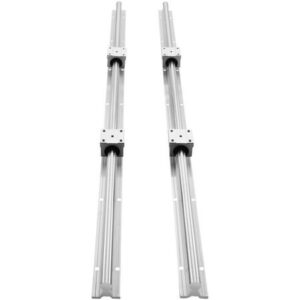
A roll rail is a type of linear motion system that guides mechanical parts along a straight path with minimal resistance. Unlike traditional sliding guides, which rely on direct contact, roll rails employ balls or rollers to achieve low-friction movement.
The distinction may sound minor, but in industries where precision is measured in microns, it makes all the difference. Roll rails offer higher rigidity, better repeatability, and reduced maintenance compared to conventional methods.
Types of Roll Rail Systems
Not all roll rails are the same. Their design varies depending on the intended application.
Ball-Type Roll Rail
These use recirculating steel balls between the rail and carriage. They’re ideal for high-speed applications where smoothness is more critical than sheer load capacity.
Roller-Type Roll Rail
Instead of balls, these use cylindrical rollers, which provide greater surface contact. This makes them perfect for heavy-duty applications requiring high rigidity and load handling.
Key Differences
Ball-type systems excel in speed and quiet operation, while roller-type rails shine in stiffness and durability. The choice depends on whether speed or strength takes priority.
Working Principle of Roll Rail
The working of a roll rail is elegant yet precise.
Friction Reduction: Rolling elements eliminate sliding friction, enabling near-effortless movement.
Load Distribution: Loads are spread across multiple points of contact, ensuring even wear and longer service life.
Accuracy in Motion: The rolling mechanism allows for micrometer-level precision, essential in semiconductor and medical equipment.
This design ensures reliable performance, even under demanding conditions.
Main Components of Roll Rail
Every roll rail is made up of carefully engineered components:
Rails: Hardened steel tracks that guide movement.
Carriages: Blocks that house rolling elements and carry loads.
Rolling Elements: Balls or rollers that enable low-friction motion.
End Caps and Seals: Keep contaminants out and ensure smooth recirculation of elements.
Each part is crucial—together, they create a system that delivers flawless linear motion.
Advantages of Roll Rail
Roll rails have become the preferred choice for engineers and manufacturers, and the reasons are clear.
Smooth Motion: By using rolling elements instead of sliding surfaces, roll rails achieve effortless linear motion with minimal resistance.
High Rigidity: Roller-type systems, in particular, provide excellent stiffness, making them suitable for heavy-duty machining.
Energy Efficiency: Reduced friction means machines consume less energy, lowering operating costs.
Long Service Life: Even under continuous use, roll rails outlast traditional sliding guides thanks to even load distribution.
Precision and Repeatability: They ensure consistent accuracy, essential for industries like robotics and semiconductors.
Low Maintenance Needs: With proper lubrication and sealing, they require fewer interventions than conventional systems.

Challenges of Roll Rail
Despite their impressive advantages, roll rails are not without challenges.
Higher Costs: Compared to simple bushings or slides, roll rails require a larger initial investment.
Complex Installation: Proper alignment is essential; even minor misalignments can lead to performance issues.
Environmental Sensitivity: Dust, dirt, and coolant can enter the system if seals fail, affecting precision.
Specialized Maintenance: Although infrequent, maintenance requires skilled handling to ensure optimal performance.
Still, in most applications, the benefits outweigh these drawbacks.
Applications of Roll Rail
Roll rails are indispensable in industries that rely on precision, speed, and durability.
CNC Machines: Deliver vibration-free and accurate machining, ensuring high-quality finishes.
Robotics: Provide the stability and precision robotic arms need for assembly, welding, and automation.
Aerospace: Enable accurate handling of large, heavy components under strict tolerances.
Semiconductor Industry: Used in delicate microchip assembly processes requiring micrometer-level accuracy.
Medical Equipment: Surgical robots, imaging machines, and lab automation systems rely on roll rails for stability and precision.
From manufacturing floors to operating rooms, roll rails silently power progress.
How to Select the Right Roll Rail
Choosing the right roll rail involves considering several critical factors:
Load Requirements: Heavy-duty tasks demand roller-type rails with higher rigidity.
Precision Needs: Ball-type rails are better for applications requiring high speed and smoothness.
Speed and Acceleration: High-speed environments benefit from ball-based systems.
Environmental Conditions: Harsh or dusty settings require sealed and coated rails.
Budget Constraints: Balancing performance needs with cost efficiency ensures sustainable investment.
A well-chosen system prevents downtime and improves long-term efficiency.
Popular Roll Rail Manufacturers
Several global companies are recognized for their excellence in producing roll rails:
THK: An industry leader known for pioneering linear motion technology.
Hiwin: Offers affordable yet reliable systems, popular in CNC and robotics.
NSK: Specializes in durable rails for heavy industrial applications.
SKF: Famous for robust engineering and products suited for extreme environments.
Bosch Rexroth: Provides modular systems designed for high-performance automation.
Working with trusted brands ensures quality, warranty coverage, and access to technical expertise.
Installation of Roll Rail
Correct installation is the foundation of performance.
Preparation
Inspect rails for any shipping damage.
Clean mounting surfaces thoroughly to remove dirt and debris.
Mounting
Secure rails to a flat base using precision bolts.
Tighten bolts in sequence to avoid uneven stress.
Alignment
Use precision alignment tools to ensure perfect parallelism.
Check for smooth carriage movement across the entire length.
Proper installation ensures the rail delivers its promised accuracy and lifespan.
Maintenance of Roll Rail
Maintenance is simple but vital to longevity.
Lubrication
Apply grease or oil recommended by the manufacturer.
Automatic lubrication systems can reduce downtime in high-use machines.
Cleaning
Periodically wipe rails to remove dust and contaminants.
Replace seals if damaged to prevent debris ingress.
Wear Detection
Monitor for unusual noise or vibration.
Use vibration sensors for predictive maintenance in critical applications.
A well-maintained roll rail can easily last beyond a decade of continuous use.
Common Problems with Roll Rail
Even high-precision systems can face issues.
Noise: Typically caused by poor lubrication or contamination.
Misalignment: Leads to uneven wear and reduced accuracy.
Vibration: Often a result of loosened bolts or uneven load distribution.
Wear: Rolling elements and seals eventually degrade, requiring replacement.
Proactive troubleshooting reduces downtime and prevents costly failures.
Innovations in Roll Rail
The roll rail industry continues to evolve with new technologies.
Smart Rail Technology: Built-in sensors for load, temperature, and vibration monitoring.
Lightweight Materials: Aluminum and carbon composites for aerospace and robotics.
Advanced Coatings: Anti-corrosion and low-friction layers that extend service life.
Noise Reduction Designs: New geometries that minimize sound during high-speed movement.
These innovations make roll rails smarter, lighter, and more efficient.

Roll Rail vs Linear Guideways
Although both systems serve similar purposes, differences exist.
Performance: Roll rails excel in rigidity, while linear guideways offer versatility.
Lifespan: Roll rails typically last longer under heavy-duty use.
Cost Analysis: Roll rails are often more expensive but deliver better ROI in demanding environments.
The decision depends on the balance between load capacity, precision, and budget.
Environmental Impact of Roll Rail
Sustainability is becoming central in engineering, and roll rails play a role.
Energy Efficiency: Lower friction reduces power usage.
Eco-Friendly Materials: Many manufacturers use recyclable alloys.
Recycling Options: Old rails can often be refurbished or recycled.
This makes roll rails compatible with sustainable manufacturing practices.
Case Studies of Roll Rail in Industry
Automotive Assembly
A leading car manufacturer integrated roller-type roll rails into robotic assembly lines, improving precision by 20% and reducing downtime.
Precision Robotics
In a semiconductor factory, ball-type roll rails were used for chip placement, achieving micrometer accuracy.
Aerospace Manufacturing
Heavy-duty roll rails ensured flawless handling of aircraft engine components, cutting assembly errors by 15%.
These examples highlight real-world performance benefits.
Future Trends in Roll Rail
The future promises exciting developments.
AI Integration: Self-learning systems for automated adjustments.
Predictive Maintenance: IoT sensors warning of failures before they happen.
Next-Gen Materials: Nanotechnology-based coatings for near-frictionless operation.
Roll rails will continue adapting to the increasing demands of Industry 4.0.
Cost and ROI Analysis of Roll Rail
The financial aspect is always critical.
Initial Costs: Higher than alternatives.
Operational Savings: Reduced maintenance, energy use, and downtime.
ROI Timeline: Most companies recover costs in 1–3 years through improved efficiency.
For industries where precision equals profit, roll rails are worth the investment.
Safety Considerations in Roll Rail
Safety ensures both people and machines are protected.
Proper Handling: Avoid dropping rails during transport or installation.
Avoiding Overload: Always operate within rated load capacities.
Safety Stops: Mechanical stops prevent carriages from overrunning.
Adhering to safety protocols extends both machine life and workplace security.
Roll Rail in Robotics
Robotics thrives on consistency, and roll rails deliver. They allow robotic arms to perform complex tasks—such as welding, painting, and assembly—with accuracy and repeatability. In collaborative robots (cobots), roll rails ensure smooth, safe interactions with human operators.
Roll Rail in CNC Machines
CNC machines demand vibration-free motion for high-speed milling, drilling, and cutting. Roll rails provide this stability, improving tool life and surface finishes. Faster cycles and fewer errors directly translate into higher productivity.
Roll Rail in Healthcare
Healthcare is one of the most precision-focused industries. Roll rails are used in:
Medical Imaging: For stable and accurate positioning.
Surgical Robots: Enabling delicate, controlled movements.
Lab Automation: Handling samples with repeatable accuracy.
Their reliability helps improve patient outcomes.
Buying Tips for Roll Rail
When purchasing roll rails, consider:
Supplier Reliability: Stick with established brands.
Certifications: ISO and CE certifications ensure quality standards.
After-Sales Support: Access to spare parts and service is critical.
Application Match: Choose ball or roller type depending on needs.
Careful selection ensures long-term success.
Frequently Asked Questions
What is a roll rail used for?
It provides smooth, precise linear motion in industries like CNC machining, robotics, and healthcare.
How long do roll rails last?
With proper care, they can last several years, often exceeding 10,000 km of travel.
Which is better: ball-type or roller-type roll rail?
Ball-type is faster and smoother, while roller-type handles heavier loads and provides more rigidity.
Do roll rails require lubrication?
Yes, lubrication is essential for reducing friction and extending service life.
Can roll rails be used in vertical applications?
Absolutely. They are designed to handle loads in multiple directions.
Are roll rails expensive to maintain?
Not particularly. With regular lubrication and cleaning, maintenance costs are low compared to alternatives.
Conclusion
The roll rail has revolutionized linear motion systems by combining smoothness, precision, and durability. From aerospace to healthcare, its applications span industries where reliability and accuracy are non-negotiable.
Though the upfront cost is higher, the long-term benefits—energy efficiency, reduced downtime, and unmatched precision—make it a wise investment. With innovations like smart sensors and AI integration on the horizon, roll rails are set to play an even bigger role in the future of automation and precision engineering.
Inbound Link Suggestions
Article on Linear Motion Rails for technical comparisons.
Post on CNC Machine Components to explain practical usage.