

Outline for “Linear Motion Rails”
| Main Headings | Sub-Headings |
|---|---|
| Introduction to Linear Motion Rails | Defining Linear Motion Rails, Importance in Modern Engineering, Historical Development |
| Linear Motion Rails | The Core Concept Explained, Why They Are Indispensable |
| Types of Linear Motion Rails | Profiled Rails, Round Rails, Differences Between Profiled and Round Types |
| How Linear Motion Rails Work | The Science of Motion, Friction Reduction Mechanism, Load Distribution |
| Key Components of Linear Motion Rails | Rails, Bearings and Carriages, Ball and Roller Mechanisms, End Seals |
| Advantages of Linear Motion Rails | Precision and Smoothness, High Load Capacity, Energy Savings, Long Lifespan |
| Challenges with Linear Motion Rails | High Initial Costs, Installation Demands, Sensitivity to Contamination |
| Applications of Linear Motion Rails | CNC Machines, Robotics, Medical Devices, Semiconductor Industry, Aerospace Applications |
| Choosing the Right Linear Motion Rails | Load Considerations, Accuracy Needs, Speed Requirements, Environmental Conditions |
| Top Manufacturers of Linear Motion Rails | THK, Hiwin, NSK, Bosch Rexroth, SKF |
| Installation of Linear Motion Rails | Preparation and Alignment, Proper Mounting, Calibration Steps |
| Maintaining Linear Motion Rails | Lubrication Methods, Cleaning, Condition Monitoring |
| Common Problems and Fixes | Noise, Misalignment, Vibration, Wear Issues |
| Innovations in Linear Motion Rails | Smart Rails with Sensors, Lightweight Alloys, Enhanced Coatings |
| Linear Motion Rails vs Other Guiding Systems | Sliding Guides, Linear Shafts, Cost and Performance Comparison |
| Environmental Impact of Linear Motion Rails | Sustainability, Energy Efficiency, Recycling Potential |
| Case Studies of Linear Motion Rails | Automation in Automotive Industry, Robotic Assembly Lines, Aerospace Manufacturing |
| Future of Linear Motion Rails | AI Integration, Predictive Maintenance, New Material Research |
| Cost and ROI Analysis | Investment vs Long-Term Benefits, Efficiency Gains |
| Safety in Using Linear Motion Rails | Handling Precautions, Load Limits, Safety Systems |
| Linear Motion Rails in Robotics | Accuracy in Automation, Role in Collaborative Robots |
| Linear Motion Rails in CNC Machines | Faster Machining, Vibration-Free Operations |
| Linear Motion Rails in Healthcare | Surgical Equipment, Laboratory Automation |
| Buying Guide for Linear Motion Rails | Supplier Reputation, Certifications, After-Sales Support |
| Frequently Asked Questions | Six Common FAQs with Clear Answers |
| Conclusion | Final Thoughts on Linear Motion Rails |
Introduction to Linear Motion Rails
Think about a CNC machine carving a delicate component, or a robotic arm assembling microchips. Without smooth, precise motion, these tasks would be impossible. That’s exactly where linear motion rails come in. They form the backbone of countless automation and precision systems.
Linear motion rails allow carriages to glide smoothly along a straight path, ensuring accurate positioning and stable movement. Over the years, they’ve replaced traditional sliding guides thanks to their durability, efficiency, and unmatched precision. From robotics to medical devices, their role in modern engineering is undeniable.
Linear Motion Rails
At their essence, linear motion rails are guiding systems that enable controlled, low-friction movement in a straight line. They usually consist of a rail and a carriage equipped with rolling elements like balls or rollers. This design dramatically reduces friction compared to flat sliding systems.
Engineers love them because they make machines faster, quieter, and more reliable. Industries that rely on accuracy—semiconductors, aerospace, healthcare—consider linear motion rails a game-changer.
Types of Linear Motion Rails
Not all rails are created equal. Depending on the application, engineers choose between two major designs.
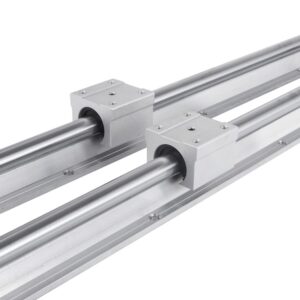
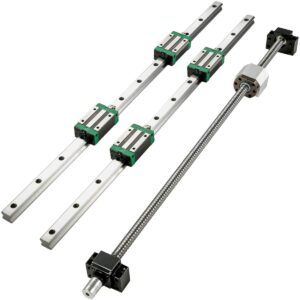
Profiled Rails
Also known as square rails, these provide extremely high rigidity and load capacity. They’re the go-to choice in CNC machines and heavy-duty automation lines where accuracy is critical.
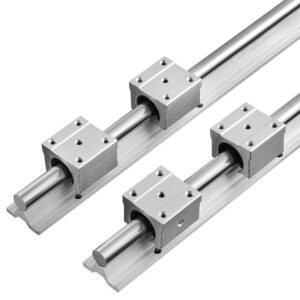
Round Rails
Round rails are simpler and easier to install. While they don’t offer the same stiffness as profiled rails, they’re great for lighter applications where flexibility and low cost matter more.
Differences Between Profiled and Round Types
Profiled rails provide higher accuracy and stiffness, while round rails offer greater flexibility and easier alignment. The decision depends on whether the priority is precision or versatility.
How Linear Motion Rails Work
Behind the scenes, these rails are engineering marvels.
The Science of Motion: Rolling elements inside the carriage reduce resistance, allowing near-frictionless movement.
Friction Reduction Mechanism: Instead of dragging surfaces across each other, steel balls or rollers glide smoothly inside tracks.
Load Distribution: Rails are designed to distribute loads across multiple rolling elements, preventing concentrated stress and extending lifespan.
This synergy ensures motion that is smooth, reliable, and repeatable.
Key Components of Linear Motion Rails
A typical linear motion rail system consists of several interconnected parts:
Rails: Hardened steel tracks that form the pathway.
Bearings and Carriages: Move along the rails, holding the rolling elements.
Ball and Roller Mechanisms: Depending on type, they provide either point contact (balls) or line contact (rollers).
End Seals: Protect the system from dirt, dust, and contaminants.
Each component plays a role in keeping performance at peak levels.
Advantages of Linear Motion Rails
The adoption of linear motion rails across industries is no coincidence. Their design offers clear benefits that traditional sliding systems can’t match.
Precision and Smoothness: Rolling elements ensure high repeatability and minimal vibration. For CNC machining and robotics, this precision translates into flawless performance.
High Load Capacity: Profiled rails, in particular, can carry heavy loads without losing accuracy. This makes them invaluable in aerospace and automotive assembly.
Energy Savings: Lower friction means less power consumption. Over time, this reduces operating costs significantly.
Long Lifespan: With proper lubrication and care, these rails last for years, often outliving the machines they serve.
Compact Design: Despite their strength, they take up relatively little space, making them easy to integrate into complex systems.
Challenges with Linear Motion Rails
While they are excellent for precision engineering, linear motion rails aren’t without drawbacks.
High Initial Costs: Compared to simple bushings or sliding guides, rails demand a larger upfront investment.
Installation Demands: They require perfect alignment during setup. Even minor misalignments can cause uneven wear.
Sensitivity to Contamination: Dust, dirt, or coolant can affect performance if seals aren’t adequate.
Specialized Maintenance: While not frequent, maintenance must follow strict guidelines to preserve accuracy.
Despite these challenges, their long-term benefits often outweigh the initial hurdles.
Applications of Linear Motion Rails
Their versatility is what makes linear motion rails so valuable. They find applications across almost every high-tech industry.
CNC Machines: Delivering vibration-free, high-precision cutting and milling.
Robotics: Ensuring robotic arms move with flawless accuracy.
Medical Devices: Powering surgical robots and lab automation.
Semiconductor Industry: Supporting the delicate process of chip fabrication.
Aerospace Applications: Handling massive components with micrometer precision.
From automotive assembly to hospital labs, their uses are widespread and expanding.
Choosing the Right Linear Motion Rails
Selecting the right system requires balancing performance with environment. Engineers usually evaluate:
Load Considerations: Heavier applications need profiled rails with roller bearings.
Accuracy Needs: Semiconductor and medical equipment demand micrometer-level precision.
Speed Requirements: High-speed manufacturing lines benefit from ball-bearing designs.
Environmental Conditions: Dusty or corrosive environments require special seals or coatings.
Getting these factors right ensures reliability and cost-effectiveness.
Top Manufacturers of Linear Motion Rails
Several manufacturers dominate the global market with proven reliability.
THK: A pioneer and global leader in linear motion technology.
Hiwin: Known for delivering high-quality products at competitive prices.
NSK: Famous for durable, heavy-duty linear systems.
Bosch Rexroth: Offers modular, automation-ready solutions.
SKF: Specializes in rugged, industrial-grade motion rails.
Choosing a trusted brand ensures both product quality and strong after-sales support.
Installation of Linear Motion Rails
Getting installation right is crucial. A poorly installed rail won’t perform as expected.
Preparation and Alignment
Check surfaces for flatness and cleanliness. Any debris will interfere with performance.
Proper Mounting
Rails are secured using bolts, typically tightened gradually in a cross pattern for balance.
Calibration Steps
Once mounted, fine-tuning alignment ensures smooth, frictionless motion. Laser tools are often used in precision industries.
Maintaining Linear Motion Rails
With regular care, these systems can run for years without issues.
Lubrication Methods
Using grease or oil as recommended by manufacturers prevents friction buildup. Automatic lubrication systems are common in large-scale setups.
Cleaning
Contamination is the biggest enemy. Rails must be cleaned periodically, especially in machining environments where metal shavings are present.
Condition Monitoring
Early detection of wear through vibration monitoring and noise checks prevents unexpected downtime.
Common Problems and Fixes
Even robust systems face issues. Here are frequent problems and solutions:
Noise: Usually due to poor lubrication or contamination. Fix by re-lubricating and cleaning.
Misalignment: Leads to uneven wear. Solution: re-calibrate using alignment tools.
Vibration: Can be caused by loose bolts or damaged rolling elements. Inspect and tighten or replace parts.
Wear Issues: Replace seals and rolling elements as soon as wear becomes noticeable.
Proactive maintenance minimizes downtime and ensures smooth operation.
Innovations in Linear Motion Rails
Technology is driving new advancements.
Smart Rails with Sensors: Real-time monitoring of loads and friction for predictive maintenance.
Lightweight Alloys: Aluminum and composites reduce weight without sacrificing strength.
Enhanced Coatings: Anti-rust and low-friction coatings extend service life in harsh environments.
These innovations ensure linear rails remain relevant in the age of automation and AI.
Linear Motion Rails vs Other Guiding Systems
Compared to alternatives, linear motion rails stand out.
Sliding Guides: Cheaper but prone to wear and higher friction.
Linear Shafts with Bushings: Simple and versatile but less rigid and precise.
Rails: More expensive initially but superior in accuracy, lifespan, and efficiency.
For high-stakes industries, the choice is clear—linear motion rails win.
Environmental Impact of Linear Motion Rails
Modern design emphasizes sustainability.
Sustainability: Use of recyclable alloys is increasing.
Energy Efficiency: Reduced friction lowers energy consumption.
Recycling Potential: Old rails can often be repurposed or recycled.
This makes them not just efficient but also eco-friendly in the long run.
Case Studies of Linear Motion Rails
Automation in Automotive Industry
Car manufacturers use profiled rails in robotic arms, improving accuracy and production speed.
Robotic Assembly Lines
In electronics factories, round rails enable high-speed assembly of delicate parts.
Aerospace Manufacturing
Rails ensure safe handling of large, high-value aircraft components.
These examples highlight how rails boost both efficiency and precision.
Future of Linear Motion Rails
The next decade looks promising.
AI Integration: Systems that learn usage patterns and predict failures.
Predictive Maintenance: IoT sensors that alert before breakdowns occur.
New Material Research: Carbon composites and nanomaterials for lighter, stronger rails.
As automation advances, rails will continue evolving with it.
Cost and ROI Analysis
Are linear motion rails worth it?
Initial Costs: Higher than simple guides.
Long-Term Benefits: Reduced downtime, energy savings, and longer service life.
ROI: Most companies recover costs within 1–2 years through efficiency gains.
For industries relying on precision, they’re an investment that pays for itself.
Safety in Using Linear Motion Rails
Safety is often overlooked but vital.
Handling Precautions: Rails must be stored and installed carefully to avoid damage.
Load Limits: Overloading reduces lifespan and risks failure.
Safety Systems: Emergency stops and rail guards protect both machines and operators.
Safe practices protect investments—and people.
Linear Motion Rails in Robotics
Robots rely on repeatability. Rails provide the stable, smooth motion needed for everything from welding to assembly lines. Collaborative robots (cobots), designed to work alongside humans, use rails for quiet, accurate, and reliable movements.
Linear Motion Rails in CNC Machines
In CNC machining, every cut must be exact. Rails minimize vibration, improving surface finish and tool life. Faster, smoother operations translate into higher productivity and better-quality products.
Linear Motion Rails in Healthcare
Healthcare demands extreme precision. Rails are critical in:
Surgical Robots: Allowing delicate, controlled movements.
Laboratory Automation: Handling samples with repeatable accuracy.
Medical Imaging: Supporting vibration-free, stable scans.
Their reliability makes them indispensable in modern healthcare.
Buying Guide for Linear Motion Rails
If you’re purchasing linear rails, consider these factors:
Supplier Reputation: Stick with proven brands like THK, Hiwin, and Bosch Rexroth.
Certifications: ISO and CE certifications guarantee quality.
After-Sales Support: Ensure spares and servicing are available.
Application Match: Choose profiled or round based on needs.
Cutting corners may lead to long-term performance issues.
Frequently Asked Questions
What are linear motion rails used for?
They provide smooth, precise movement in machines such as CNC systems, robots, and medical devices.
Which is better: profiled or round rails?
Profiled rails are stronger and more accurate, while round rails are more flexible and easier to install.
How long do linear rails last?
With proper care, they can last many years, often exceeding 10,000 km of movement.
Do they require lubrication?
Yes. Lubrication is critical for reducing friction and extending lifespan.
Can linear motion rails be used vertically?
Yes, they can handle loads from multiple directions, including vertical motion.
Are they expensive to maintain?
Not particularly. With regular lubrication and cleaning, maintenance costs remain low.
Conclusion
Linear motion rails are more than just machine components—they are the backbone of precision engineering. From CNC machining to robotics and healthcare, they enable tasks that demand flawless accuracy and durability.
While their initial investment may be higher, the returns in efficiency, reliability, and productivity far outweigh the costs. As industries embrace automation, AI, and sustainability, linear motion rails will continue evolving, remaining indispensable for the future of engineering.
Inbound Link Suggestions
Link to an article on CNC Machine Components for deeper technical insights.
Link to a post on Robotics in Manufacturing to highlight application examples.