

Outline for “Linear Guideway”
| Main Headings | Sub-Headings |
|---|---|
| Introduction to Linear Guideway | What is a Linear Guideway?, Importance in Modern Engineering, Evolution of Linear Motion Systems |
| Linear Guideway | Core Concept Explained, Why It Matters in Industrial Machinery |
| Types of Linear Guideway Systems | Ball Type Linear Guideway, Roller Type Linear Guideway, Difference Between Ball and Roller Guideways |
| Working Principle of Linear Guideway | Load Distribution Mechanism, Friction Reduction, Motion Accuracy |
| Key Components of a Linear Guideway | Guide Rail, Blocks or Carriages, Ball Bearings and Rollers, End Caps and Seals |
| Advantages of Using Linear Guideway | Smooth and Precise Motion, Durability and Load Capacity, Reduced Maintenance, Energy Efficiency |
| Disadvantages of Linear Guideway | Cost Factor, Installation Complexity, Environmental Limitations |
| Applications of Linear Guideway | CNC Machines, Robotics, Semiconductor Industry, Medical Equipment, Aerospace Engineering |
| How to Select the Right Linear Guideway | Considering Load Requirements, Precision Needs, Speed and Acceleration, Environmental Conditions |
| Popular Linear Guideway Manufacturers | THK, Hiwin, NSK, SKF, Bosch Rexroth |
| Installation of Linear Guideway | Pre-Installation Checklist, Mounting Process, Alignment and Adjustment |
| Maintenance of Linear Guideway | Lubrication Techniques, Cleaning Practices, Wear and Tear Monitoring |
| Common Problems and Troubleshooting | Noise Issues, Misalignment, Vibration, Uneven Motion |
| Latest Innovations in Linear Guideway | Smart Guideways with Sensors, Lightweight Designs, Enhanced Coatings |
| Linear Guideway vs Traditional Sliding Guides | Performance Comparison, Lifespan, Cost Efficiency |
| Environmental Impact of Linear Guideway | Eco-Friendly Materials, Energy Savings, Recycling Possibilities |
| Case Studies on Linear Guideway Usage | Automotive Industry Example, Precision Robotics, Aerospace Systems |
| Future Trends in Linear Guideway | AI Integration, Predictive Maintenance, Next-Gen Materials |
| Cost Analysis of Linear Guideway Systems | Initial Investment vs Long-Term Benefits, ROI Calculation |
| Safety Measures While Using Linear Guideways | Proper Handling, Avoiding Overloading, Emergency Protocols |
| Linear Guideway in Robotics | Role in Automation, Precision in Robotic Arms |
| Linear Guideway in CNC Machines | Accuracy in Milling and Cutting, Speed Enhancement |
| Linear Guideway in Medical Devices | Precision in Surgery Equipment, Laboratory Automation |
| Buying Tips for Linear Guideway | Trusted Suppliers, Warranty & Certifications, After-Sales Support |
| Frequently Asked Questions | Six Engaging FAQs with Answers |
| Conclusion | Final Thoughts on Linear Guideway Systems |
Introduction to Linear Guideway
Imagine trying to cut metal sheets or assemble microchips without precise motion control. Machines would wobble, vibrations would ruin accuracy, and efficiency would vanish. That’s where linear guideways enter the stage. These motion control systems are the unsung heroes behind modern CNC machines, robotics, aerospace tools, and even medical devices.
Linear guideways have reshaped industries by ensuring smooth, accurate, and consistent movement. Over time, they’ve evolved from traditional sliding systems to today’s advanced rolling-based mechanisms. With reduced friction, high load capacity, and remarkable precision, linear guideways aren’t just a component—they’re a revolution in engineering design.
Linear Guideway
At its heart, a linear guideway is a motion system designed to allow parts or loads to move smoothly in a straight line with minimal friction. Unlike conventional slides that rely heavily on surface contact, linear guideways leverage rolling elements such as balls or rollers. This fundamental shift drastically improves accuracy, reduces wear, and extends service life.
Industries love them because they blend high performance with reliability. Whether it’s a robotic arm delicately placing electronic chips or a CNC machine cutting aerospace-grade titanium, linear guideways ensure every motion counts.
Types of Linear Guideway Systems
Linear guideways aren’t one-size-fits-all. Different applications demand different levels of speed, precision, and load-bearing capacity. Over the years, manufacturers have developed two major types that dominate industrial usage.
Ball Type Linear Guideway
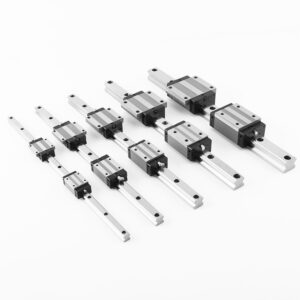
Ball-type linear guideways use rows of recirculating steel balls between the rail and the carriage. Their primary advantage is their ability to handle high speeds with minimal friction. The rolling balls reduce resistance significantly, which means less wear and lower energy consumption. They are particularly popular in CNC machines where precision and speed go hand in hand.
A ball linear guideway is also versatile. Whether it’s a semiconductor assembly line or a 3D printer, these guideways offer smooth linear movement with high repeatability. However, their main drawback is slightly lower load capacity compared to roller types.
Roller Type Linear Guideway
Instead of balls, roller guideways employ cylindrical rollers. These rollers have more surface contact with the rail, translating into higher stiffness and greater load capacity. That’s why roller guideways are often used in heavy-duty machining, aerospace, and construction equipment where durability is paramount.
Roller guideways are more resistant to vibrations, making them a perfect fit for applications that involve heavy loads and intense forces. On the flip side, they may operate at slightly slower speeds compared to ball-based systems.
Difference Between Ball and Roller Guideways
The primary difference lies in contact area and performance. Balls provide point contact, which allows for high speeds but slightly lower rigidity. Rollers, on the other hand, offer line contact, which boosts rigidity and load-bearing capacity. Choosing between them depends entirely on whether speed or strength is your top priority.
Working Principle of Linear Guideway
At first glance, linear guideways look deceptively simple: just a block sliding along a rail. But inside, a finely engineered mechanism ensures flawless performance.
The block or carriage contains rolling elements (balls or rollers) that circulate within a precisely machined groove in the rail. As the carriage moves, these elements roll along, reducing friction to nearly negligible levels.
Load Distribution Mechanism
One of the most remarkable features of linear guideways is their ability to distribute loads evenly. Because the rolling elements contact the rail across multiple points, the pressure spreads out, ensuring smoother motion and longer service life.
Friction Reduction
Compared to traditional sliding guides, linear guideways cut friction down by up to 90%. This not only enhances efficiency but also minimizes wear and tear, saving industries thousands in replacement costs.
Motion Accuracy
The reduced friction and controlled rolling action allow machines to achieve micrometer-level precision. This accuracy is vital in applications like semiconductor manufacturing, where even the slightest deviation can cause defects.
Key Components of a Linear Guideway
Every linear guideway is an assembly of critical parts, each serving a unique function.
Guide Rail
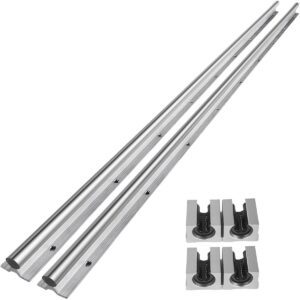
The backbone of the system, the guide rail is usually made of hardened steel. It acts as the path along which the carriage travels. The rail must be precisely machined, as even the smallest imperfection could affect performance.
Blocks or Carriages
The block (also called the carriage) holds the rolling elements and attaches to the machine. It’s designed to handle loads from multiple directions, making it versatile for both vertical and horizontal movements.
Ball Bearings and Rollers
Depending on the type, these rolling elements are the heart of the system. They reduce friction and ensure smooth, precise linear movement.
End Caps and Seals
End caps guide the recirculating elements back into position, while seals prevent dust, dirt, and coolant from entering. Proper sealing is essential for longevity, especially in environments like metal machining where contaminants are everywhere.
Advantages of Using Linear Guideway
Why do industries around the globe prefer linear guideways over traditional sliding systems? The reasons are plenty.
Smooth and Precise Motion: Thanks to rolling elements, they deliver frictionless movement.
Durability and Load Capacity: Capable of handling both light and heavy-duty applications.
Reduced Maintenance: With less friction comes less wear, meaning fewer replacements.
Energy Efficiency: Lower resistance reduces the energy required to move loads.
Flexibility: Suitable for both high-speed and high-load applications.
This unique blend of speed, accuracy, and strength makes linear guideways indispensable.
Disadvantages of Linear Guideway
Of course, no system is perfect. Despite their numerous advantages, linear guideways do have a few limitations.
Cost Factor: High initial investment compared to simple sliding systems.
Installation Complexity: Requires precision alignment, which can be time-consuming.
Environmental Limitations: Dust, dirt, and poor lubrication can impact performance.
Still, when weighed against their benefits, most industries find these drawbacks manageable.
Applications of Linear Guideway
The versatility of linear guideways allows them to power a vast array of industries.
CNC Machines: Accuracy in cutting, drilling, and milling.
Robotics: Smooth, reliable movement in automation systems.
Semiconductor Industry: Ultra-precise assembly processes.
Medical Equipment: High-precision surgical tools and lab automation.
Aerospace Engineering: Handling of critical, high-load components.
From factories to hospitals, linear guideways silently ensure that machines work with unmatched accuracy.
How to Select the Right Linear Guideway
Selecting the right system can make or break an operation. Key factors to consider include:
Load Requirements: Heavy-duty or light precision tasks?
Precision Needs: High-accuracy applications demand ball-type guideways.
Speed and Acceleration: Faster processes require low-friction solutions.
Environmental Conditions: Dusty or corrosive environments need sealed, coated models.
A careful analysis of these parameters helps engineers pick the most cost-effective yet reliable guideway.
Popular Linear Guideway Manufacturers
Several global companies dominate the linear guideway market, each known for innovation and reliability.
THK: A pioneer in linear motion technology, THK introduced the world to the first commercial linear guideway. Their products are trusted in precision machinery worldwide.
Hiwin: Known for delivering cost-effective yet high-performance solutions, Hiwin is popular in robotics and CNC machining.
NSK: Renowned for producing durable and efficient linear motion components, especially in heavy-duty applications.
SKF: This Swedish giant has a reputation for engineering excellence, offering guideways that perform well in harsh environments.
Bosch Rexroth: Their linear guideways are famous for modularity and integration into complex automation systems.
Choosing a reputable brand ensures better quality control, warranty support, and long-term performance.
Installation of Linear Guideway
Proper installation is critical for maximizing the life and performance of a linear guideway system.
Pre-Installation Checklist
Check rail straightness and flatness.
Inspect guideways for shipping damage.
Clean mounting surfaces thoroughly.
Mounting Process
The rail must be aligned carefully on the base surface. Any misalignment could lead to uneven wear. Bolts should be tightened gradually in a crisscross pattern to ensure even distribution.
Alignment and Adjustment
After mounting, fine adjustments are necessary to minimize clearance and ensure smooth travel. Laser alignment tools are often used in precision applications.
Maintenance of Linear Guideway
Regular maintenance ensures optimal performance and extends service life.
Lubrication Techniques
Lubrication is the lifeblood of linear guideways. Manufacturers recommend specific greases or oils that should be applied periodically. Automatic lubrication systems are increasingly popular in factories to reduce downtime.
Cleaning Practices
Dust and metal shavings are the enemy of linear guideways. Regular cleaning with lint-free cloths and recommended solvents keeps performance intact.
Wear and Tear Monitoring
Engineers often use vibration analysis and noise detection to spot early signs of wear. Replacing seals and bearings on time prevents catastrophic failure.
Common Problems and Troubleshooting
Even the best systems may face challenges. Here are some frequent issues:
Noise Issues: Often caused by poor lubrication or contamination.
Misalignment: Leads to uneven wear and rough motion.
Vibration: Usually the result of loose bolts or poor load balancing.
Uneven Motion: Indicates damage to the rail or worn-out rolling elements.
Early detection and proper corrective action keep downtime to a minimum.
Latest Innovations in Linear Guideway
The linear guideway industry is not standing still. Some exciting innovations include:
Smart Guideways with Sensors: Real-time monitoring for predictive maintenance.
Lightweight Designs: Aluminum-based rails for aerospace and robotics.
Enhanced Coatings: Anti-corrosion coatings that extend life in harsh environments.
These advancements not only improve reliability but also reduce costs in the long run.
Linear Guideway vs Traditional Sliding Guides
Traditional sliding guides rely on direct surface contact, which creates more friction and requires constant lubrication. In contrast, linear guideways use rolling elements that drastically reduce friction.
Performance: Linear guideways offer higher precision.
Lifespan: Rolling systems last longer due to reduced wear.
Cost Efficiency: While the initial cost is higher, long-term savings are significant.
For most modern industries, linear guideways have become the preferred choice.

Environmental Impact of Linear Guideway
Sustainability is becoming a key focus in mechanical design. Linear guideways help by:
Eco-Friendly Materials: Manufacturers now use recyclable alloys and coatings.
Energy Savings: Lower friction translates to reduced power consumption.
Recycling Possibilities: Old components can be reprocessed into raw materials.
As industries move toward greener practices, linear guideways fit well into sustainable manufacturing.
Case Studies on Linear Guideway Usage
Automotive Industry Example
A leading car manufacturer integrated roller guideways into its robotic assembly lines, boosting accuracy by 20% and reducing downtime by 15%.
Precision Robotics
A semiconductor factory adopted ball-type guideways in its microchip assembly machines. The result? Near-perfect accuracy with minimal defects.
Aerospace Systems
In aircraft engine assembly, linear guideways ensure components are handled with micrometer-level precision, avoiding costly errors.
Future Trends in Linear Guideway
The future of linear motion systems looks bright.
AI Integration: Predictive maintenance powered by AI algorithms.
Next-Gen Materials: Lighter yet stronger alloys for extreme conditions.
Predictive Maintenance: Systems that alert operators before failure occurs.
These trends will continue pushing the boundaries of speed, efficiency, and reliability.
Cost Analysis of Linear Guideway Systems
The big question: are they worth it?
Initial Investment: Higher than traditional systems.
Long-Term Benefits: Lower maintenance costs, fewer breakdowns, and better energy efficiency.
ROI Calculation: Most industries report recovering costs within 1–3 years due to improved productivity.
In short, the return on investment makes linear guideways a wise choice.
Safety Measures While Using Linear Guideways
To prevent accidents and ensure longevity:
Proper Handling: Avoid dropping or mishandling guide rails.
Avoid Overloading: Exceeding rated capacity shortens lifespan.
Emergency Protocols: Install safety stops and monitoring systems.
Safety is not just about machines—it protects people as well.
Linear Guideway in Robotics
Robotics thrives on precision. Linear guideways allow robotic arms to move with exact repeatability, which is critical for tasks like welding, assembly, and packaging. Their compact size also makes them easy to integrate into robotic systems.
Linear Guideway in CNC Machines
In CNC machining, speed and accuracy are everything. Linear guideways minimize tool vibrations and ensure smoother cuts. This leads to higher-quality finishes and faster machining cycles, giving manufacturers a competitive edge.
Linear Guideway in Medical Devices
The medical field requires accuracy beyond imagination. Linear guideways are used in:
Surgical Robots: For steady, precise movements.
Laboratory Automation: Ensuring repeatable testing and analysis.
Imaging Equipment: For stable, vibration-free scans.
Their reliability makes them a cornerstone of modern medical technology.
Buying Tips for Linear Guideway
If you’re planning to purchase a system, keep these tips in mind:
Trusted Suppliers: Stick with established brands.
Warranty & Certifications: Look for ISO and CE certifications.
After-Sales Support: Ensure easy access to spares and technical support.
Cutting corners may save money upfront but can cost more in the long run.
Frequently Asked Questions
What is the difference between a linear guideway and a linear bearing?
A linear bearing typically refers to bushings and shafts, while a guideway is a complete rail-and-block system offering higher load capacity and precision.
How long does a linear guideway last?
With proper installation and maintenance, they can last several years, often exceeding 10,000 km of travel.
Can linear guideways be used vertically?
Yes, they are designed to handle forces from multiple directions, including vertical loads.
Do linear guideways require lubrication?
Absolutely. Lubrication is essential to reduce friction, prevent corrosion, and extend service life.
Which industries use linear guideways the most?
CNC machining, robotics, medical technology, aerospace, and semiconductor manufacturing are the largest users.
Are linear guideways expensive to maintain?
Not really. With proper lubrication and cleaning, maintenance costs remain low compared to traditional sliding systems.
Conclusion
Linear guideways have transformed modern engineering by offering unmatched precision, reliability, and efficiency. From CNC machines to surgical robots, their impact spans industries, proving they are more than just mechanical parts—they are the backbone of precision motion.
While the initial cost may seem steep, the long-term benefits of smoother motion, higher productivity, and reduced downtime make them an investment worth every penny. As technology continues to advance, we can expect linear guideways to become even smarter, lighter, and more efficient, securing their place in the future of automation and engineering.
Inbound Link Suggestions
Link to a blog on CNC Machine Components for deeper understanding.
Link to an article on Robotics in Manufacturing to show application examples.
Outbound Link Suggestions
Link to THK Official Site for product details.
Link to Hiwin Technologies for application guides.
Link to Bosch Rexroth Linear Technology for advanced solutions.